Rand District Cemetery: Memorials and Minerals

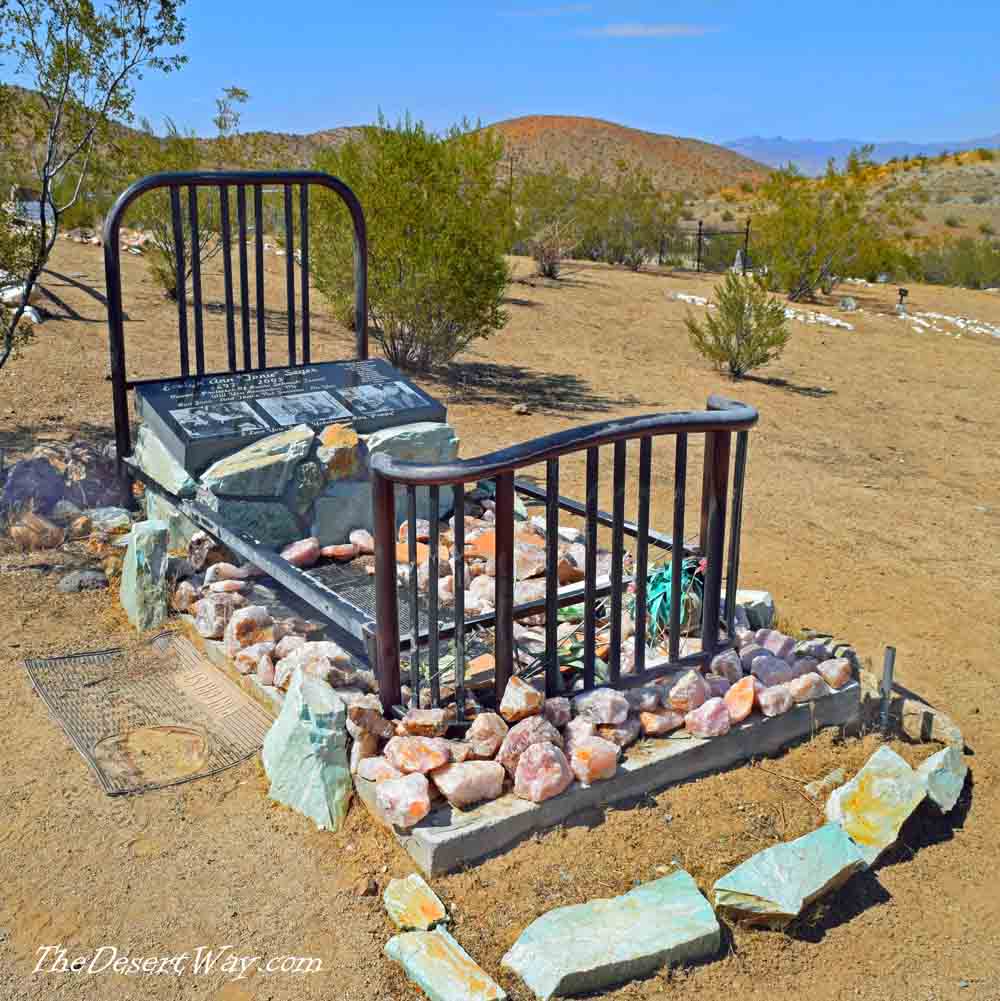
Collected at Rand District Cemetery are the final resting places of some five generations of dream chasers, miners, merchants, ranchers, freighters, madams, promoters, vigilantes, teachers, movers and shakers, loafers and busy bodies; most from somewhere else, from all over the world, all brought here by the winds of fortune, and caught, like nuggets, in holes in the ground.

Burro Schmidt, famous for digging a half mile tunnel through a solid granite mountain for 38 years, left his beloved town only twice in his lifetime. Little did he know as happenstance would have it that years after his death a widow by the name of Tonie would pay the ultimate tribute to the miner by protecting his legacy for the rest of her life, and spending eternity next to his grave…

Read More

Randsburg, California: Mine Blown

Just what keeps the memory of this old town alive more than a century after it was born in the midst of the mining boom of the 19th Century?

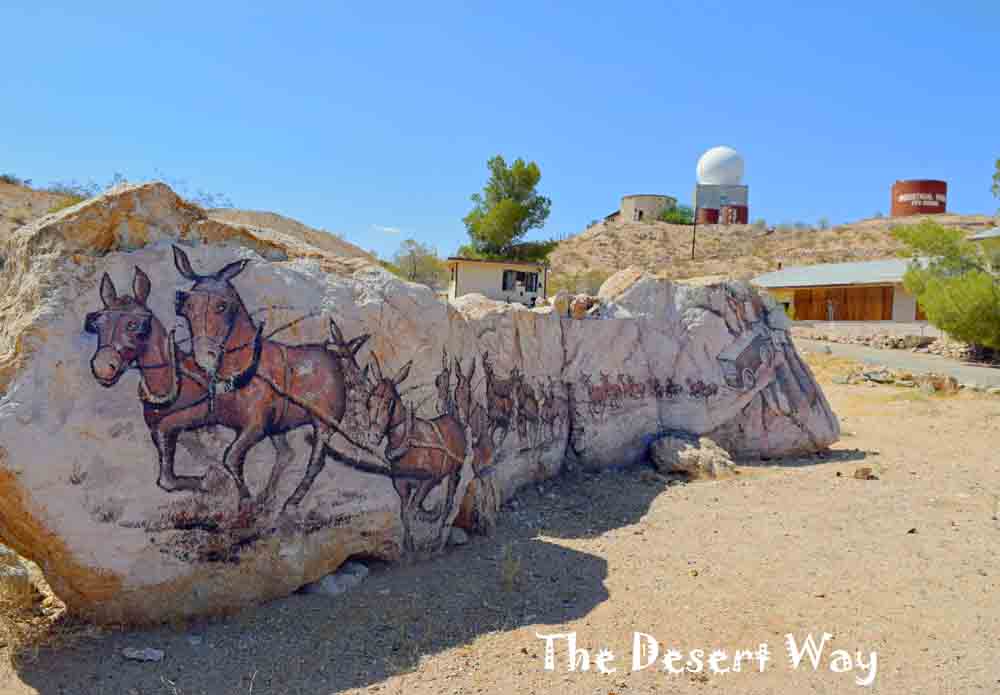
Walk down Butte Avenue and, in the middle of the block, you will surely find the answer at the Rand Desert Museum.

Founded in 1943 and given over to Kern County in 1948, the museum is the heart and soul of the old town…

Read More

Wilbur’s Grave: Death and Taxes in Belleville

Within two months of Holcomb’s discovery of gold in 1859, a town called Belleville sprang into existence at the entrance into Holcomb Valley, near the upper part of Van Dusen Canyon. It had a collection of stores, saloons, dance halls, and blacksmith shops. In 1860, the Wild West town lost its bid for county seat by a mere two votes.

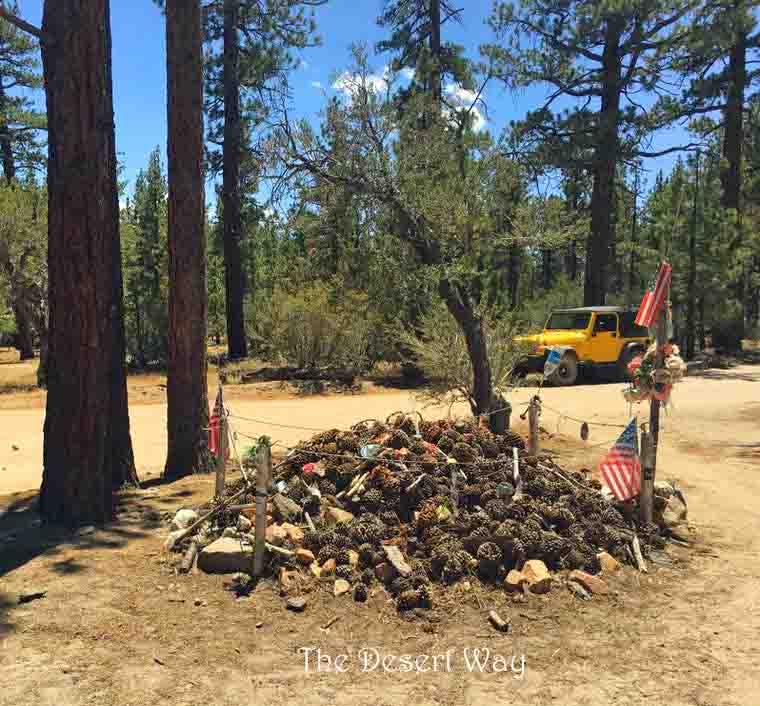
Charles Wilbur was the first tax assessor in San Bernardino County. He was also a gold placer miner who lived in the area around the mid to late 1800s. He was well liked among his fellow miners who lived in the area and they voted for him to organize the miners and the boundary stones. Before he died he asked to be buried by his favorite pond, Wilbur’s Pond, and they did as he asked…

Read More

Boron Federal Prison: Abandoned Club Fed

Minimum-security institutions such as Boron are often referred to as country club prisons or Club Fed; officially they are categorized as Security Level No. 1 institutions, the least guarded in the federal prison system. There were only seven such facilities in the country, and Boron was the only self-contained Level 1 institution in California. The prison had no walls, fences, bars, gun towers or guns. What could go wrong? Surprisingly, very little…

Read More

Elmer’s Bottle Tree Ranch: Kaleidoscope on Route 66

Visiting Elmer’s Bottle Tree Ranch is an experience for the senses. Not only are you mesmerized by the colorful bottles combined with antiques in creative ways, but there are soul-pleasing sounds to accompany it too.

Elmer told us his most beloved pieces are the ones he found with his Dad during his youth. One of his favorites is a handmade pitch fork Elmer found in 1959 or 1960 in a fallen down homestead near Edwards AFB, now at the top of one of his colorful displays.

Elmer’s Bottle Tree Ranch is not just another roadside attraction on Route 66. It has rightfully earned it’s designation as a destination in and of itself. Come see why this quirky slice of Americana and the humble artist who created it attracts people from all over the world…

Read More

Bagdad Cafe: Calling You to Route 66

For us and countless others, Jevetta Steele’s haunting lyrics from the song, “Calling You,” from the 1987 indie cult classic “Bagdad Cafe” will forever evoke the particularities of a small desert town on Route 66 contrasted with the vastness of the Mojave Desert. However, Bagdad Cafe was not actually shot in Bagdad. Not Bagdad, California, and not Baghdad, Iraq. The award-winning German film, directed by Percy Adlon, was filmed in Newberry Springs at the former Sidewinder Cafe, which decided to let the name “Bagdad Cafe” live on, drawing throngs of international tourists.

Read More

Ludlow Cemetery: Eternity Near the Tracks

Like so many pioneer towns in the Mojave Desert established by necessity for its connection to the railroads, Ludlow Cemetery is serenaded by the rumble of frequent trains.

The cemetery appears to have approximately 50 visible graves. All but three are marked by wooden crosses with no information. Only seven grave sites have been identified.

Ludlow was founded in 1882, brought about by the establishment of the Southern Pacific Railroad until May 4, 1897 when it became the Santa Fe Railway.

This was the main line and connection with Los Angeles…

Read More

Ludlow, California: More Than Ice Cream and Gasoline

Admit it. If you’ve traveled on the I-40 or Route 66, you’ve stopped for ice cream or gasoline. Maybe a corn dog.

The tiny ghost town of Ludlow, California is just off these long stretches of roads. You can’t miss it and if you do, you have miles to go before you can turn around.

We think Ludlow is the perfect little desert spot in the middle of nowhere. Ludlow is home to quite a few abandoned ramshackle houses and countless rusted cannibalized vintage cars. Ludlow even has its own pioneer cemetery. Like many ghost towns, what Ludlow has the most of is a wealth of history.

You could say Ludlow has it all…

Read More

Heat in the West at Roy Rogers Double R Bar Ranch

It was hellishly hot, it was sweltering, it was blazing. Well, you get the idea. It was just summer in the Mojave Desert. The real heat in the real desert.

The sizzle flavored all the things a good western exemplifies. Man against nature. Man against man. Women against men. Horses against…

Wait, I think I spotted a running theme.

Intrigue, drama and laughter.

Yes, plenty of laughter…

The movie is currently in post-production. In the meantime, we’ll give Heat in the West more buzz than an angry tarantula hawk…

Read More