The U.S. Army officer slowly banked his 1940 Stinson Voyager to the left and readied it for a rough landing on the dirt runway. The small 80 horsepower airplane always got a workout during the many flights made by this solder while he surveyed the land below him during a hot summer. A cavalry officer by training and preference, this two-star general was now a confirmed tank driver, and deserts of the Southwest United States, as seen from the air, convinced him that it was just perfect for the needs of the Army.
A living hell on earth school of warfare. The perfect place to train green troops. George S. Patton Jr. was living his destiny.
Born into a wealthy and politically powerful California dynasty on November 11, 1885, George entered the world already surrounded by the echoes of battle. His childhood was steeped in classical military lore and family legends of warriors who carved their names into history.
Even as George wrestled with dyslexia, he possessed a razor‑sharp memory and an almost prophetic sense of destiny, driving him with relentless intensity toward one goal: to become a military legend in his own right. It was a far cry from the large ranch in San Gabriel of his youth.
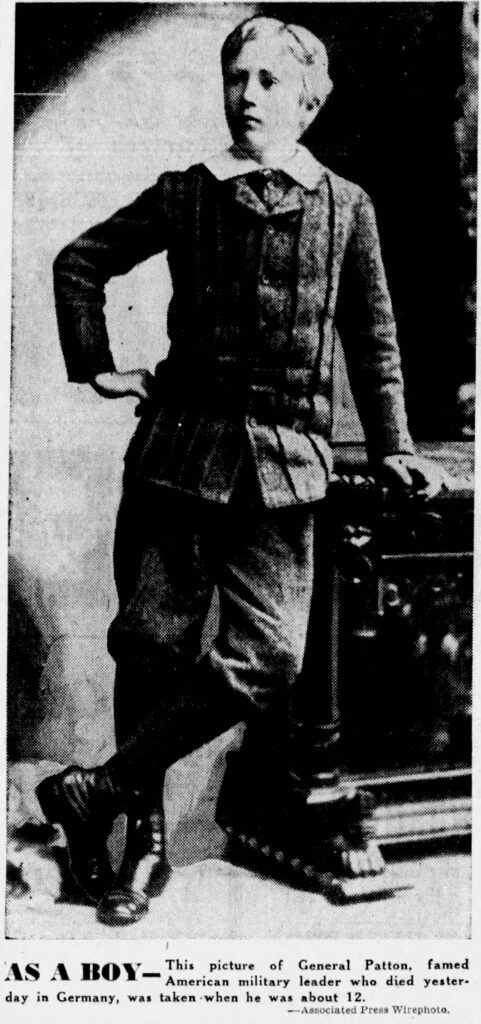
San Francisco Examiner, Dec. 22, 1945
The Desert Training Center (DTC) was established by General George S. Patton in 1942 and consisted of 11 to 13 main divisional camps across California and Arizona, along with several auxiliary camps. Over 1 million men trained in these 18,000-square-mile desert locations to prepare for World War II. The availability of water at the Desert Training Center was one of the main reasons Patton selected the area and placed camps accordingly. The prevailing school of thought some 80 years ago was that water was to be rationed to the warriors, but tanks and trucks needed the precious liquid to function.*
*Side Note: After World War Two, and especially during Operation Desert Storm in 1991, common sense gave water priority to the warriors. This, when a review of After Action Reports (AARs) showed the large number of troop deaths due to dehydration.
The mission of the DTC was to train United States Army and Army Air Corps (Today’s U.S. Air Force) units and personnel to live and fight in the desert, to test and develop suitable equipment, and to develop tactical doctrines, techniques and training methods.
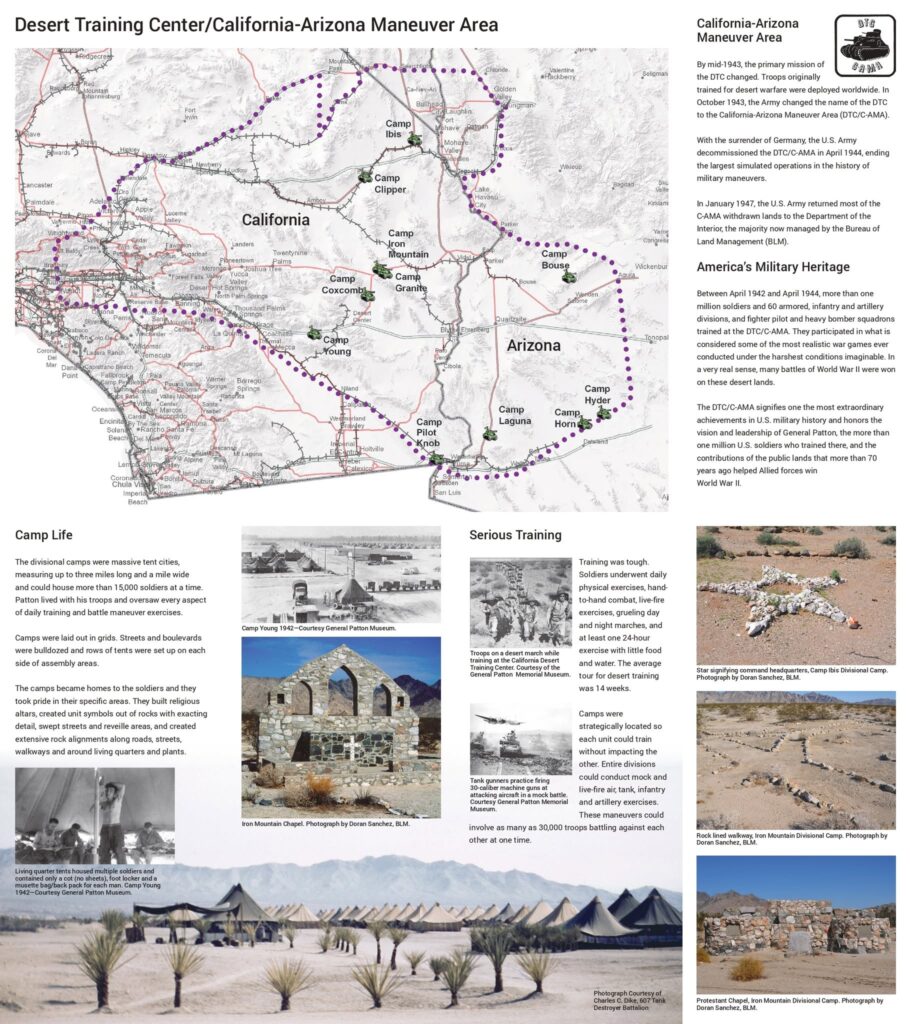
Photo courtesy of General Patton Memorial Museum
Even though General Patton only stayed at the DTC just long enought to get it up and running, it was a key training facility for units engaged in combat during the 1942–1943 North African campaign. It stretched from the outskirts of Pomona, California eastward to within 50 miles of Phoenix, Arizona, southward to the suburbs of Yuma, Arizona and northward into the southern tip of Nevada.
This simulated theater of operation was the largest military training ground in the history of military maneuvers. A site near Shavers Summit, now known as Chiriaco Summit, between Indio and Desert Center, was selected as the headquarters of the DTC. The site, called Camp Young, was the world’s largest Army post.
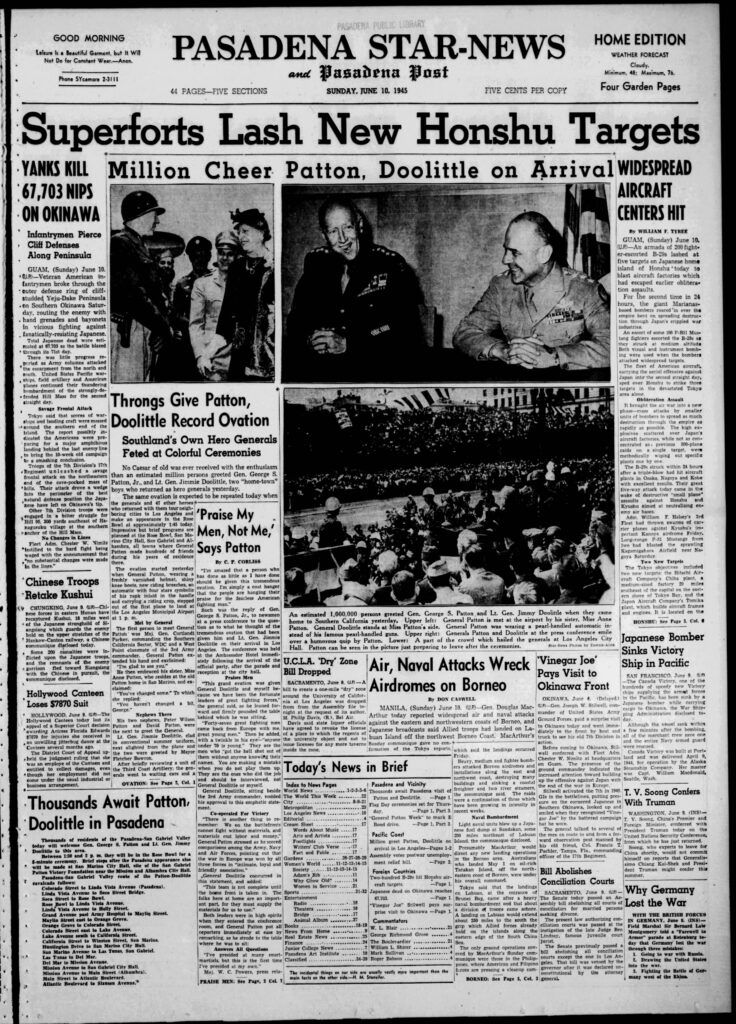
Pasadena Star-News, June 10, 1945
Major General George S. Patton Jr. stormed into Camp Young as the inaugural commanding general of the Desert Training Center, bringing with him the force and urgency of a man who knew war was closing in fast. A son of southern California, Patton understood the desert not as an empty expanse but as a proving ground—shaped by his childhood memories and hardened by the Army maneuvers he led across the Mojave in the 1930s.
His first mission was nothing short of monumental: to scour the vast desert and carve out additional training grounds capable of hosting the massive, punishing maneuvers needed to forge American soldiers into a fighting force ready to face the German Afrika Korps in the unforgiving sands of North Africa.
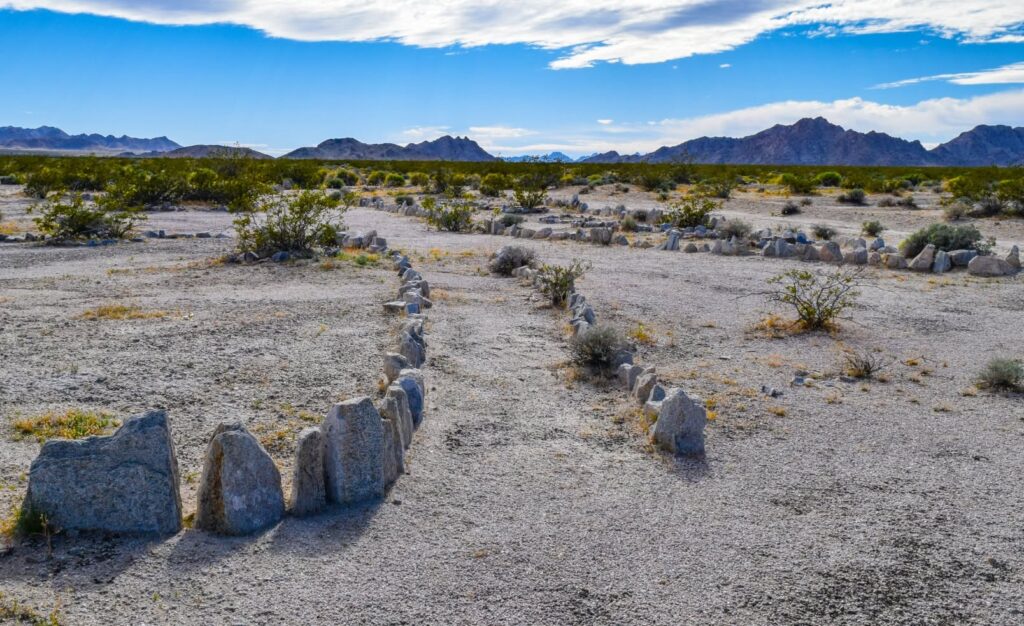
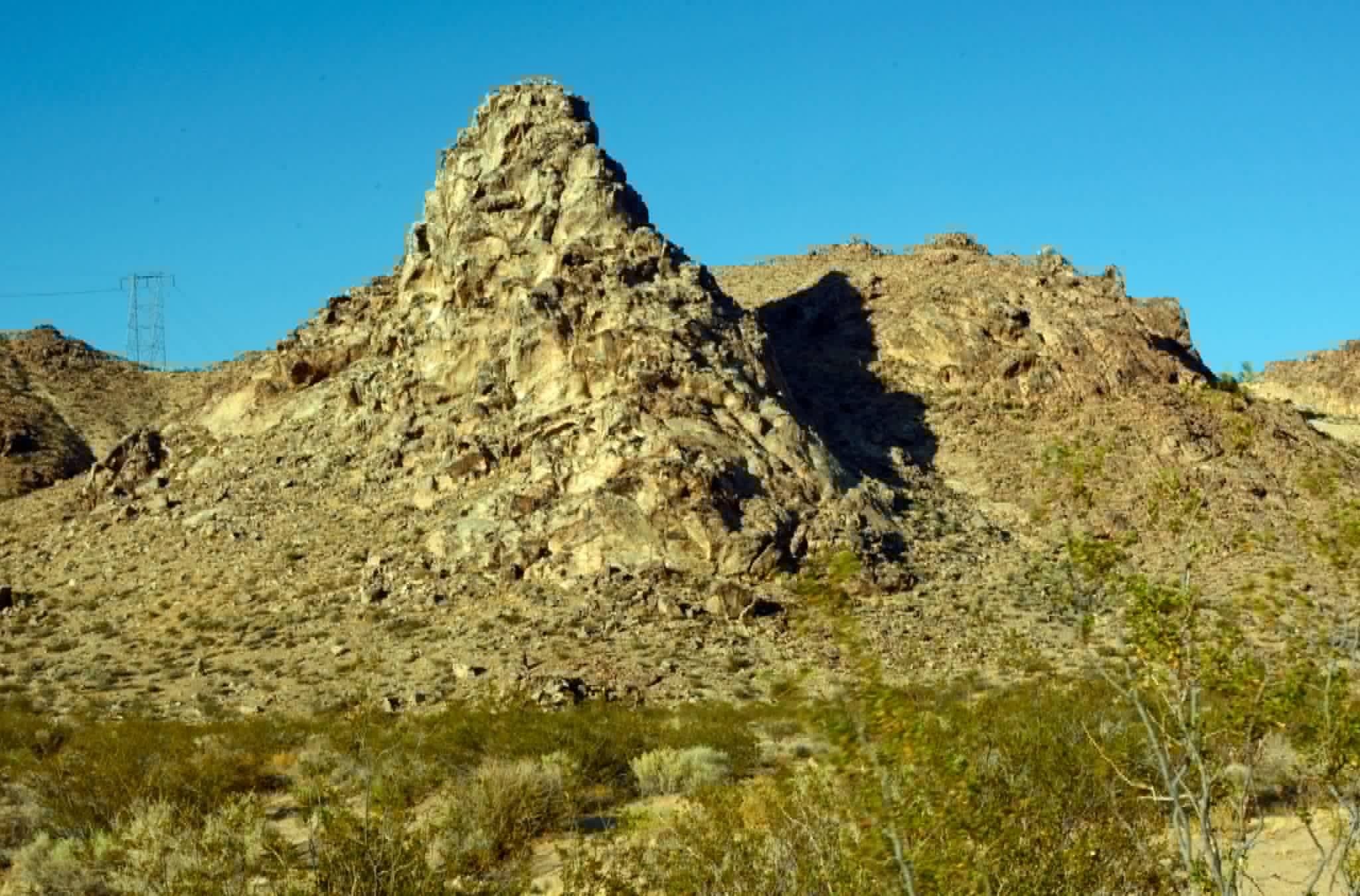
Camp Iron Mountain. On a quiet day, if you listen carefully, you can almost hear the GIs from 83 years ago, complaining about the conditions here. Complaining, as many of us know from personal experience, is the God-given right of every soldier or Marine in the field.
The photograph below comes from the General George S. Patton Memorial Museum in Chiriaco Summit, standing on the very soil where Camp Young once pulsed with wartime urgency. In 1942, this was Patton’s nerve center—his headquarters at the heart of the Desert Training Center, where he forged an army for a new kind of war.
Today, that same ground bears a different mission: a museum raised in tribute to a commander whose presence still seems to echo across the desert. Many regard him as one of the greatest, perhaps the greatest, combat general in American history, and this place preserves the intensity, ambition, and legacy that defined him.
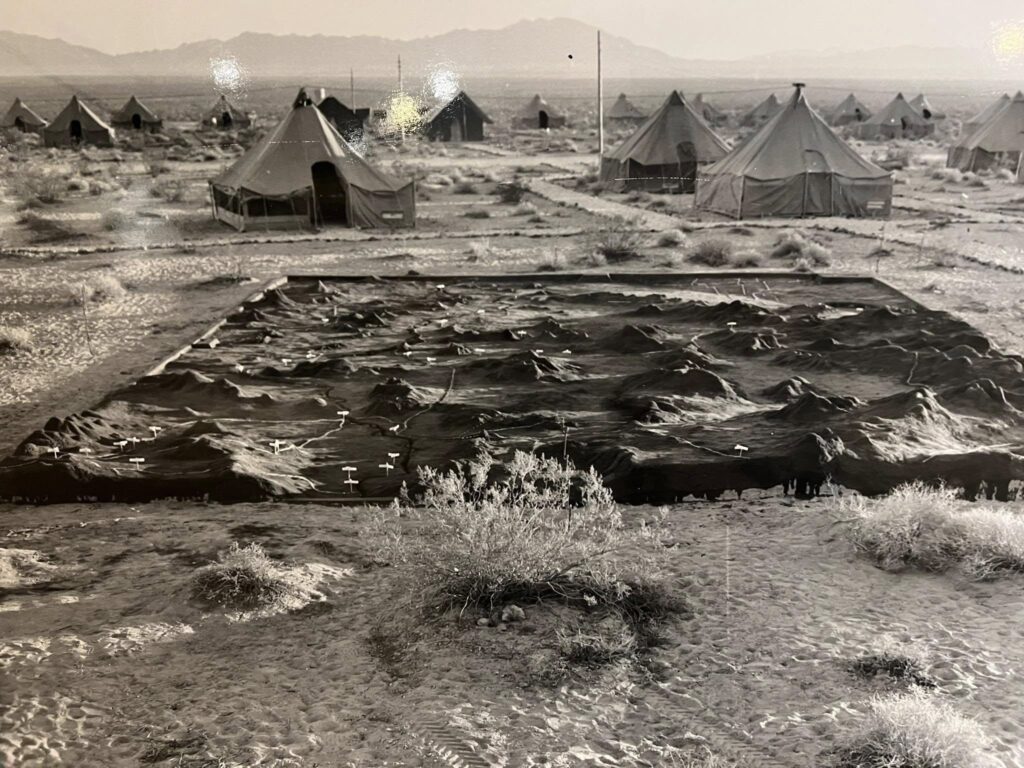
The museum stands as a tribute to the warriors, volunteers and conscripts alike, who carved out a temporary home in this harsh stretch of desert during the war years. What began as a barren expanse transformed into a vast military complex of 13 divisional camps, supported by a network of railroad sidings, ammunition dumps, hospitals, airfields, and quartermaster depots.
By May 1943, the tide had turned: the German Afrika Korps was defeated, and the urgent need for desert warfare training faded. Yet the legacy of those who trained here still lingers in the sand and wind.
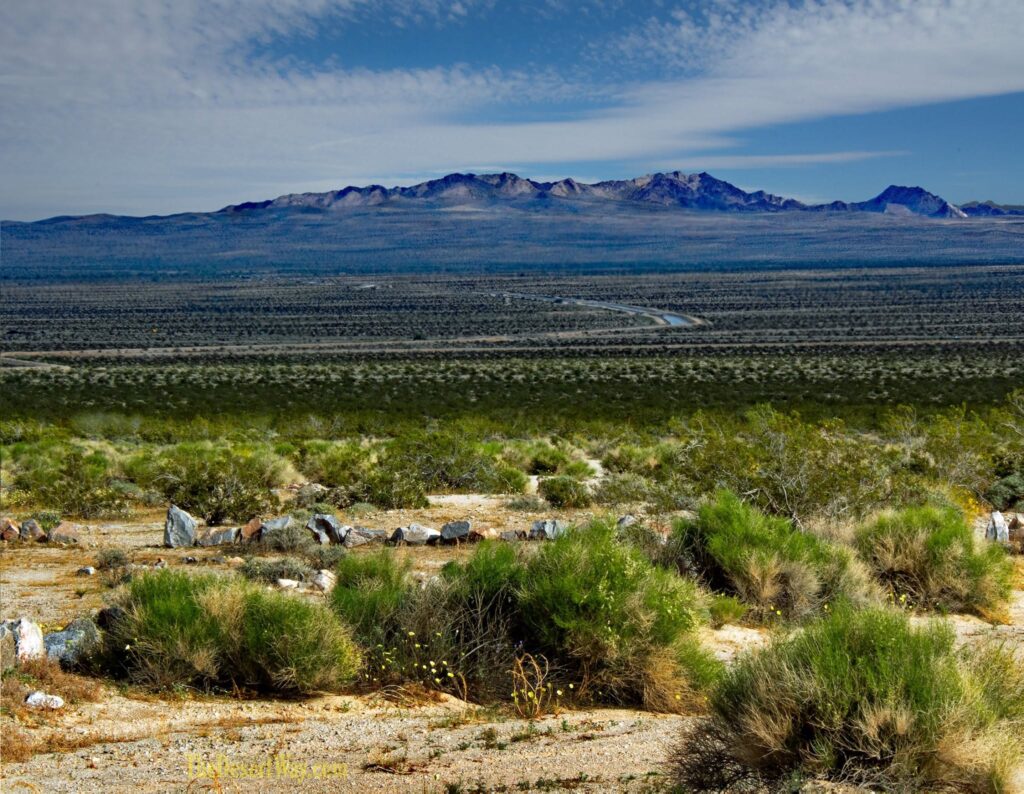
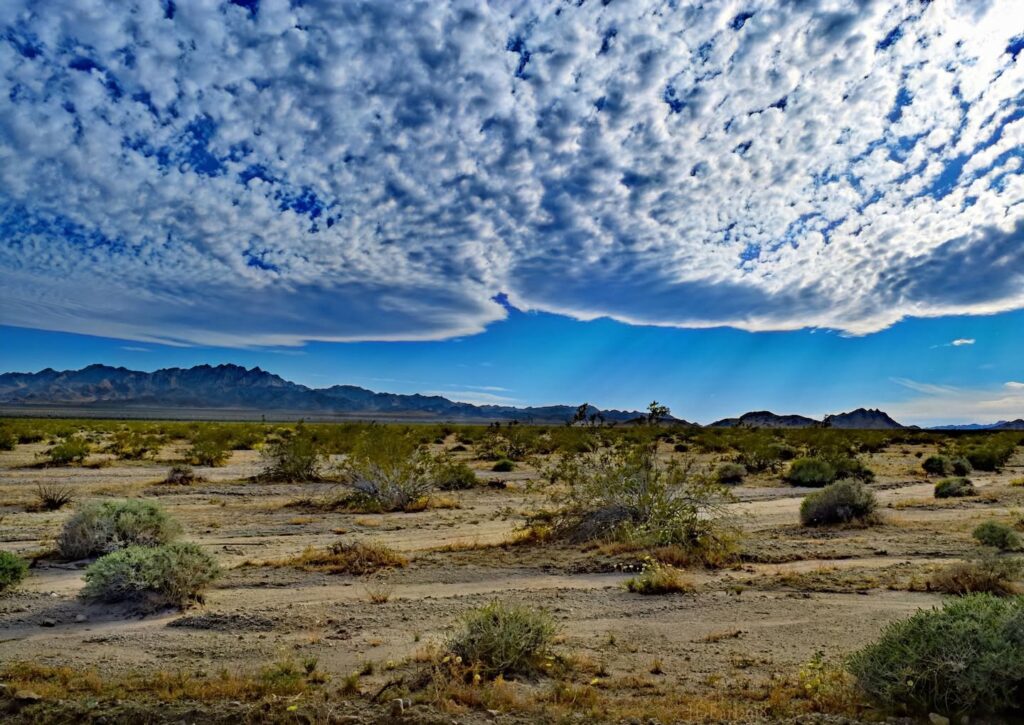
Turtle Mountain off in the distance from Camp Iron Mountain. Once upon a time when soldiers, many from the Eastern United States, had this view while training under the command of General Patton and those who succeeded him. For city boys used to concrete jungles, this must have been a surreal view. In fact, I have known hard-core Staten Islanders who are terrified of open desert. A completely alien experience.
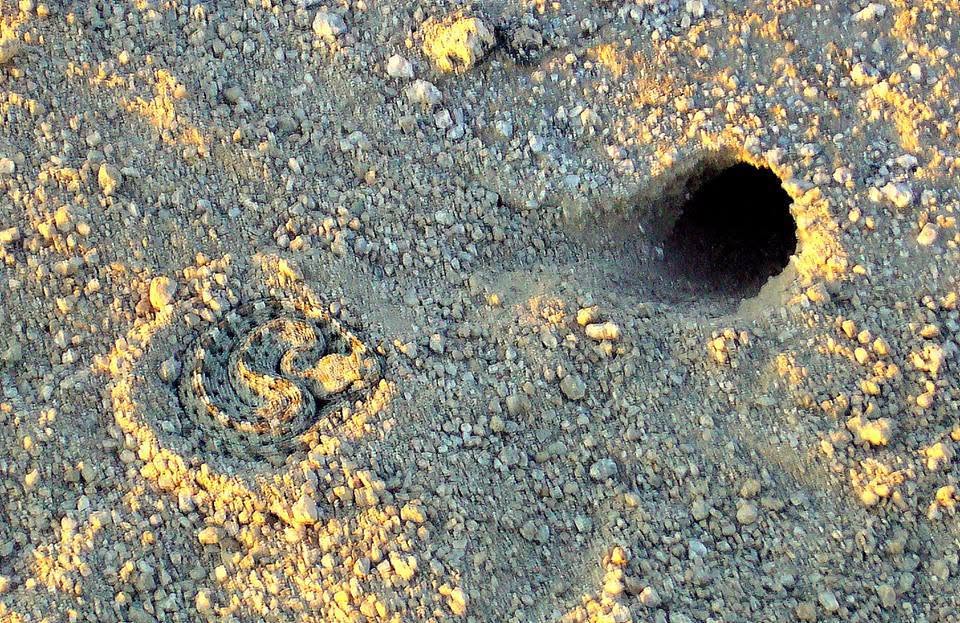
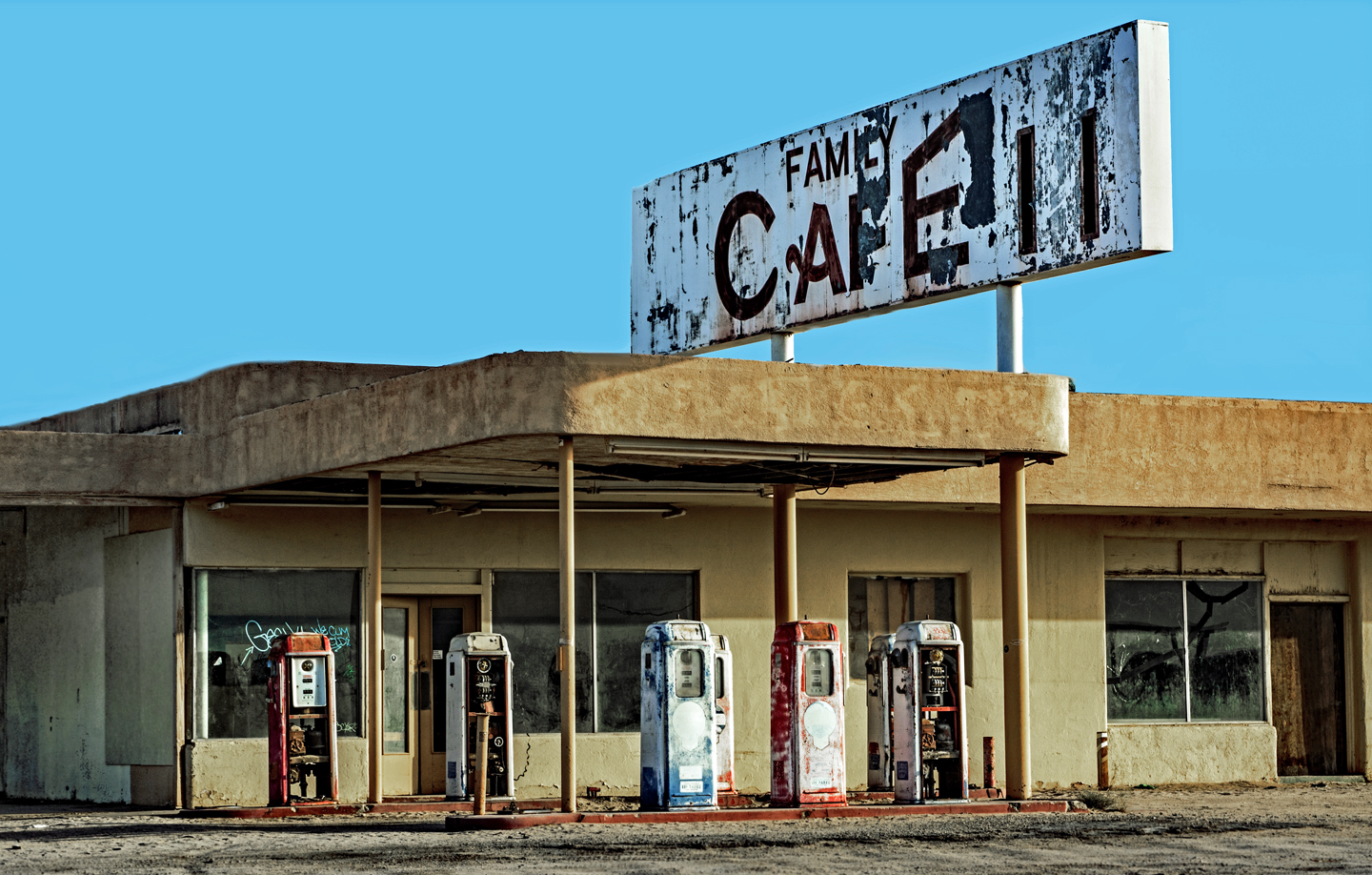
One of the few remaining occupants of the Desert Training Center.
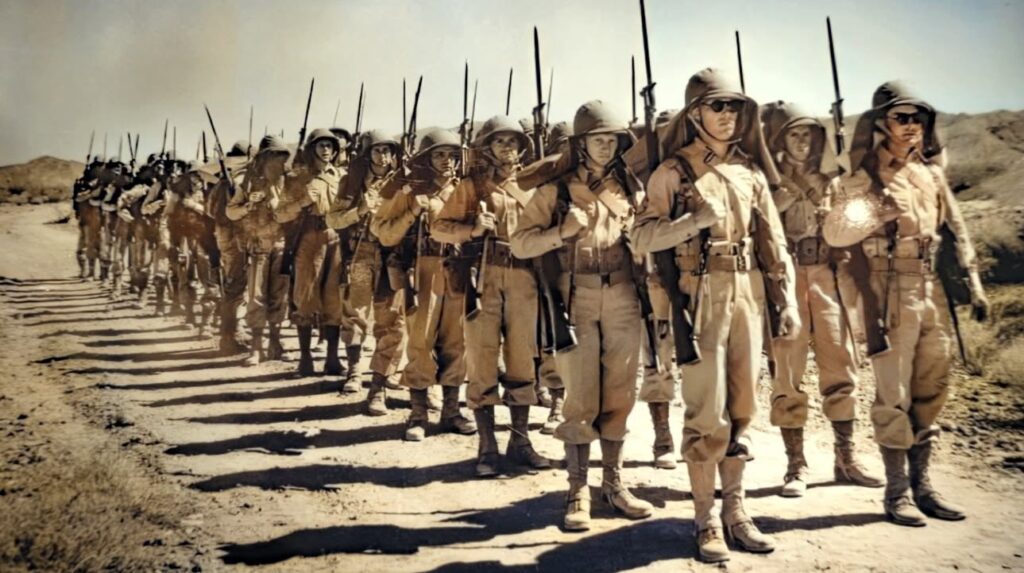
Soldiers on an outing at the Desert Training Center in 1942. On their way to a picnic area for a day’s fun and relaxation in the sun. To “catch a few rays,” as Odd Ball so succinctly stated in the war comedy, Kelly’s Heroes. Only part of this statement is correct when appled to the DTC. Sunglassses were a rarity so long ago, and only appeared among reconnaissance troops and pilots on limited basis. Even today they are not required wear, unless on orders from above. Commander’s orders!
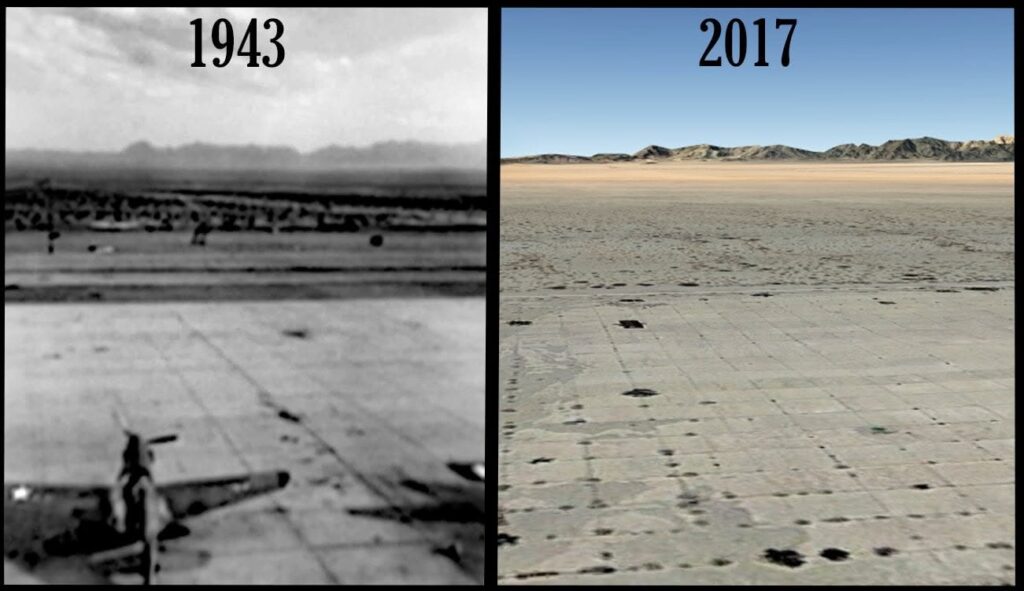
In this now quiet place in the desert, once there was a man and his Army. Patton’s Desert Training Center. Here, Rice AAF, then and now. Pilots and crews used the airfield for advanced training before deployment. The base housed over 3,000 officers and enlisted men, and had barracks, latrines, showers, mess halls, and operations buildings.
Rice AAF had two 5,000 foot long V-shaped runways. As part of the combat training, the Army Air Force and the Army Service Force were included, serving as support to Army Ground Forces.
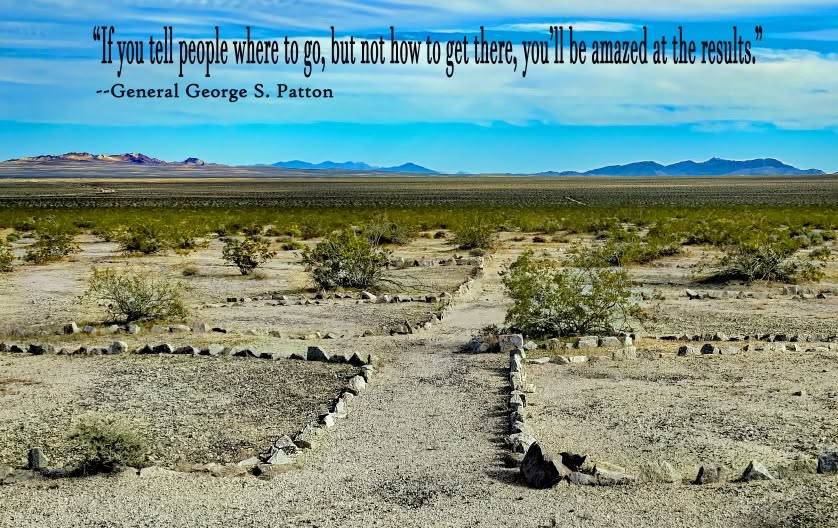
Camp Iron Mountain, part of the Desert Training Center. General Patton selected this and other sites for realistic training. He told them where to go, and they did. We can all be thankful for that.
A trip to the Desert Training Center always includes the deep, raspy and commanding voice of George C. Scott as General Patton playing in my head. The fact is that the real General Patton had a high pitched, scratchy voice, more akin to Deputy Barney Fife.
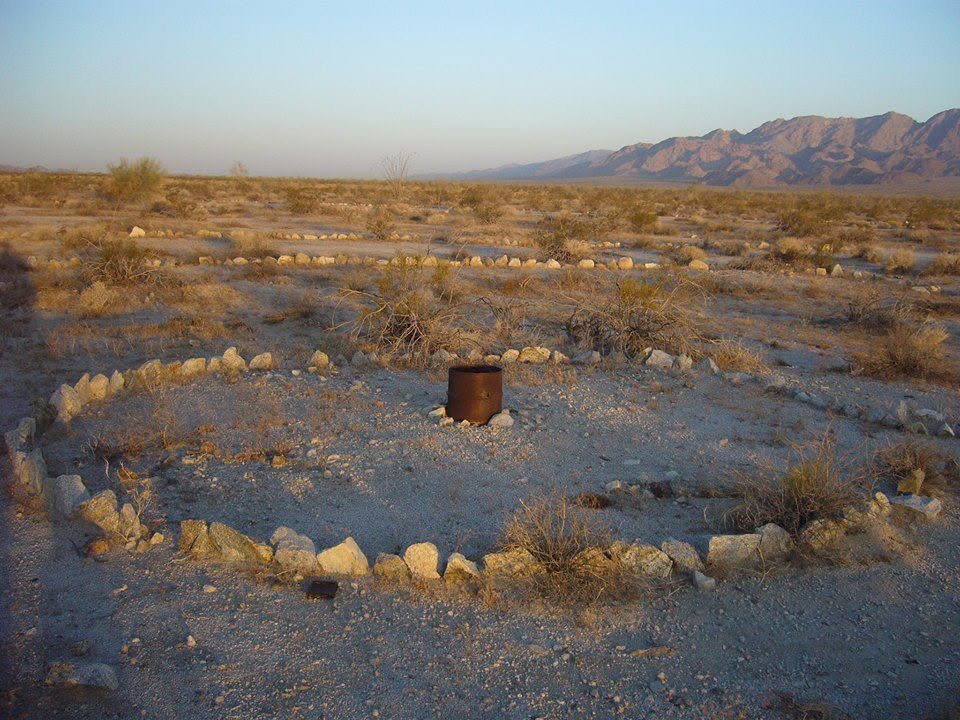
The rocks that outlined the many tents from 75 years ago, put there by troops during their free time, and the church alter still remain today. Drive by with a bit of reverence. Something great once happened here.
Still, it can be successfully argued that General Patton was the greatest military leader to come out of West Point, and he appreciated a good desert when he saw one. As we all know, the Mojave and Sonoran/Colorado Deserts are best in the west. Okay, they’re almost the only ones in the west, but who’s counting?
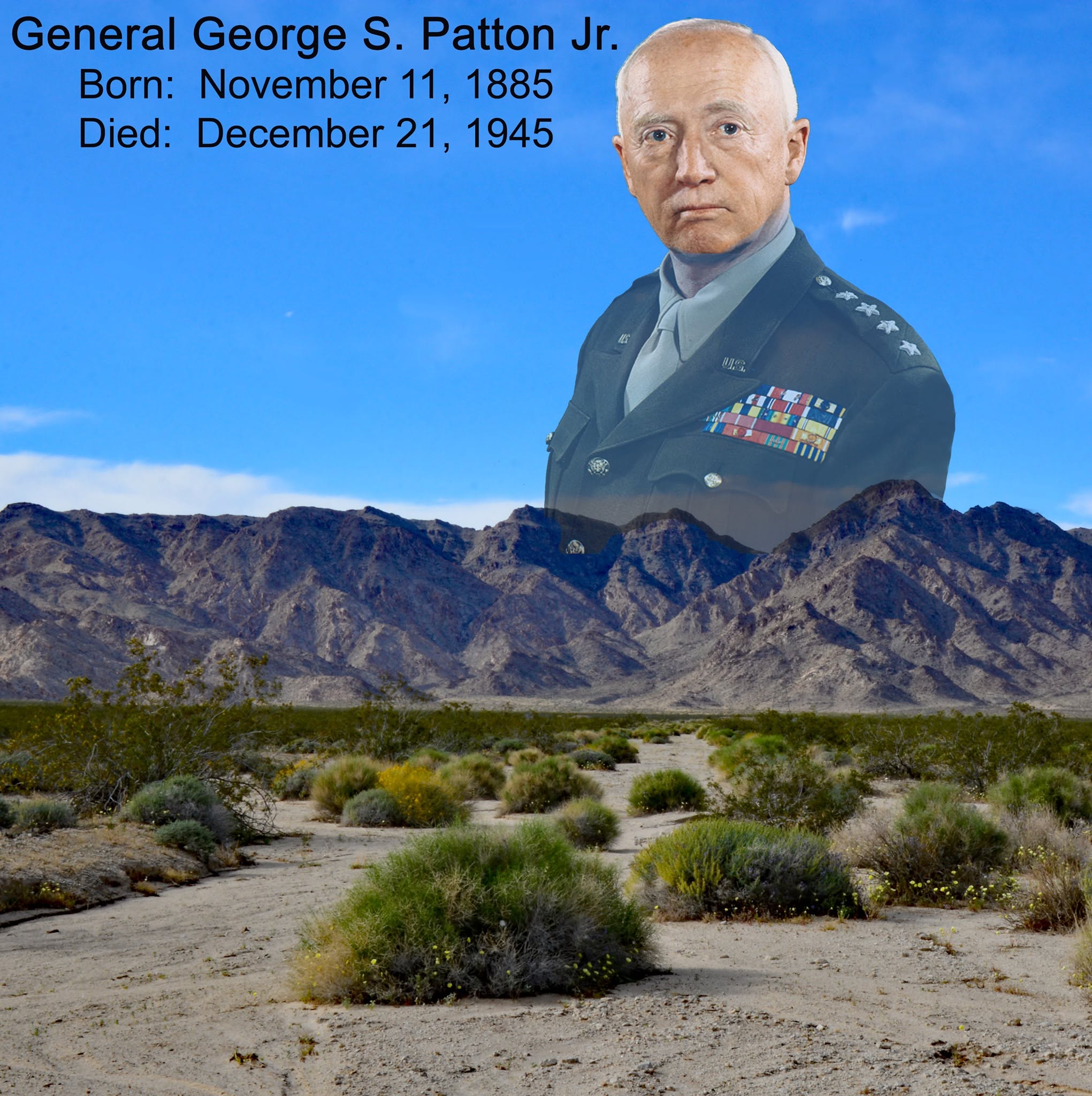
General Patton Jr. died under what many say are mysterious circumstances, just months after leading the 3rd Army across Europe, and into the heart of a defeated Nazi Germany.
General George S. Patton’s life ended on December 21, 1945, in a way as sudden and violent as the battles he commanded. Twelve days earlier, his staff car collided with an Army truck on a cold morning outside Mannheim, Germany. The impact snapped his neck, leaving the legendary general paralyzed—an unthinkable fate for a man who had spent his life in relentless motion.
Patton fought the injury with the same ferocity he brought to every campaign, but even his iron will could not turn the tide. A pulmonary embolism claimed him in his sleep, closing the final chapter of a commander whose presence once felt larger than the war itself.
The ordinary nature of the crash that ended the life of such a towering wartime commander has only intensified the mystery surrounding it. Patton’s death in a slow‑moving, almost trivial accident felt jarringly out of step with the ferocity of the man himself, and that contrast has fueled decades of speculation. In the void left by an ending so mundane, rumors and assassination theories have flourished, casting a long, dramatic shadow over his final days.
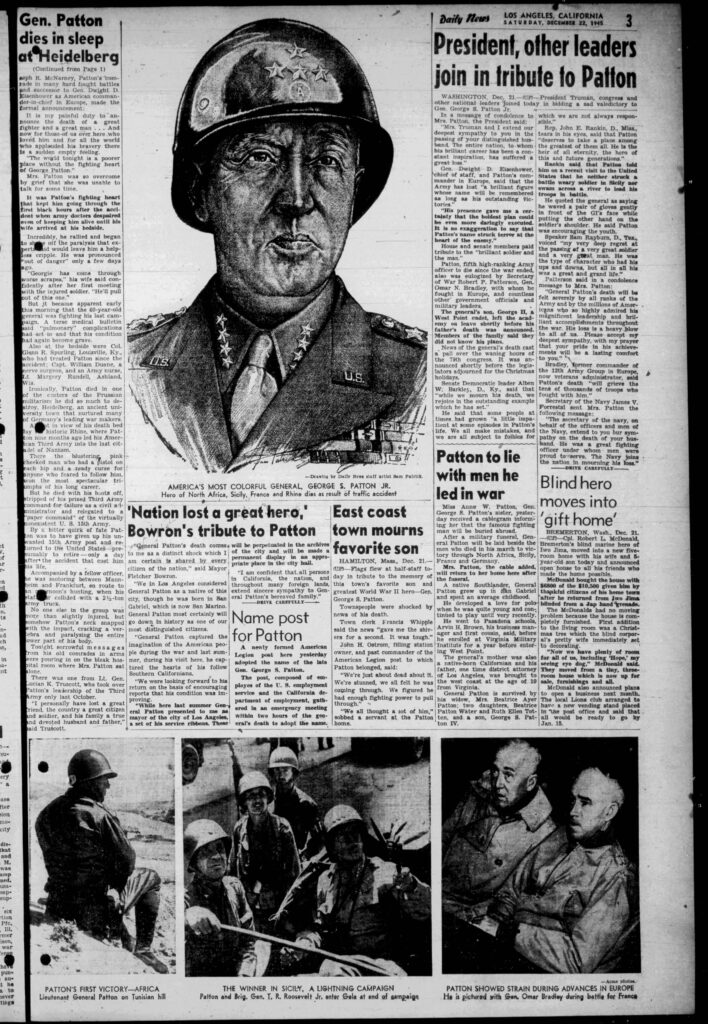
Daily News, Dec 22, 1945
General George Patton was controversial to be sure, and not without his faults. One point that is beyond dispute, and readily agreed upon by both Allied and Axis war fighters was this, General George S. Patton, could fight, and his enemies, both foreign and domestic, feared him.
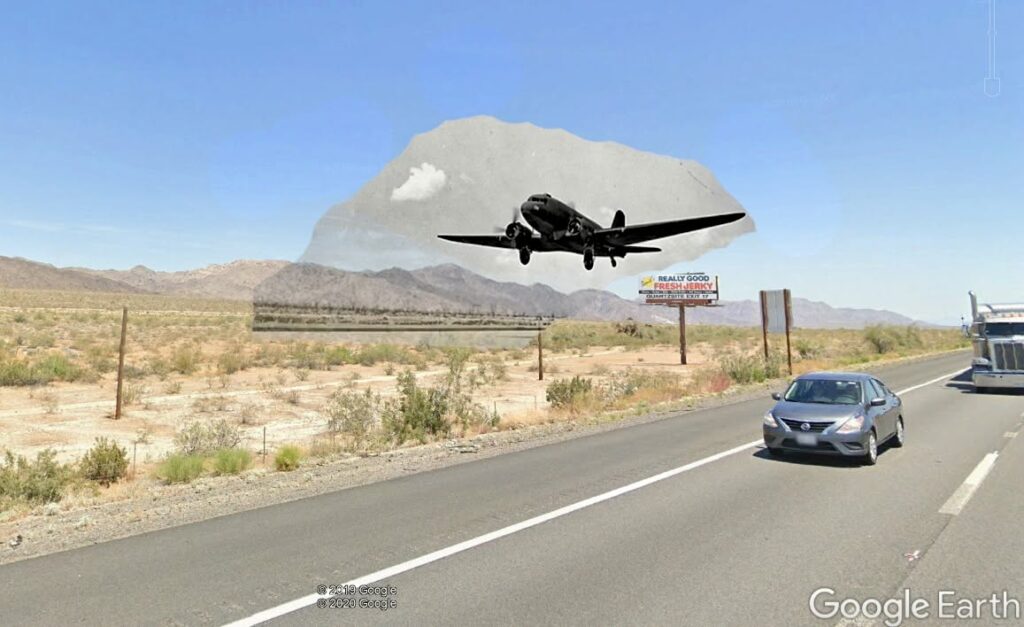
A composite depicting a DC-3, known to the military as the C-47, comes in for a landing at the Camp Young Army Airfield sometime in 1943, juxtaposed above the modern interstate and vehicles.
Little known to most modern travelers on Interstate-10 nowadays, they are driving alongside what used to be one of the most important airfields in the country for a moment in time. Today we know it as Chiriaco Summit and the George S. Patton Museum. It was the General’s headquarters, 83 years ago.
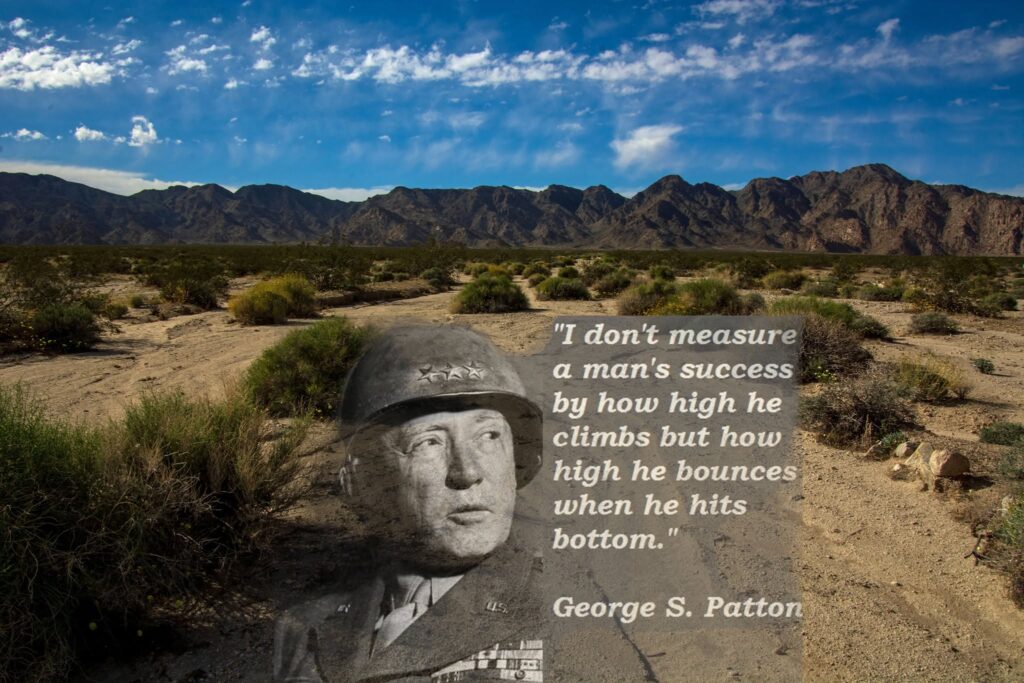
U.S. Army General George S. Patton’s Iron Mountain Divisional Camp, about an hour east of the Marine Corps Air Ground Combat Center in 29 Palms.
Here, in 1942, the greatest military force in history came into existence to fight a threat to the USA. The General was tough, vulgar, willing to fight anyone, anytime, anyplace and held a belief in a divine presence that compelled him to win battles at any cost. The right man for the job, and at the right time.
Now we’re faced with another outside threat, and the General would likely agree that the measure of us all is not that we got knocked down, but that we got back up again and kept on fighting.
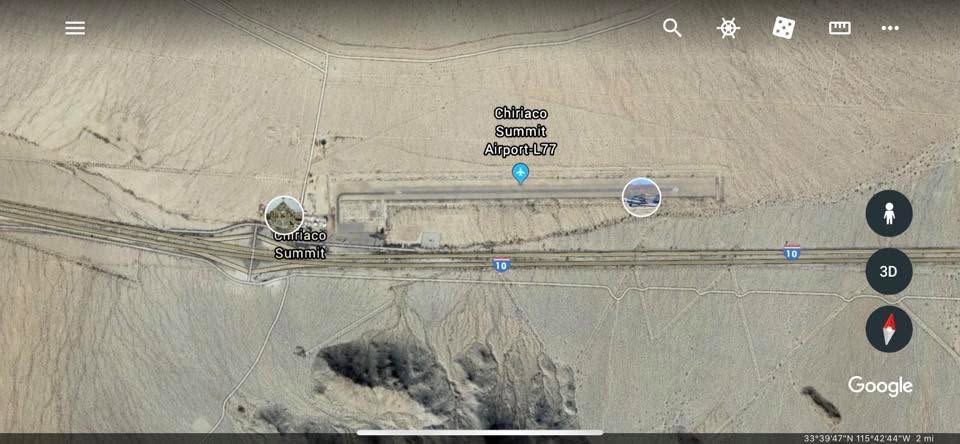
Map courtesy of Google.
Though General George Patton spent less than four months at the Desert Training Center, his establishment of the training grounds directly impacted more than one million troops.
General George S. Patton Jr. never met Field Marshal Erwin Rommel in direct combat, yet their strategic contest became one of the most remarkable episodes of the North African campaign.
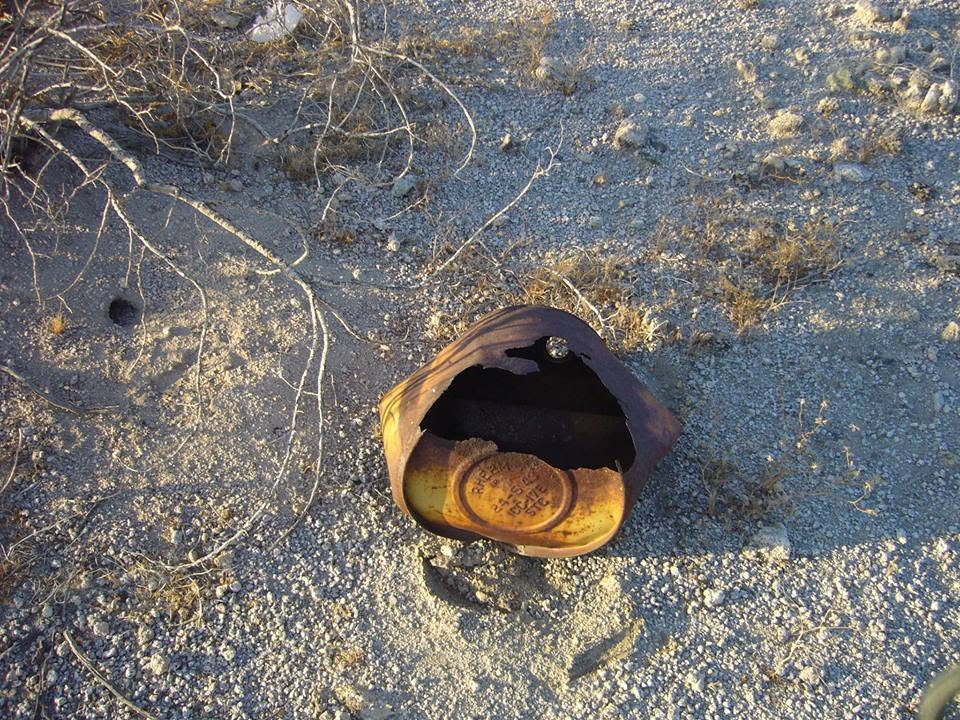
If you zoom in on the bottom of this oil can you can see the stamped fill date of 24-5-43 left over from the Desert Training Center.
Through deception operations, fabricated radio networks, silent troop movements, and one audacious display of force, Patton compelled Rommel to react to an army that, in many cases, existed only in signals and sand.
Historians often describe it as a “ghost war,” a contest of wits fought through misinformation rather than firepower.
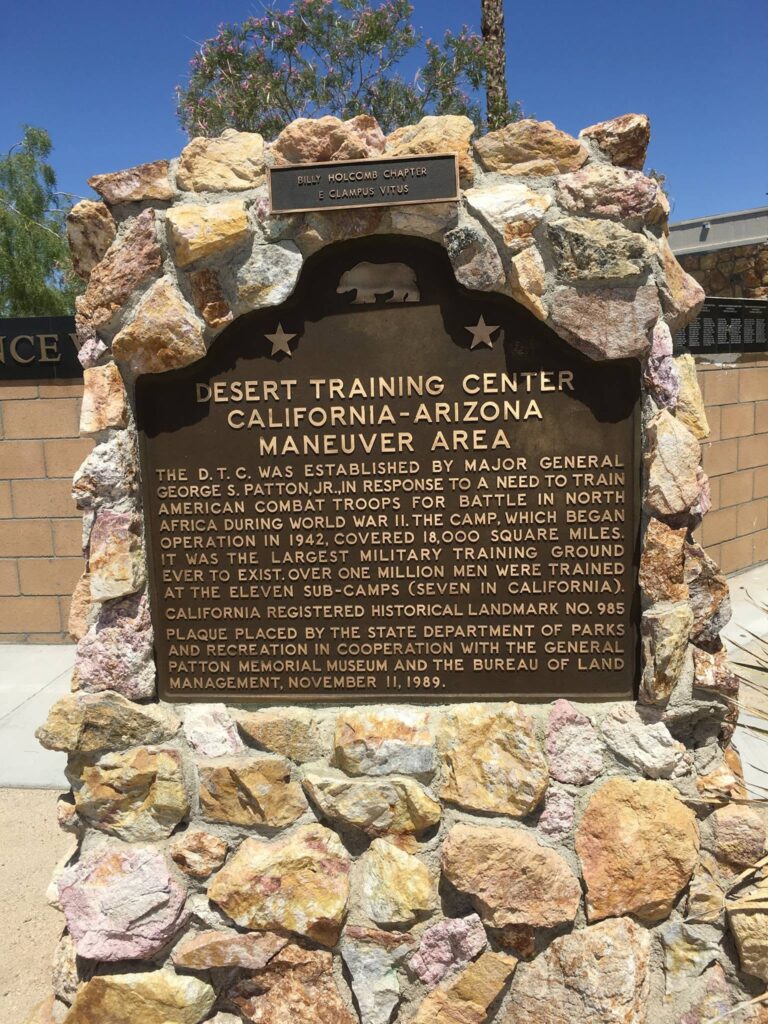
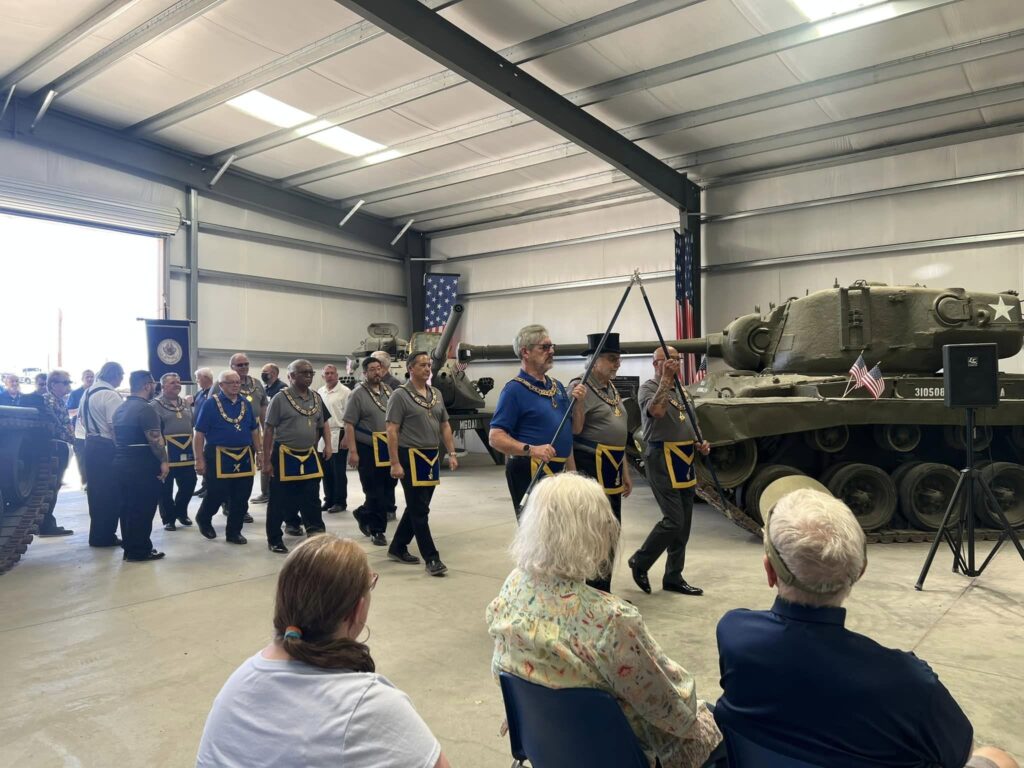
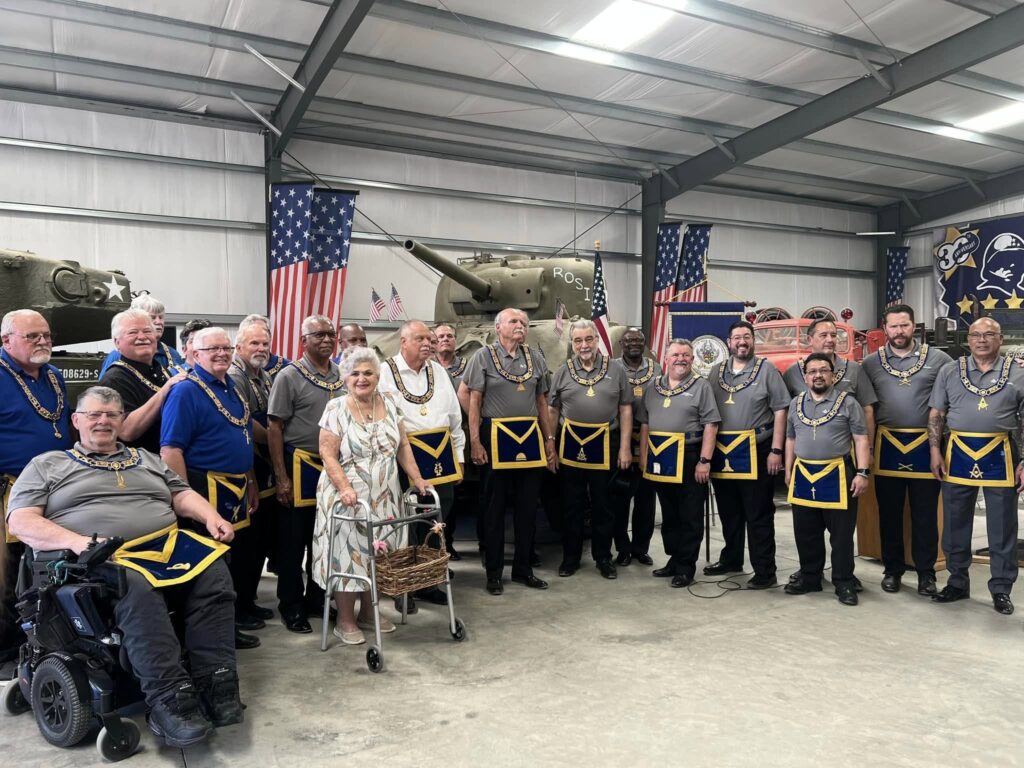
We were honored to be invited guests at a Masonic Cornerstone Laying Ceremony on April 26, 2023, at the General George S. Patton Memorial Museum in Chiriaco Summit, a moment that connected living tradition with historic ground.
On that same day, Masonic groups and Grand Lodges across the United States performed their time‑honored cornerstone laying and rededication rites, echoing a practice that stretches back centuries. These ceremonies, built around the symbolic acts of squaring, leveling, and plumbing a foundation, reaffirm the Masonic commitment to integrity, stability, and moral architecture.
The museum was first conceptualized in 1985 by Margit Chiriaco Rusche, pictured here, daughter of Joe and Ruth Chiriaco, and Leslie Cone of the Bureau of Land Management, the agency that manages the land upon which the training center existed.
The founders obtained the old Coachella DMV office and moved the building to the museum site on land donated by Rusche’s parents.
The museum opened to the public on Nov. 11, 1988, on Patton’s 100th birthday. The remembrance walls at the museum’s entrance were funded by WWI and WWII veterans, who purchased custom-engraved bricks to honor those who served.
One of the museum’s most dramatic centerpieces is a colossal topographical relief map crafted by the Metropolitan Water District in the 1920s. Stretching across 50,000 square miles of Southern California, the model rises and falls like a frozen landscape, an ambitious, three‑dimensional vision built not just to impress, but to persuade.
It was the centerpiece of a bold campaign to convince Congress to fund the Colorado River Aqueduct, a project that would transform the destiny of an entire region.
Outside the museum, you will find a tank yard showcasing military hardware, including WWII and Korean War-era tanks like the Sherman and Stuart.
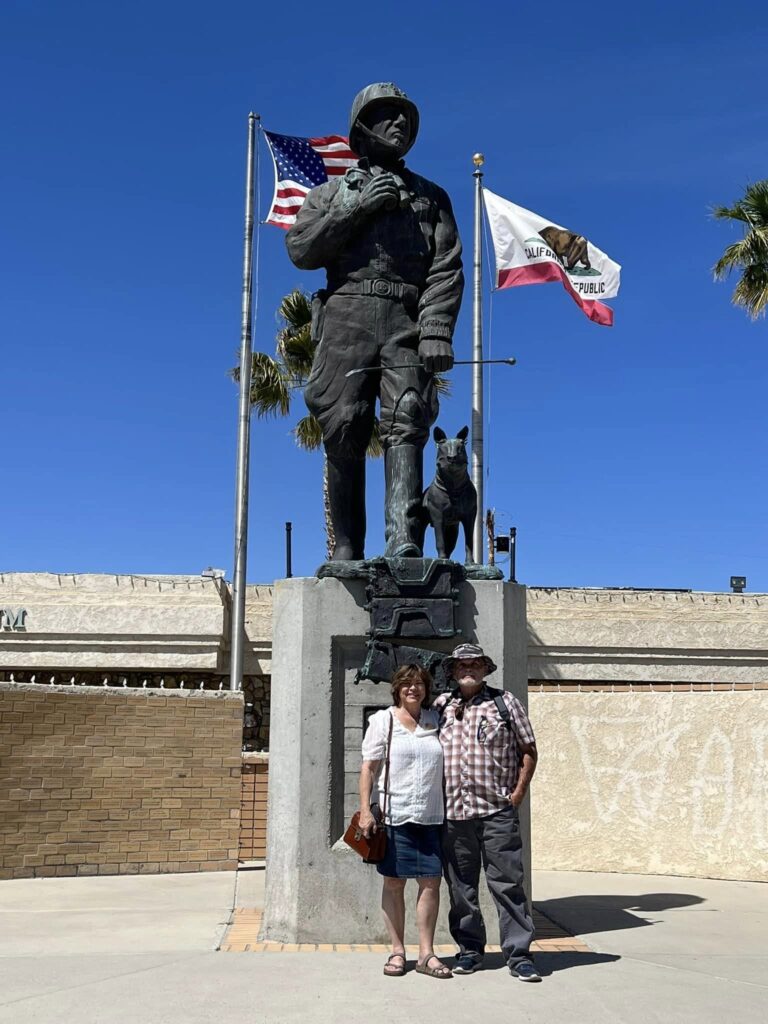
The General George S. Patton Memorial Museum in Chiriaco Summit off Interstate 10 is built on the site of the entrance of Camp Young, part of the Desert Training Center of World War II.
The museum is located at the Chiriaco Summit exit of Interstate 10, 30 miles east of Indio. The General George Patton Museum of Leadership is a museum in Fort Knox, Kentucky, the original home of the U.S. Army’s armored and cavalry schools.
Note: Topmost photo by Robert Earl. Additional photos, except those attributed otherwise, are by Jaylyn and John Earl.
Recommended Resources
General Patton Memorial Museum https://www.generalpattonmuseum.org