Cadiz Summit didn’t just sit on Route 66, it perched there, like a stubborn outpost daring the Mojave to knock it down. Cadiz (pronounced Kay-deez) was one of a series of alphabetically named railroad stations built across the Mojave Desert; Amboy, Bristol, Cadiz, Danby, Essex, Fenner, Goffs, Homer, Ibis, Java, Khartoum and others. The Arizona Southern Railroad completed its line to Cadiz in 1910, establishing a junction with the Santa Fe Railroad. This made Cadiz the first railroad agency station west of Needles.
In its prime, Cadiz Summit, 18 miles southwest of Essex, hit you before you even rolled to a stop: the heat shimmering off the ridge like a mirage, the Mobil sign rattling in the wind and a 1928 garage standing there like an old cauliflower earred prizefighter who refused to retire.
For forty‑four years, Cadiz Summit passed from one set of hands to the next, mechanics, cooks, couples chasing a dream, families trying to make a living on a ridge the desert never fully surrendered. Each owner patched the roof, hauled the water, kept the pumps alive, and held the line against heat that could buckle steel and winds that could strip paint to bone.
Travelers came and went in waves. Dust‑coated truckers, overheated tourists, soldiers on leave, families chasing the promise of California and the Summit fed them, cooled them, fixed their engines, and sent them back onto the highway with a little more hope than they arrived with.
It was never a fortune, never easy, but for nearly half a century it was a lifeline in the middle of nowhere, kept alive by whoever was willing to stand between the Mojave and the motoring world.
Tom Morgan opened Cadiz Summit in 1928 with the steady confidence of a man who’d already learned how to survive the Mojave. He’d run the general store in Amboy with Frances and their three kids, so he knew the rhythm of desert travelers: the overheated radiators, the dust‑choked engines, the families chasing California with more hope than preparation.
When he unlocked the door of the new structure, that first morning on the ridge above Cadiz Valley, the place felt raw and new, boards still smelling of sawdust, pumps gleaming under a sun that would soon try to melt them. The road below hummed with early traffic, and Tom stood there with his hands on his hips, watching the first car climb the grade toward him.
Frances was the quiet backbone of the whole operation. She’d already run the Amboy store with Tom. The Morgans came with emotional baggage and not much cash. In 1927 in Amboy, The fire that took Tom Morgan’s Amboy store wasn’t just a setback; it was the kind of blow that changes the trajectory of a family.
Tom had been stockpiling fireworks for the Fourth of July, a classic desert‑merchant gamble: buy big, sell big, make the holiday pay for the lean months. Cases of rockets, fountains, firecrackers, all stacked in a building made of dry lumber, sitting under a Mojave sky that could turn anything into tinder.
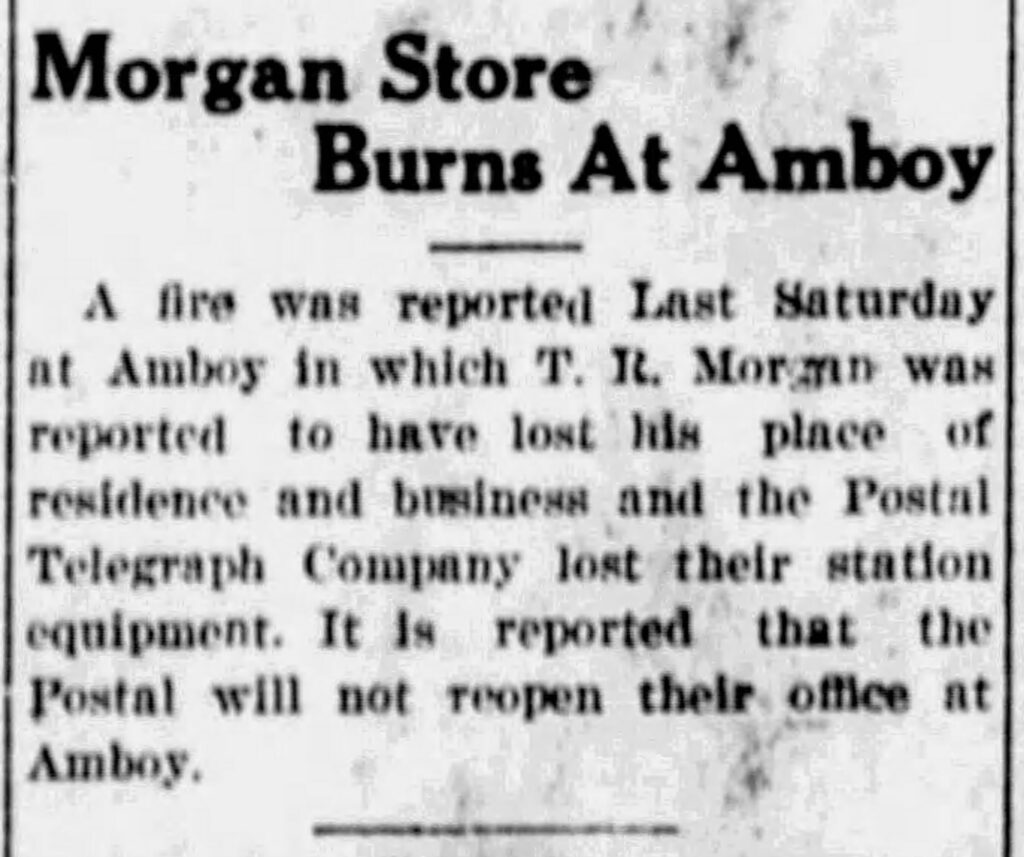
The Desert Dispatch, Thu, Jun 24, 1926 ·Page 1
One night, something sparked. Maybe a faulty wire. Maybe a stray ember from a stove. Maybe just the desert deciding it had been patient long enough. Whatever the cause, the fireworks turned the store into a furnace. Although impressive, the explosions weren’t celebratory; they were frantic, chaotic, echoing across Amboy like a holiday gone wrong. By the time anyone could get close, the building was a roaring box of flame.
And inside that building sat the family’s entire savings.
Amboy had no bank then. Money lived where people lived — in pockets, in drawers, in safes. Tom’s was a heavy steel one, the kind a man trusts because it feels immovable. But the fire burned too hot, too long. When the ashes cooled, the safe was still there, but its contents were nothing but charred fused remnants of a life’s work.
Tom Morgan didn’t set out to become a homesteader but the fire forced his hand. After losing the Amboy store, the fireworks, and the family’s savings in that molten collapse of steel and ash, he was left standing in the ruins with nothing but resolve and a family depending on him. Borrowing money from his father wasn’t prideful; it was survival, and Tom took the loan the way a man takes a breath after nearly drowning.
Fourteen miles east of Amboy, the land waited, 160 acres of raw Mojave, empty except for wind and the long silence between passing trains. It wasn’t opportunity so much as a blank page, and Tom claimed it because he had to. The homestead became his second gamble, a place where he could rebuild on his own terms, far enough from the fire’s memory but close enough to the road to matter.
That stretch of desert would eventually give rise to Cadiz Summit, but in the beginning it was just Tom, a borrowed stake, and a belief that the Mojave could be persuaded, not conquered but persuaded to give a man one more chance.
Cadiz Summit wasn’t a legend yet, wasn’t a refuge or a curse or a fading memory. It was just a man’s fresh gamble in the desert, a bright, necessary dot on Route 66, waiting for its first customer to roll in and make it real. Cadiz Summit didn’t look like a business opportunity when the Morgans first rolled up, it barely looked like a place at all. It was just a wide, wind‑scoured pause in the highway, a lonely stretch where the desert seemed to have forgotten to finish the landscape.
But Tom Morgan saw something in that emptiness, not comfort, not beauty, but potential. What looked like nothing to everyone else became the foundation of their second chance. They built and ran the Summit for the next six years.
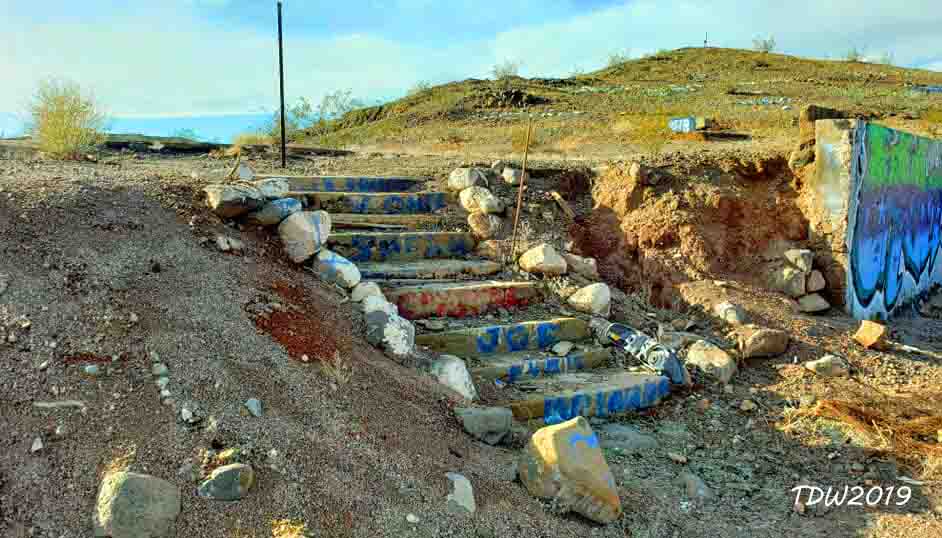
George Tienken’s arrival at Cadiz Summit in 1936 feels like the desert quietly turning a page, not dramatic, just a shift in who was willing to stake their life on that lonely rise above Route 66. George and Jim McDonald brought pieces from Goffs and built a home which would eventually become a restaurant with steps facing the highway in its latter years.
For George, Minnie, and their daughter Winnifred, the Summit wasn’t a hardship; it was an upgrade. After years living at the Hidden Hills Mine, a rough, isolated outpost tucked into the south end of the Providence Mountains, Cadiz Summit must have felt almost civilized. Fifteen miles north, but a world away in comfort. At the mine, life meant dust, dynamite, and the constant grind of rock and ore. At the Summit, life meant travelers, engines, conversation, and the steady rhythm of the highway.
Little Win even brought her parrot named “Polly” someone had gifted her at the mine. One day the parrot squawked, “Another damn Ford!” The Tienkens were pet lovers. They owned cats and a dog. Minnie’s pet was a desert tortoise she named “Skobble” who responded to its name being called to dinner every evening.
Records show the next Summit owners, Clint and Dorothy Hunt, arrived in 1944. However, there may have been owners in-between but the records were unclear. They ran it until 1949.
Jim and Mae Flanagan assumed ownership of Cadiz Summit, purchasing it from Clint Hunt. Prior to the move, Jim and his son‑in‑law, Max Gardens, were co‑owners of the Vermont Bowl, a Los Angeles bowling alley. Jim negotiated an arrangement that would make the Flanagans’ move to the desert possible, striking a deal in which they would acquire the land and buildings at Cadiz Summit while Cliff Hunt took ownership of their Los Angeles home in return.
It was a bold exchange, but one that aligned perfectly with Mae’s desire for a clean break from city life. With the trade settled, the family could finally turn their attention toward the wide‑open desert and the new beginning they hoped to build there. Jim’ sister, Marie, and her husband, George Sterling, joined in for the adventure.
Selling liquor to Native people was illegal then, a law enforced unevenly but harshly when it suited the authorities. Jim knew the risk, yet he also knew the men who came by: Navajo railroad workers who spent long days maintaining the tracks that cut across the Mojave. They arrived in small groups, boots dusty, shoulders tired, speaking quietly among themselves as they waited in the shadow of the old cars. Some nodded to Jim in greeting; others simply stood with the patient stillness of men who had learned not to draw attention.
Jim moved purposely, keeping the bottles of Tokay wine wrapped in paper, passing them over with a brief word or two. The men paid in cash, always neatly folded, always exactly $3.35. They traded turqoise jewelry if they were short on cash. There was no lingering, just a brief exchange, a moment of understanding between people living under rules none of them had written.
When the last of them walked back toward the tracks, the desert fell quiet again. Jim paused, listening to the distant hum of a locomotive somewhere out on the line, the sound carrying across the open land like a reminder of how far they all were from the city, from oversight, from anything but the choices they made out here on their own.
Each Saturday night brought its own small ritual to Cadiz Summit. As the heat of the day finally eased, the railroad crews rumbled in on a large truck stacked high with old ties, weathered with the heavy with the smell of creosote. They unloaded them in the dry wash behind the restaurant, working with the easy rhythm of men who had done this many times before. When the sun slipped behind the hills, someone struck a match, and the whole pile went up in a deep, roaring blaze that lit the desert like a second sunset. The fire became the gathering point for everyone within reach of the Summit.
The Flanagans stepped out from the café, the workers drifted over from the truck, tourists wandered in from the highway, and the handful of local residents appeared as if drawn by instinct. Beer bottles clinked, conversations rose and fell, and the glow of the flames threw long shadows across the wash. For a few hours each week, the isolation of the desert softened, replaced by laughter, stories, and the easy camaraderie of people sharing the same patch of night.
Travelers didn’t just stop at Cadiz Summit, they marooned there. Engines steaming. Tempers frayed. And the Summit, with its cabins, its little house, its patched‑together restaurant, offered just enough shade and just enough hope to get people moving again. It was a speck on the map, sure. But out there, in that heat, on that lonely rise, it felt like the last outpost before the Mojave decided whether you were worthy to continue.
Jim sometimes bartered with customers, that’s how he got Jiggs the monkey in trade for a diesel generator. Jiggs must’ve been the strangest employee Cadiz Summit ever had, a living receipt for a trade nobody else on the highway would’ve dared to make. There are no records to indicate whether Jiggs, the original name of the famous chimpanzee who starred as Cheeta in the Tarzan movie franchise which began in the 1930s, were related. There was also a chimp named Cheeta (Jiggs IV), born in 1960, who resided at a Palm Springs Primate Sanctuary.
Some may posit the place was cursed; the former owners, Clint and Dorothy Hunt, were killed in an automobile accident on the way back home to Needles from Summit on New Year’s Day, 1950. Cadiz Summit was already a hard outpost, water hauled by hand, buildings patched and repatched, owners scraping by on grit and hope. But after the Hunts’ deaths, the story changed shape. People didn’t just say the Summit was unlucky.
They said it carried a shadow, something that clung to the ridge and watched every new owner with quiet, patient interest. The Hunts’ deaths settled over Cadiz Summit like a quiet verdict, the kind the desert delivers without raising its voice.
On November 10, 1954, The San Bernardino County Sun reported William Andrew Atwater, two and a half years old, burned to death in an abandoned car when one of his brothers accidentally set fire to a pile of greasy rags in the rear of the vehicle. Their parents were drinking coffee in the cafe while their car was being serviced at the Cadiz Summit garage. Other tragedies followed.
“This is where the water tank was to store water when it was hauled from the BNSF, then just Santa Fe rail siding when I lived there in the early 60’s.” ~Betty Brock
Around 1961, a terrible fire believed due to faulty wiring, destroyed most of the buildings and businesses at Summit. The fire didn’t roar to life, it crept, the way disasters do in the desert, slow and silent until suddenly they’re everywhere at once. It started with a flicker in the wiring, a tiny electric stutter behind a wall that had already survived too many summers. Then the wind caught it. And once the Mojave wind decides to help a fire, the outcome is already written.
Flames slipped under eaves, climbed dry boards, and lit the Summit from the inside out. The restaurant went first a flash of orange behind the windows, then a bloom of heat that punched upward into the night. The cabins followed, their roofs collapsing in soft, defeated sighs. The old garage, stubborn as ever, held out the longest, glowing like a blacksmith’s forge before finally giving in.
There were no crowds, no sirens, no reporters. Just the desert, watching with that ancient, patient stare. The fire was over, but the Mojave wasn’t done. It never is. It simply waited to see who would come next, who would dare to rebuild on ground it had just reclaimed. The old story about the Hunts didn’t fade. It sharpened. It became part of the explanation people reached for when logic felt too small.
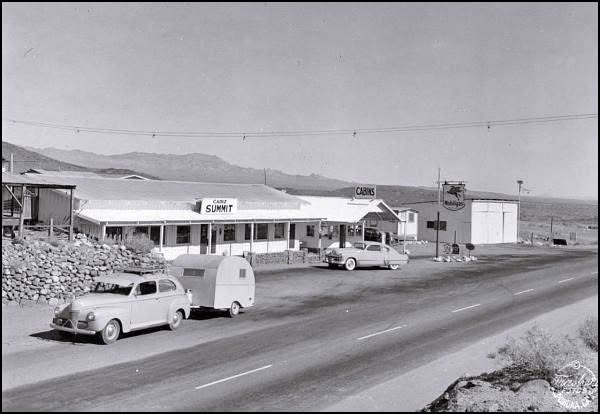
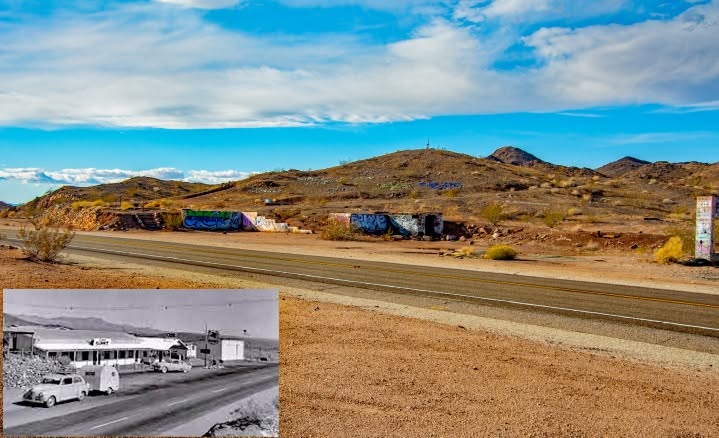
The prominent white building in the center was moved in four pieces from Goffs in the late 1930s, and was used as a gift shop and restaurant. A Mobil gas station, cash office and a garage are to the right. Lights were strung across Route 66 to attract motorists. Photo, 1948: Frasher Postcard Foto Collection via Pomona Public Library.
Floyd and Josephine Wiley took over a few years later. They weren’t pioneers; they were inheritants of a battlefield, taking over a place that had already burned once, struggled twice, and refused to die a third time. The Wileys didn’t rebuild Cadiz Summit into what it had been, nobody could, but they kept it alive in the way desert people do: quietly, stubbornly, with whatever resources the highway and the heat allowed.
Mr. Wiley ran the gas station and garage and Mrs. Wiley drove the school bus. They hauled water from the BNSF depot at Cadiz. Sisters Betty and Linda made change for the gas station during the summers before the Wileys moved to Lenwood. Many thanks to Betty Wiley Brock for filling us in.
An Army Camp, 2.4 miles east of Cadiz Summit and 6 miles west of Danby was developed in 1964. The last people to operate the business from 1965-1971 at Summit was Dick and Nadine Cruse, who ran the joint with grit more than profit, hauling water up from Cadiz like it was liquid gold, keeping the pumps alive, keeping the coffee hot, but most of all, keeping the desert from swallowing the place whole. Dick had worked for a short time at a truck stop and cafe called the Road Runner’s Retreat in nearby Chambless, colloquially known as East Amboy.
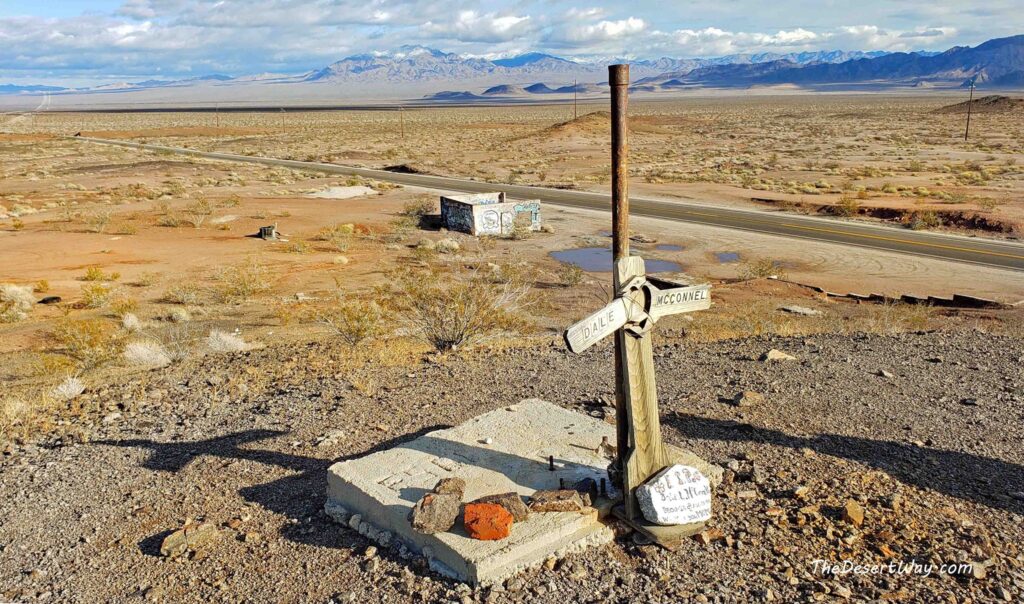
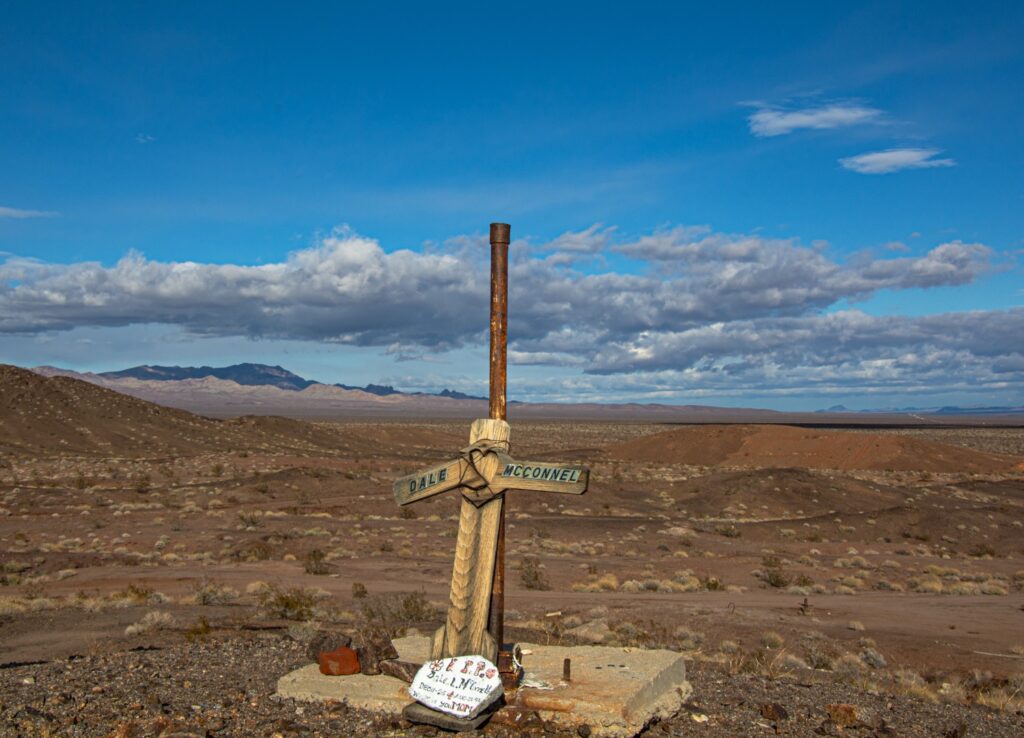
Dale McConnel had no direct connection to Cadiz Summit, but she was a devoted admirer of Route 66. After her passing in Los Angeles County, her family placed the memorial in her honor.
Dick and Nadine Cruse were the last owners before Interstate 40 opened in 1973, bypassing Route 66. The day the traffic vanished from Cadiz Summit didn’t arrive with drama, it arrived with absence, the kind that hits harder than any storm.
It was early, the kind of morning when the heat hasn’t quite found its footing. Dick Cruse stepped out to check the pumps, same as always, expecting the low hum of Route 66 to be waiting for him, a truck downshifting, a family wagon whining in the distance, the familiar pulse of engines working their way up the grade.
But the road was empty. Not quiet; empty. A stillness so profound it felt surreal.
He waited for the next set of headlights to crest the rise. None came. Nadine stepped out onto the porch, wiping her hands on a towel, and she felt it too, that eerie, unnatural pause in the world. The Summit had always lived on borrowed time, but this was different. This was final.
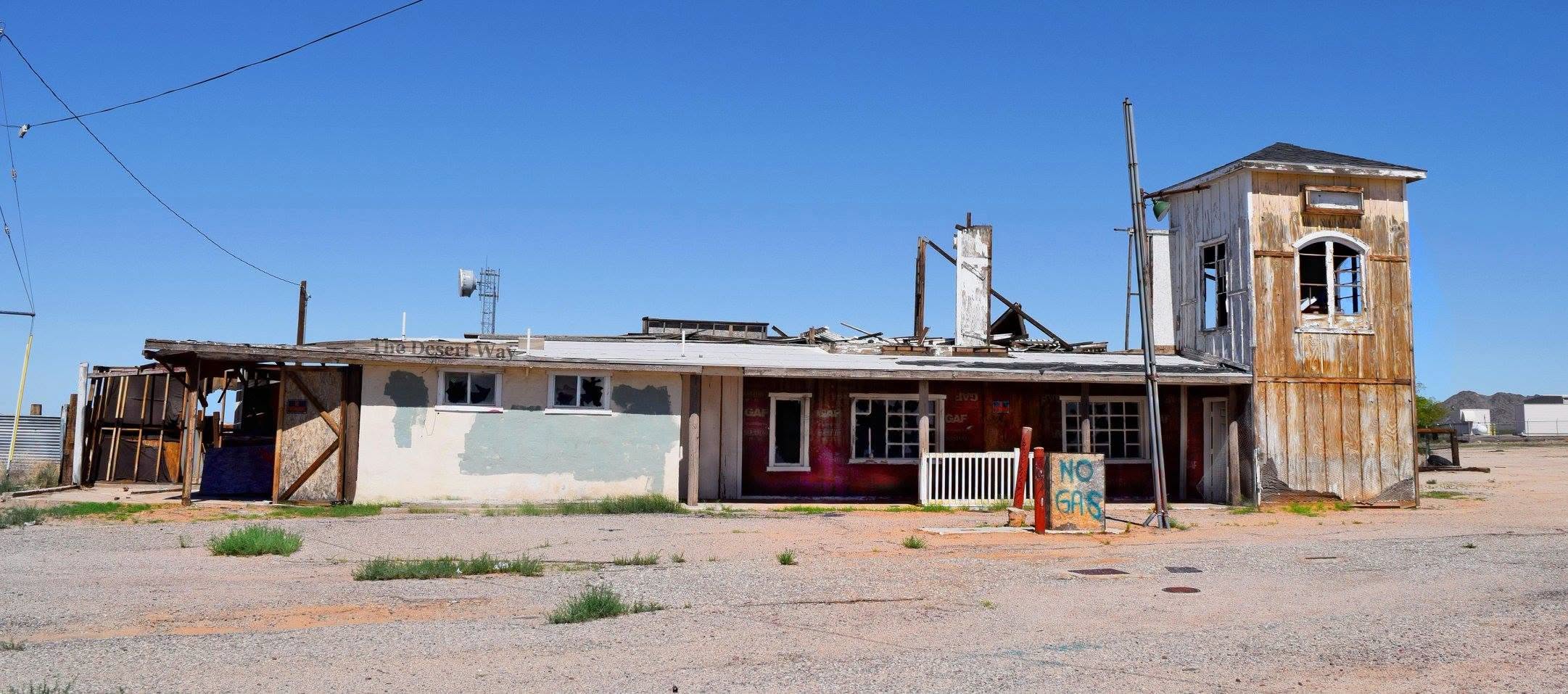
By noon, the truth settled in: Interstate 40 had opened, and the river of travelers that kept Cadiz Summit alive had been rerouted miles away, leaving the Cruses with a gas station, a restaurant, and a ridge overlooking a road that no longer needed them.The pumps stood ready. The coffee stayed hot. But the world had already moved on. Cadiz Summit didn’t die with a fire or a curse; it died in a single, perfect moment of silence, when the last car passed and no one followed.
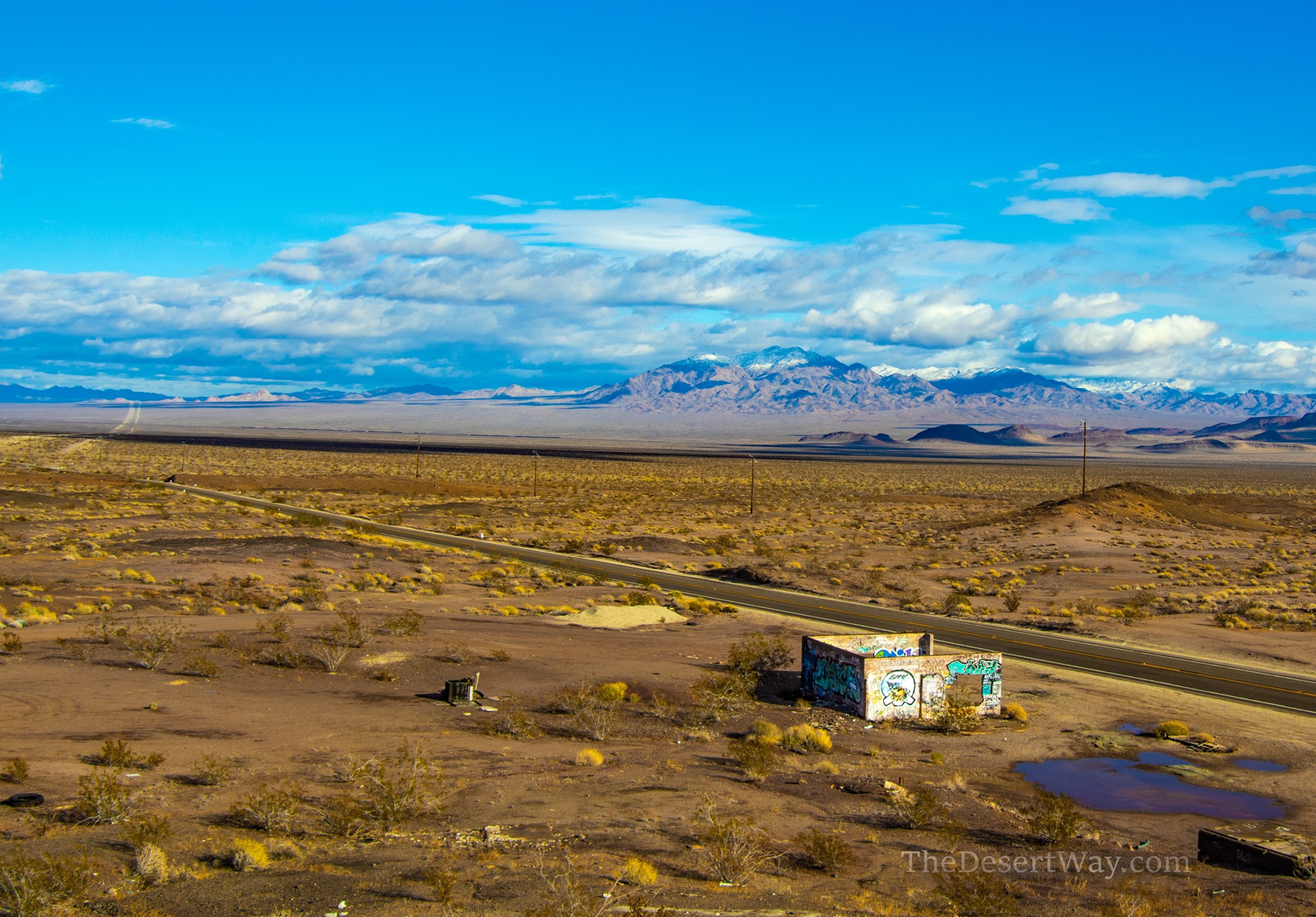
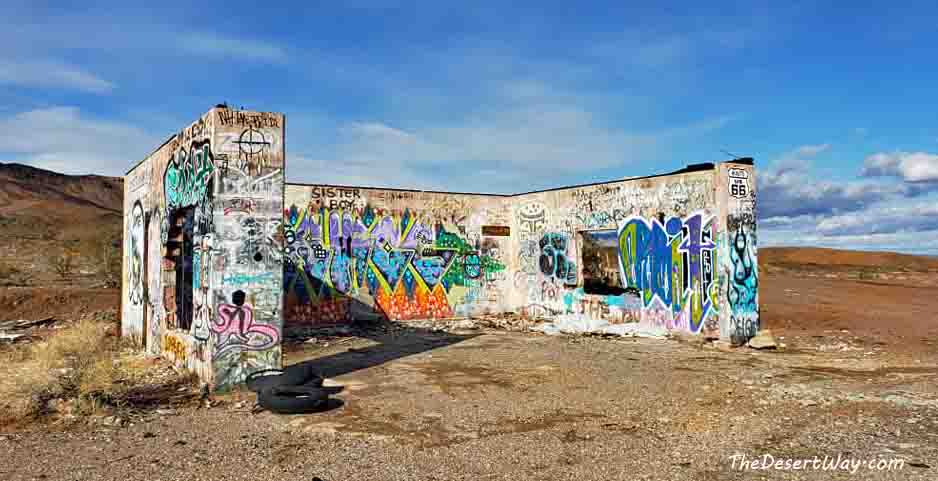
Time has thinned Cadiz Summit to its barest bones. All the wooden buildings that once gave the place its shape have disappeared, most likely claimed by fire, whether in a single blaze or in a series of small, unremarked burnings over the decades. What endures now are only the structures stubborn enough to resist both flame and time: the hollowed‑out walls of the garage, the concrete foundation perched above the highway where the store once stood, the weathered pad where the gas pumps anchored the forecourt, and the old icehouse carved into the hillside, still holding its coolness like a memory it refuses to surrender.
The desert has a way of erasing without hurry, and even the things built to last eventually yield. The rock wall Tom Morgan stacked by hand in the early 1930s is slowly loosening, stone by stone, as if exhaling after nearly a century of holding its place. The word Summit, once painted boldly across its face, has long since faded, worn away by wind and sun.
What remains is not so much a landmark as an echo, a reminder that people once lived, worked, and hoped here, leaving behind traces that the desert is now determinedly reclaiming.
Cadiz Summit is situated at GPS coordinates: 34.569587, -115.485303
Note: Above photographs, except where attributed otherwise, are by Jaylyn and John Earl.
Recommended Resources
De Kehoe, Joe, The Silence and the Sun, Third Ed, 2025, Trails End Publishing Company, pgs 164-192.