The Kelso Depot, formerly the Kelso Depot, Restaurant and Employees Hotel, and now home to the Mojave National Preserve Visitor Center, sits in the heart of the Mojave Desert within the National Park Service’s Mojave National Preserve.
Kelso Depot is one of the Mojave National Preserve’s star attractions—it played a major role in shaping the history of southeastern California, helped write a whole chapter of western railroad development, and now stands as one of the last surviving examples of early railroad architecture in the Southwest.
The depot is located in Kelso, California, located 235 track miles east of Los Angeles, at the intersection of Kelso Cima Road and Kelbaker Road, roughly between Baker and Interstate 15 to the north and Interstate 40 to the south.
The Kelso Depot Visitor Center in Mojave National Preserve is currently closed for a major overhaul of its heating, ventilation, and air conditioning (HVAC) system.
The project, which began in late 2023, requires extensive repairs to the building’s core infrastructure, rendering the site temporarily inaccessible.
Renovation is ongoing, with the visitor center expected to reopen in 2026. During the rehabilitation, nearby restrooms and parking areas have also experienced intermittent closures due to a well pump problem in July 2023 and November 2025.
Because of the preserve’s remote desert setting, the National Park Service (NPS) urges visitors to bring plenty of water for themselves and their pets. Even when facilities are open, reliable water access cannot be guaranteed. But what is this special place anyway?

What began as a practical response to geography and grade slowly shaped Kelso’s identity, anchoring it as a crucial, if remote, support hub in the broader story of the Los Angeles & Salt Lake Railroad.
The rails didn’t just arrive in the Mojave; they cut into it, like a blade drawn across a sleeping giant.
In August 1900, when Senator William A. Clark bought that unremarkable little Los Angeles railway, nobody in the desert felt the tremor yet. But the moment he set his sights east, the Mojave felt a shift, a new line being scratched across its hide. Clark wasn’t building a railroad; he was carving a corridor between two worlds.
By 1902, Union Pacific smelled the ambition on the wind and bought half the stock before the line was even finished. Two titans shaking hands over a map the desert had never agreed to.
Then came the construction, not gentle, not patient. Crews pushed from Salt Lake and Los Angeles like rival armies racing toward each other, laying steel across sand, lava rock, and silence. Every spike was a challenge. Every mile was a dare.
By 1905, the line had stretched nearly 235 miles into the Mojave’s interior and reached a lonely dot on the surveyor’s sheet: Siding #16.
There was nothing there. No town. No shade. Just heat, emptiness, and the faint promise of a water stop.
But the desert has a way of turning nothings into somewheres.
Siding #16 would soon have a name — Kelso — and become the beating heart of the Salt Lake Route, a place where steam engines caught their breath before clawing up the Cima Grade, and where men learned that the Mojave doesn’t care about senators, rail barons, or fortunes. It only respects those who endure it.
Kelso got its name thanks to a very scientific process: two warehousemen at Siding #16 tossed their names into a hat—then, for good measure, added the name of another warehouseman who didn’t even work there anymore, John H. Kelso. As darn luck would have it, the only person not present won.
Note: The depot was not named after Union soldier, politician and preacher, John R. Kelso of Missouri.
The first depot, a small, one story building with a water tank built by the San Pedro, Los Angeles and Salt Lake Railroad, opened in 1905—back when trains were the height of luxury and “air‑conditioning” meant opening a window. The post office opened on May 20, 1905, and kept the mail flowing until 1962, when the depot’s function ended.
Upon construction completion in 1925, the Union Pacific Railroad replaced the old depot building with the current Spanish-style depot, originally named the Kelso Clubhouse and Restaurant. The restaurant and and boarding rooms continued to operate until 1985.

Kelso Depot, ca. 1925, U.P.RR. Collection, Bill Kappele Enlargement, March 1992. This photograph is the property of Dennis G. Casebier, Goffs Schoolhouse, 37198 Lanfair Road, Essex, CA 92332
According to the Mojave Desert Dictionary, 2nd Edition by Patricia A. Schoffstall (2014), the restaurant was affectionally called The Beanery and its last meal was served there at midnight on June 30, 1985. It opened in 2009 then closed again in 2013.
There was also a more practical, legally mandated reason for maintaining a crew hotel and restaurant at Kelso. Federal regulations limited the hours that train crews—engineers, firemen, conductors, and brakemen, could remain on duty, allowing a maximum of sixteen hours of operation before requiring an uninterrupted eight‑hour rest period.
On a remote stretch of railroad where long grades and heavy traffic often pushed crews to their limits, Kelso became an essential stopping point. The depot and its associated facilities provided the food, lodging, and respite that federal law demanded, ensuring that crews could safely continue their journeys across the Mojave’s vast and unforgiving landscape. Originally, the restaurant and telegraph office each had three shifts, operating around the clock.

The Kelso Depot was not a Harvey House—no matter how many times people mix them up. Harvey Houses only existed along the Atchison, Topeka and Santa Fe Railway, so calling Kelso one is like insisting a cactus is a palm tree. Charming as it is, the Kelso facility should never be labeled a Harvey House… unless you want railroad historians to appear out of thin air and correct you on the spot.
Other railroads including the Los Angeles and Salt Lake Railroad had their own version of Fred Harvey facilities, such as the Lunch Room in the new Kelso Depot.
Actually, there was only one major Fred Harvey House (Casa del Deseierto) in Barstow, California, known for its iconic name and role on Route 66 in the Mojave Desert. It was rebuilt multiple times before the final 1911 structure was established, serving as a key railroad hub. While other smaller Harvey facilities existed along the broader Santa Fe route through arid lands, Barstow’s was the prominent desert Harvey House.
By early 1923, the railroad decided Kelso needed an upgrade, so they started building the fancy new “Kelso Clubhouse & Restaurant,” which opened two years later, complete with all the whimsical charm a remote desert outpost could muster.
The Kelso Depot served passengers, railroad employees, and, most importantly, thirsty steam locomotives that needed water stops like giant metal camels crossing the Mojave.

There was even a one room school house built in 1908—because even in the middle of the Mojave Desert, kids still had to do their homework. It served the railroad community back in the day, and after a long retirement, has been restored as a ranger station for the National Park Service. The school closed in 1975 and students were bussed to Baker.
Kelso was never a tourist hotspot; nobody was packing their Model A or Model T for a glamorous getaway to a remote desert outpost with more sand than roads.
Kelso made its final debut as a meal stop in the August 1930 issue of The Official Guide, by which point only three long‑haul passenger trains were still trudging each way between Los Angeles and Salt Lake. By then, every surviving passenger train had its own dining car.

In 1944, the Vulcan Mine and the Union Pacific Railroad brought plenty of eager workers into Kelso—men with time on their hands when not working and absolutely nothing to do in the middle of the Mojave Desert.
Predictably, boredom teamed up with alcohol, and before long the local pastime became “drink until gravity wins.” When things got rowdy, the solution was simple: toss the drunks into the two 6-foot tall iron cells so they could sleep it off. I wonder if any frequent flyers had their own key, like Otis Campbell on the Andy Griffith Show.

Back when it was actually in use, the little strap‑iron jail even had a roof for shade—because if you’re going to sleep off a bender in the Mojave Desert, you might as well avoid becoming a human raisin.
At one point, corrugated tin walls surrounded the whole setup, giving it that charming “frontier storage shed meets time‑out corner” vibe. Strap‑iron jails like this popped up all over the United States in the mid‑to‑late 1800s, proving that even back then, people needed a sturdy place to cool off after making questionable life choices.
The Kelso Depot was a major player in Union Pacific’s World War II efforts. But when the war wrapped up, the depot’s importance started fading fast. It was like the party ended, everyone went home, and Kelso was left standing there with the lights still on, wondering where all the trains went.

When the Korean War broke out in the early 1950s, the Union Pacific line suddenly got busy again—like someone flipped the “rush hour” switch in the middle of the desert. For a few years, trains were rolling through Kelso with the enthusiasm of people who just heard there were free snacks at the next stop.
By the 1960s, the new high‑horsepower diesel‑electric locomotives rolled in, flexing their muscles, making the old steam‑era workforce obsolete. As these supercharged engines took over, the need for Union Pacific personnel in Kelso shrank.
In 1985, Union Pacific decided the unused Kelso Depot had outlived its usefulness and suggested tearing it down—because nothing says “problem solved” like a bulldozer.

Fortunately, preservationists from the Kelso Depot Fund swooped in like architectural superheroes, capes optional, and fought to save the place. Thanks to Mrs. H. Marie Brashier, Kelso Depot remains an icon of Mojave National Preserve! Mrs. Brashier began the movement to save Kelso Depot from demolition.
A motorist cruising down one of the giant bajadas—or alluvial fans, for those who like fancy geology words—that blanket the heart of Mojave National Preserve in the 1990s would suddenly stumble upon a big, lonely white building in full Spanish‑mission cosplay.
It stood there almost completely by itself, looking both majestic and confused, right next to the sleek, high‑speed Union Pacific main line between Los Angeles and Salt Lake. A few crumbling buildings to the northeast and some modern prefab houses to the southeast of the tracks were the only clues that this lonely spot had once been a small town.
Undoubtedly its crown jewel was Kelso Depot, doubling as a boarding house for employees, complete with a billiard room, a library and a restaurant which served both employees and as a meal stop for passenger trains without dining cars. Unlike Yermo near Daggett, 72 miles west of Kelso, the railroad combined all of these facilities in a single, large building.

In 1992 Congress appropriated $1,000,000 dollars to restore the building. An archeological survey of the site was conducted in June 1995 and subsurface testing was conducted in March 1996. The results were reported in The Kelso Depot: An Archeological Evaluation, by Steven E. Daron, February 1997.
Thanks to the passage of the California Desert Protection Act in 1994, the East Mojave National Scenic Area was redesignated as Mojave National Preserve, thereby transferring administrative responsibility for the Kelso Depot to the National Park Service.
In 2002, the National Park Service initiated a comprehensive restoration program aimed at stabilizing the structure, preserving its architectural integrity, and adapting it for interpretive use.
On October 20, 2005, Kelso Depot opened as the Mojave National Preserve Visitors Center, highlighting the region’s intertwined natural and cultural histories. Kelso Depot is #2001000760 on the National Register of Historic Places.
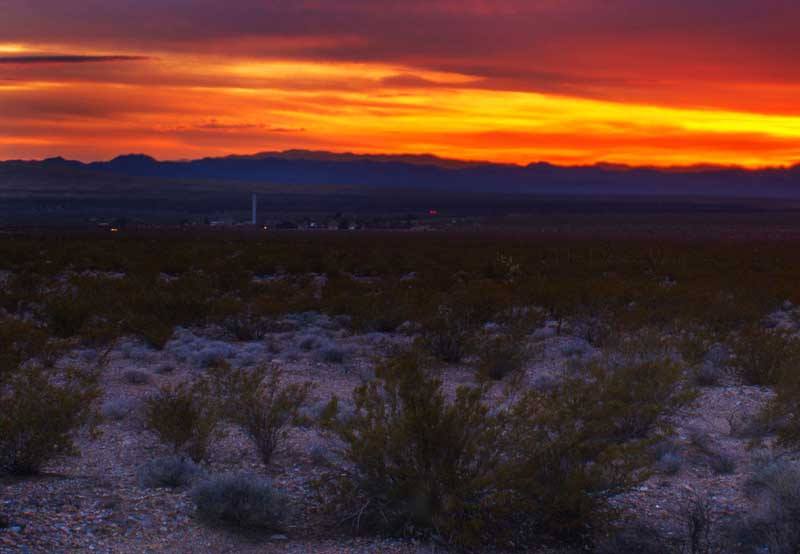
Traveling along no path at all, I could see Kelso Depot off in the distance, a short walk across a long desert.
The National Park Service has indicated its intention to reopen the Kelso Depot at some point in 2026, without adverse impact to the historic character. The complexity of conditions has driven up costs for repairs, and hence require many levels of approval and oversight. Ahh, bureaucracy.
Although there is no official re-opening date, we remain hopeful. Due to unforseeable project delays and bad weather, prospective visitors are advised to consult the National Park Service’s official website or social media platforms for the most current information before planning a visit.
For adventurers heading to Kelso Dunes at nearly 500 feet high, they are the third largest sand dunes in th U.S. and one of about 35 singing sand dunes in the world. Kelso Dunes are home to rare plant species and endemic insects found nowhere else in the world.
Note: All photos except where noted otherwise were taken by Jaylyn and John Earl.
References
https://npshistory.com/publications/moja/hsr-kelso-depot.pdf
https://www.nps.gov/moja/learn/historyculture/kelso-depot.htm
Schoffstall, Patricia A., Mojave Desert Dictionary, 2nd Edition, published by Mojave River Valley Museum, 2014.