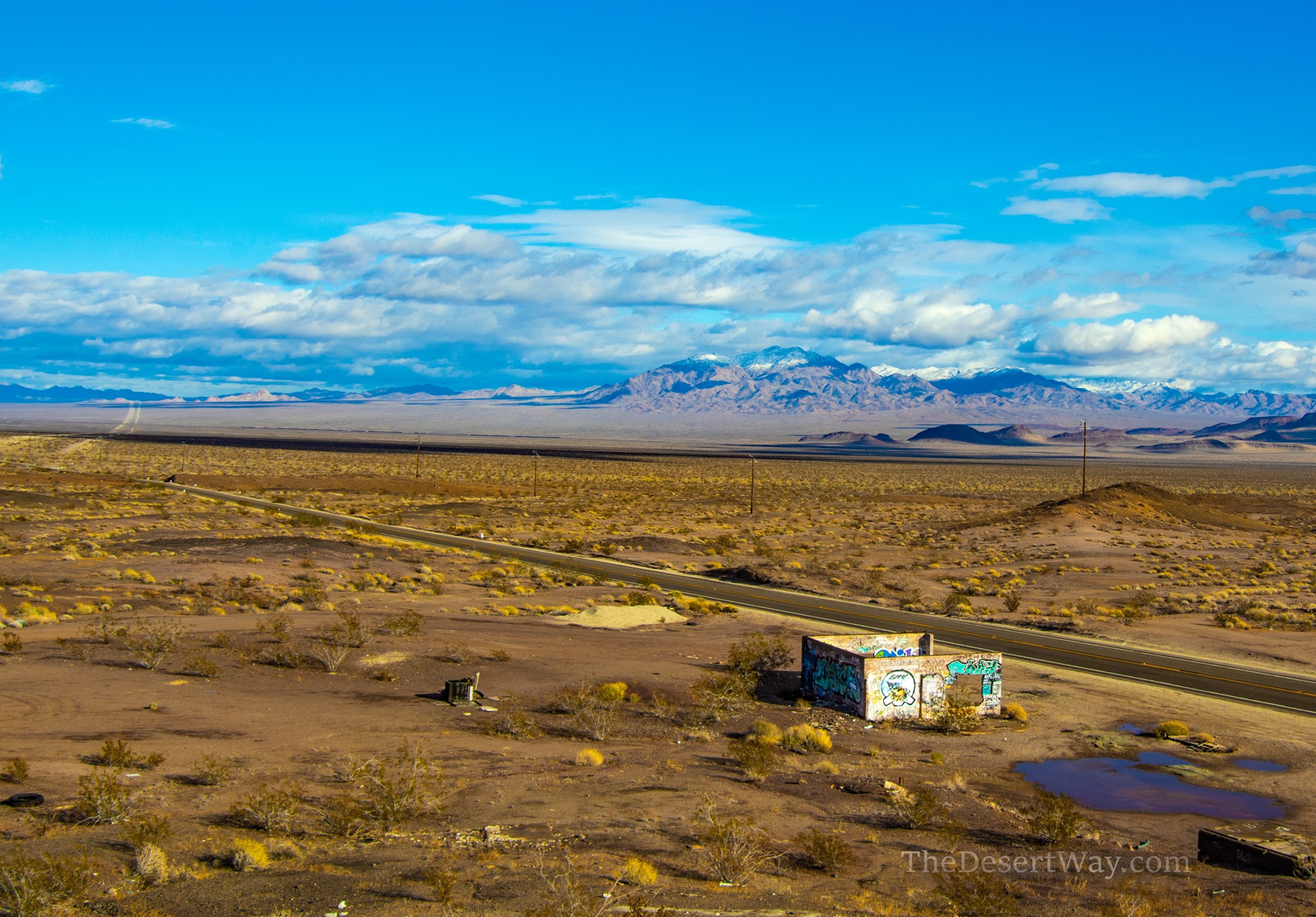
Goffs, California sits about thirty miles west of Needles and sixteen miles northeast of Essex, along the lonely ribbon of highway long celebrated as America’s Mother Road. Founded in 1883 as a Santa Fe Railroad station, Goffs became the junction where the Nevada Southern Railroad met the Santa Fe main line. It was one of the original Alphabet Towns — and one of the places we’ve always held close.
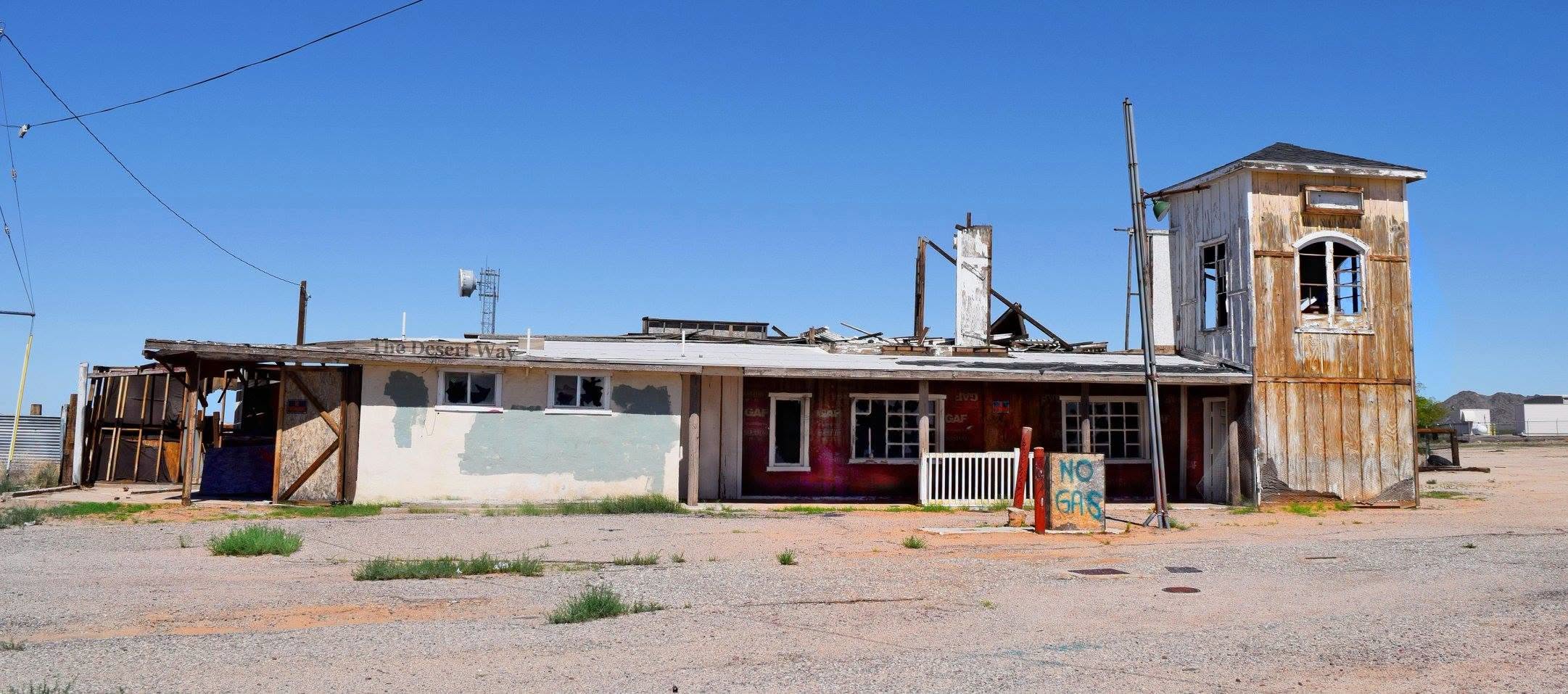
Back in 2015, we posted a tongue‑in‑cheek note on our public Desert Way Facebook page: “Glad this former general store, built on Route 66 in Goffs had a sign that says ‘No Gas.’ Otherwise, we would never have guessed.” The joke landed because the building’s weather‑beaten facade practically shouted its own history.
The original one‑story Goffs General Store, dance hall, and saloon opened in 1946. In the early 1950s, Morris Swain’s aunt and uncle, Lenna Troy Swain nee Hammond and Maurice E. Swain, ran the place before selling it to Morris’ parents in 1960. At its peak, the property offered a full‑service gas station, a general store, a restaurant, and even a dance floor. Swain remembered gasoline costing 38 cents a gallon, and Thursdays were reserved for square dancing.
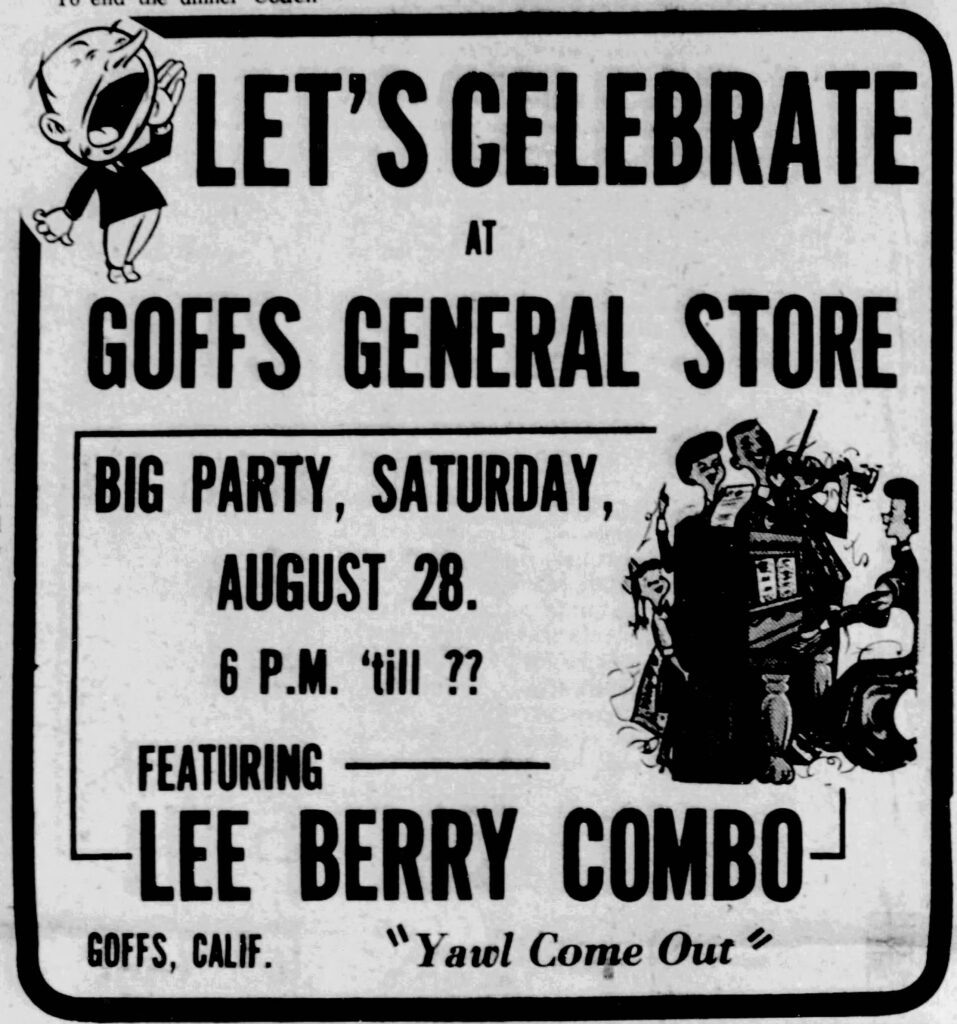
Needles Desert Star, Aug 25, 1976.
On July 1, 1981, the Needles Desert Star reported on an all‑day Fourth of July celebration hosted by the Swains. The gathering was wholesome desert Americana: sack races, three‑legged races, soda‑chugging contests, bubble‑gum competitions, and water‑balloon battles for the kids. Adults joined in horseshoe tournaments with trophies, arm‑wrestling matches, beer‑drinking contests, and a pit‑style barbecue featuring a half side of beef donated by the OX Cattle Company. After fireworks at the new Needles rodeo grounds, everyone returned to Goffs to dance to a live band under the desert sky.
Two weeks later, on July 15, 1981, the Desert Star reported that the patriotic celebration drew 400 participants — a remarkable turnout for a remote Mojave outpost.
Maggie McShan’s March 21, 1984 article in The San Bernardino County Sun cast a warm spotlight on Goffs and on owners Connie and Morris Swain. At the time, the general store was described as “a cultural and entertainment center of the last ranching stronghold in the East Mohave Desert.” It was a fitting title for a place that had become the heartbeat of a scattered desert community.
Connie Swain herself once wore the crown of Watermelon Queen, dressed in a bright red‑and‑green gown designed by store manager J.D. Yandell. Watermelon Day had begun as a joke — a rancher handing Connie a melon — but the idea took root. Before long, the celebration grew into a full‑fledged event complete with a raffle and a parade.
The parade lineup was pure desert charm. Sherry Baird marched as majorette. Jamie Gandell, Mickie Smith, and Gloria Smith carried the banner. Patty Stafford and Jim Baird kept rhythm as drummers. Morris Swain drove the old corn grinder while a make‑believe bandit was escorted to a hanging tree by a pretend marshal. A Rocking L Ranch truck happened to pass through town and unintentionally became part of the procession. Even Big Foot joined the festivities, embodied by John Frazer and his dog, George.
Inside the dance hall, the homegrown band Country Justus [sic] kept the place lively. Its members — J.D. Morris, Jim Baird, Timmy Yandell, Ted Kingman, and Patty Stafford, a singer‑guitarist from Kingman, played on the first Saturday night of every month. Their music drew ranchers, cowboys, Bureau of Land Management employees and their partners, and anyone else who wandered in from the desert looking for a night of company and sound.
Swain continued running the store through the 1980s, expanding the kitchen and keeping the place lively. Even wedding ceremonies were conducted at Goffs General Store. Karen Dominguez and Terry Brann exchanged vows on December 12, 1984 before Judge Jack Massey.
On September 21, 1990, the Desert Needles Star announced the general store’s plans for a big Halloween bash the following month. Swain eventually sold the business around 1995.
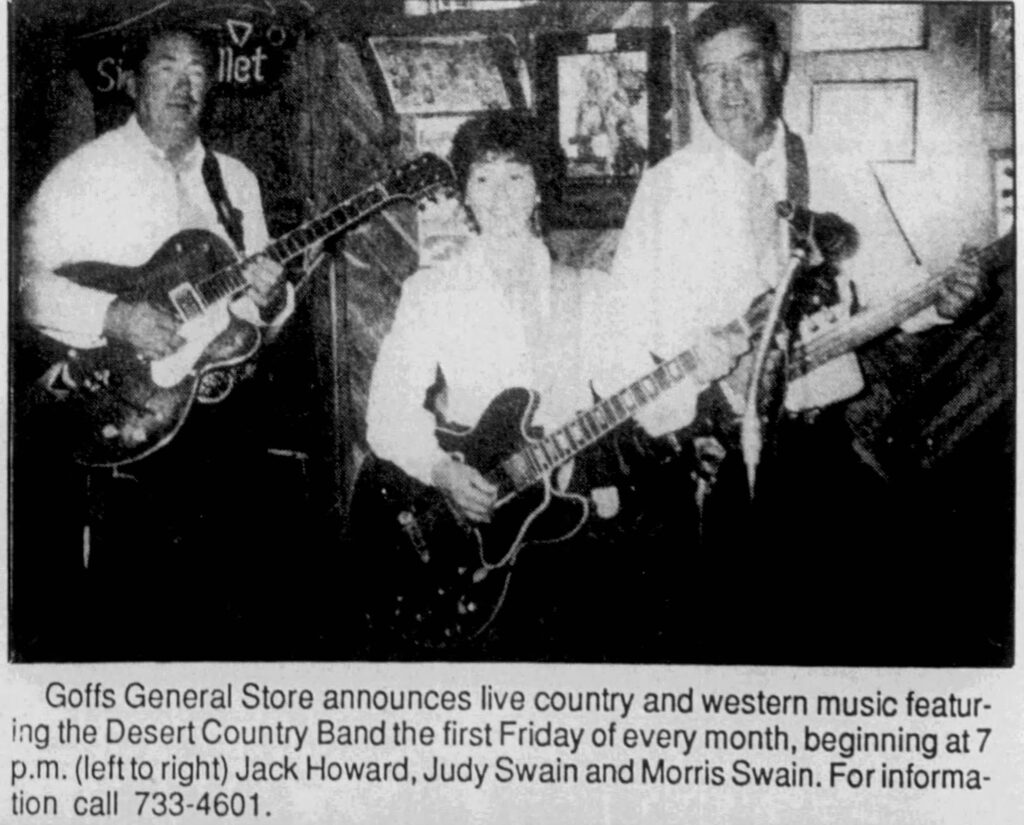
Needles Desert Star, Sep 26, 1990.
One Route 66 travel site suggests the store may have still been operating in 2000, though by then it was clear the old establishment had become a painted lady down on her luck. Graffiti and vandalism followed, marking the beginning of its long decline.
In 2004, a LiveJournal user posting under the name uberdionysus shared a personal memory of the place: “It was a general store/gas station/bar/restaurant/square dance hall. My dad and my grandfather built this from the ground up. We sold it when my parents divorced and right before I joined the Army. The new owners built the second story facade. I hated this place with a passion, but it looks supercool to me now.”
The comment captured the complicated affection many held for the building — a mix of family history, hard work, and the strange beauty of a fading Route 66 landmark.
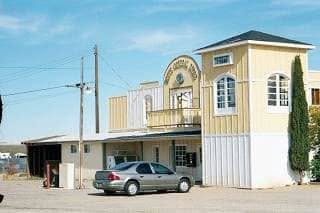
Photo Courtesy Bill Knepper, c. 2000.
By 2013, only the tower and a fragment of the second‑floor wall still stood; the rest of the structure had either collapsed or been removed.
An exterior weather‑beaten sign reading “Goffs General Store and Country Kitchen” still clung to the tired building in 2016, matching its worn‑out bones.
That same year, Joseph Sherrill posted on TripAdvisor about his lifelong connection to the place: “I’ve always loved going through Goffs and especially the historic GOFFS GENERAL STORE. As a child in the 1960s and early 1970s I loved traveling from Los Angeles to Bullhead City, AZ, to see my grandparents, often by way of Route 66 (Goffs Road). I would beg my parents to stop, but seldom did they. The times we did stop, I was in heaven.”
Sherrill went on to explain that after buying a home in Arizona, he discovered the store abandoned. After inquiring, he purchased it for delinquent taxes. His hope was simple and earnest: “My dream is to restore the building, property, and its local history over the next few years. All of you traveling on Route 66 are welcome to stop at the store and take photos of its progress.”
Sadly, the historic Goffs General Store burned down on the afternoon of June 8, 2021 under suspicious circumstances.
According to the San Bernardino County Fire Department, crews mounted a defensive attack to keep the flames contained to the building of origin. The lack of a municipal water supply made sustained water flow difficult, forcing firefighters to rely on water tenders and a shuttle operation.
A piece of local history was completely consumed in the blaze — gone in thirty minutes — leaving only ash where nearly a century of desert stories once stood.
The Goffs General Store fire remains officially unsolved, with no final public announcement regarding an arrest or a definitive root cause. Many thanks to the firefighters for their efforts.
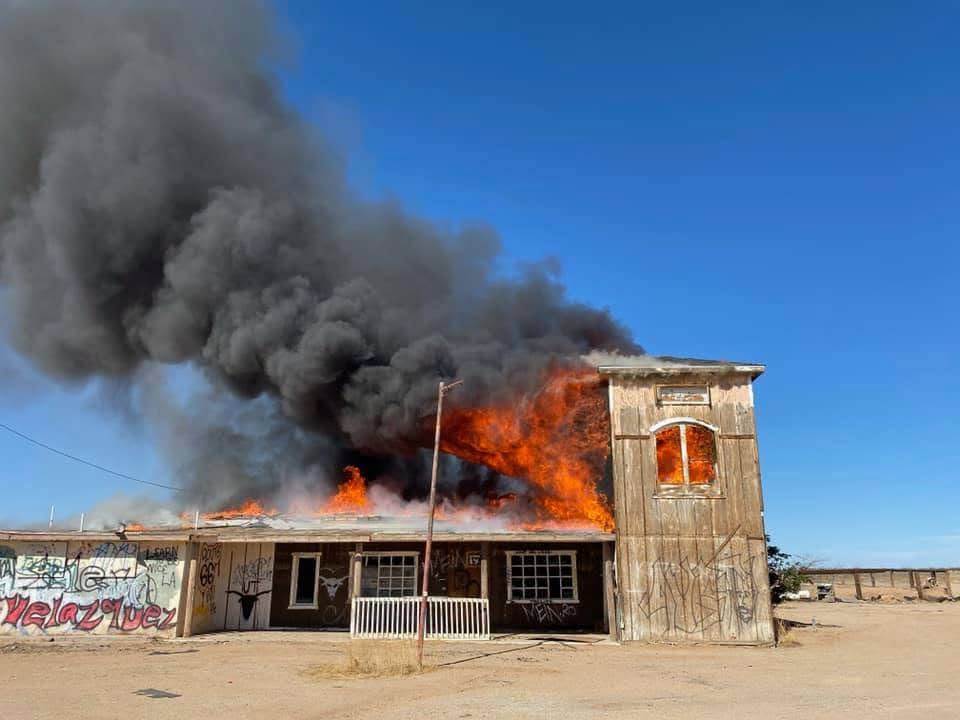
Photo Courtesy of San Bernardino County Fire Dept., 2021.
Although the general store is gone, Goffs lives on. Dennis G. Casebier and his wife Jo Ann purchased a 113-acre private Goffs property on the south side of the Mojave National Preserve in 1990, securing its future as a center for desert preservation and research.
Today, the beautifully restored 1914 Goffs Schoolhouse serves as the community’s museum, operated by the Mojave Desert Heritage and Cultural Association, continuing Casebier’s mission to protect and interpret the cultural history of the East Mojave.
Top Photo by J. Earl exclusively for The Desert Way, 2015.
References
Dominguez-Brann Nuptials at Goffs General Store, Needles Desert Star, Wed, Dec 12, 1984 ·Page 16.
Estacio, Martin, Goffs General Store Burns Down Under Suspicious Circumstances, Daily Press, Sun, Jun 13, 2021 ·pg B1.
Goffs Plans 4th Shindig, Needles Desert Star, Wed, Jul 02, 1980 ·Page 12.
General Store to Kick Up Heels, Needles Desert Star, Sep 6, 1990, Page 6.
Goffs’ Store Owners Sponsor Activities, Needles Desert Star, Wed, Jul 01, 1981 ·Page 1.
Goffs Hosts 400, Needles Desert Star, Wed, Jul 15, 1981 ·Page 11.
Lenna Troy Swain Obituary, Needles Desert Star, Wed, Feb 19, 2003 ·Page 2.
McShan, Maggie, Goffs Holds First Watermelon Parade, Swain Reigns as Queen, Needles Desert Star, Mar 14, 1984, Page 7.
McShan, Maggie, Sandscripts, The San Bernardino County Sun, March 21, 1984, Page 21.