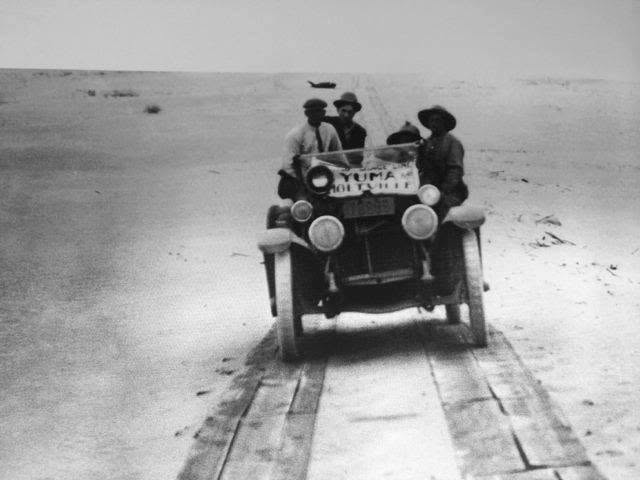
In 1915, Stephen “Desert Steve” Albert Ragsdale, originally from Coffeyville, Kansas, rattled his way west, coaxing an early‑model automobile across the Mojave as if stubbornness alone could substitute for horsepower. He was bound for a business conference in Los Angeles, because apparently the best route to professional success was straight through a sun‑scorched nowhere, but the desert knew better: every traveler comes seeking something.
Naturally, the car surrendered near a lonely spot called Gruendike’s Well. And just when the desert seemed ready to claim another optimist, a prospector‑turned‑hermit drifted out of the heat shimmer, with just enough encouragement to resurrect both man and machine — a solitary keeper of water and desert wisdom.
Wilbur C. and Peter S. Gruendike, who in 1913 and 1916, respectively, each received a patent to 160 acres along the Chuckwalla Road between Mecca and Blythe. Peter Gruendike dug a well and installed a windmill on his parcel, some 200 feet north of the road and their ranch house, hence the name.
The whole ordeal clearly rewired something in Steve’s brain. He’d been doing just fine as a cotton rancher in the Palo Verde Valley, right up until the post‑war slump turned cotton into a six‑cent joke. Since feeding a wife and four kids on that wasn’t exactly a winning business model, he handed the ranch over to the tax collector and announced his next brilliant plan. He bought the land rights from Gruendike, the same hermit‑hero who rescued him, opened a tiny repair shop, and dragged his entire family along for this bold new lifestyle choice.
The ghost town of Desert Center lies equidistant between Indio and Blythe, each one a lonely 50‑mile stretch away in opposite directions. To the south, the nearest real sign of civilization is Mexicali, simmering just across the Mexican border. But if you point yourself due north, the world simply falls away, nothing but raw, silent desert for 170 unforgiving miles, until at last the emptiness breaks and the lights of Las Vegas rise out of the void.
Ragsdale cruised the desert in a modified Model T tow truck, rescuing stranded travelers, while his wife, Lydia, kept everyone alive with food and drinks. It was a family business built on equal parts grit, hospitality, and questionable decision‑making.
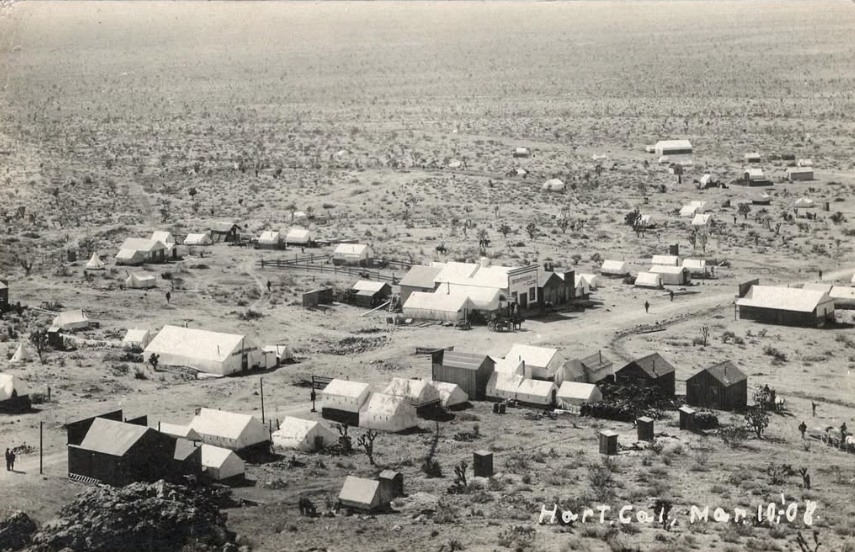
By 1921, after the entire town uprooted itself and marched a few miles south to chase the newly realigned highway, a café blazing with 24‑hour lights rose out of the dust. In that moment, half grit, half defiance, Desert Center declared itself open for business. Ragsdale was famous for his creative marketing, boasting that his town’s Main Street was “100 miles long.”
The advertising proudly declared, “We lost our keys , we can’t close!” which was his charming way of saying the place never shut its doors, ever. And in the kind of plot twist that makes historians double‑check their notes, this dusty, middle‑of‑nowhere pit stop somehow became the birthplace of Kaiser Permanente, the world’s largest managed health‑care system. Because of course it did.
The site of the Kaiser Steel Eagle Mountain Mine, once among the largest open‑pit iron operations on the planet — lies about 13 miles north of Desert Center. Its vast iron deposits were first uncovered in the early 1930s by geologists working for Henry J. Kaiser during construction of the Colorado River Aqueduct.
Surgeon Sidney Garfield set up a 12-bed hospital nearby for Colorado River Aqueduct workers. He later partnered with industrialist Henry Kaiser, giving birth to modern healthcare giant Kaiser Permanente.
Having won a legal challenge to the claims, Kaiser succeeded in having the Joshua Tree Monument boundaries shifted to exclude the Eagle Mountain properties. What began as a routine survey for a water project ended up revealing the mineral wealth that would fuel one of the great industrial engines of the American West.
A sign at the café’s entrance promised free food on any days when the sun didn’t shine in the desert. On December 27, 1932, it snowed at Desert Center and the prices were wiped from the menu until the sun came out again.
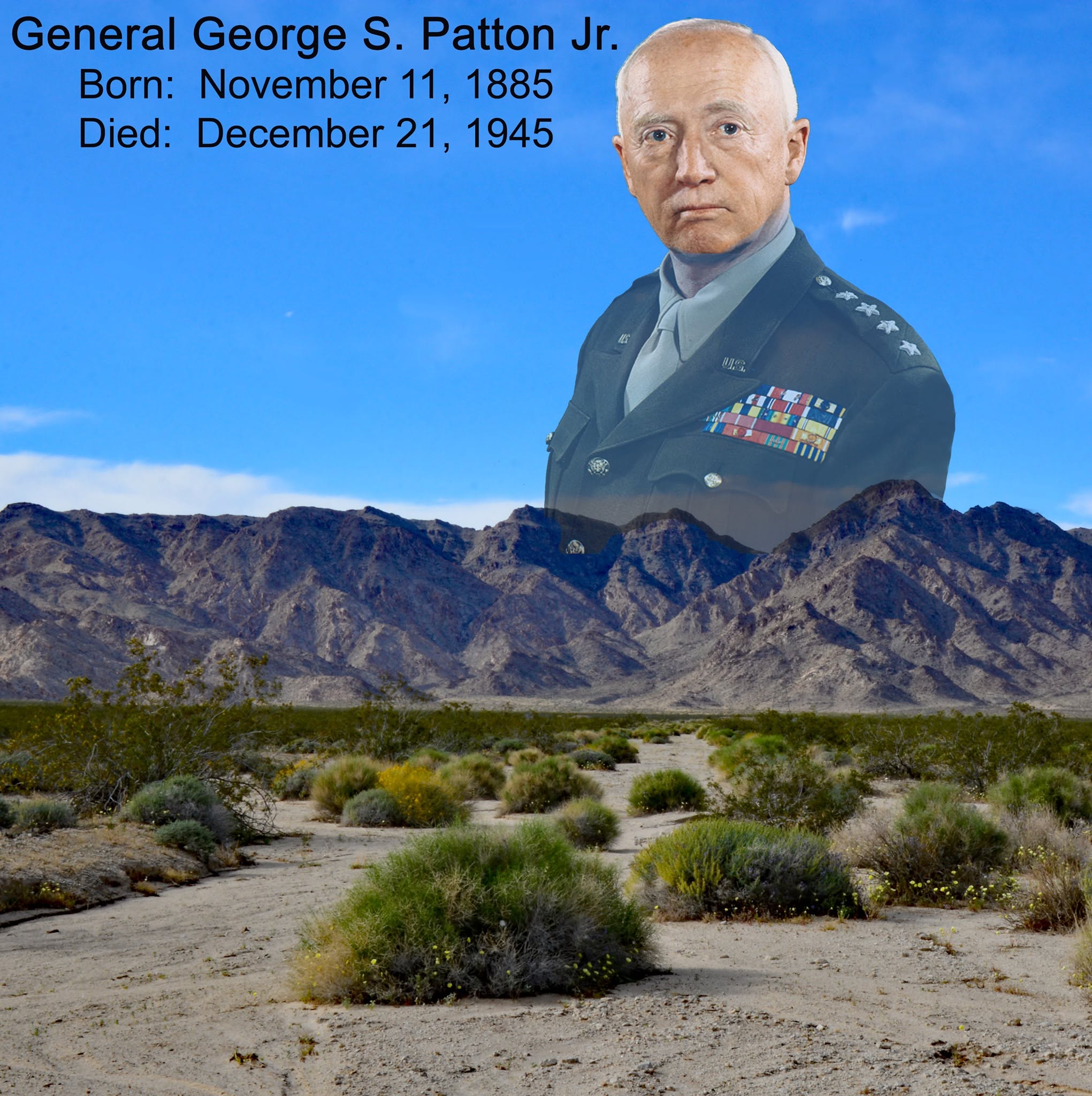
In 1942, General George S. Patton utilized Desert Center as a major base for his Desert Training Center, housing and training over a million troops for the North African campaign.
The Desert Center Café was located at 44321 Ragsdale Road in Desert Center, California, just off Interstate 10. Once an integral part of a thriving military training area of 18,000 square miles, Desert Center Cafe’s interior contents and historic relics were auctioned off in late 2019, followed by the sale of the entire 1,034-acre town property in July 2021.
As a former Methodist preacher, Desert Steve took it upon himself to personally police the vices of the American highway, because obviously what stranded travelers crave most is unsolicited moral guidance. The Desert Center Café even hung a sign spelling out his priorities: “No drunks, no dogs. We prefer dogs.” Subtle, no. Accurate, absolutely.
When Ragsdale needed a teacher for his four children and the handful of others scattered around town, the county flatly refused. Too few students, they said. Not worth the expense. So Ragsdale did what Ragsdale always did: he built his own solution. He threw together a rough schoolhouse of stick framing and paper‑board walls, then placed an ad in the Los Angeles papers asking for an auto mechanic with a large family. Incredibly, he got exactly that.
With enough children suddenly on the roster, the county had no choice but to send a teacher. It was classic Desert Steve: when the system said no, he simply rearranged reality until it said yes. His motto, “Nuff sed,” [sic] epitomized a life of action over words.
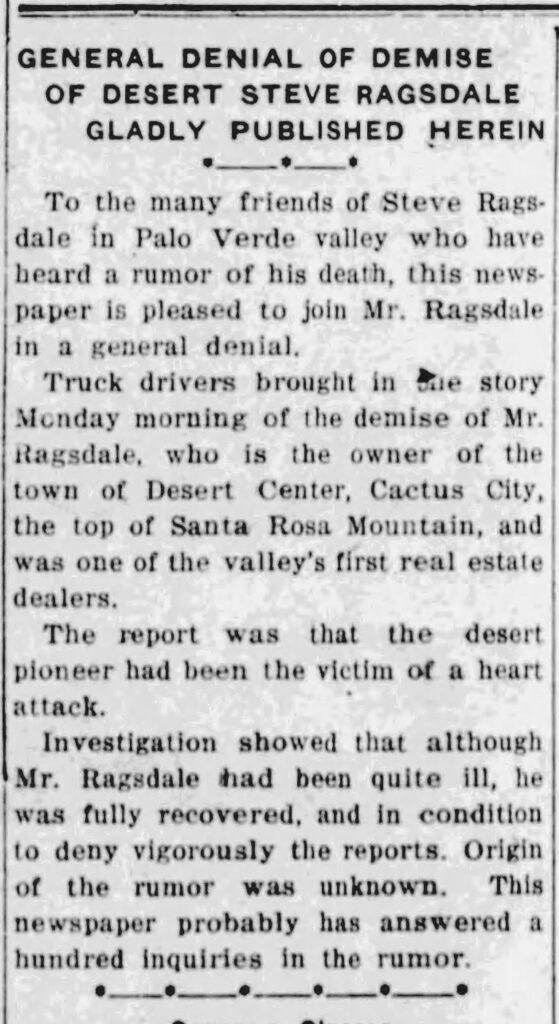
Palo Verde Valley Times, Thu, Aug 15, 1935 ·Page 1
At one point, Ragsdale envisioned carving up his 700‑acre homestead and selling it off piece by piece. He is said to have acquired the property by having his employees at the restaurant and store file for Desert Entry Lands while they lived and worked at Desert Center and then sell their parcels to Ragsdale.
Desert land entries refer to applications made under the historic Desert Land Act of 1877. While Congress never repealed the law, making it theoretically active in 12 states, acquiring these lands is virtually impossible today because most suitable acreage is already privately owned or managed for multiple uses.
But there was a catch to Ragsdale’s vision, an enormous, sermon‑sized catch. He demanded that every deed carry strict bans on liquor, gambling, and wild women, and he wanted the language so ironclad that a man couldn’t even take a sip of his own beer on land bought from him. His lawyers balked at the idea.
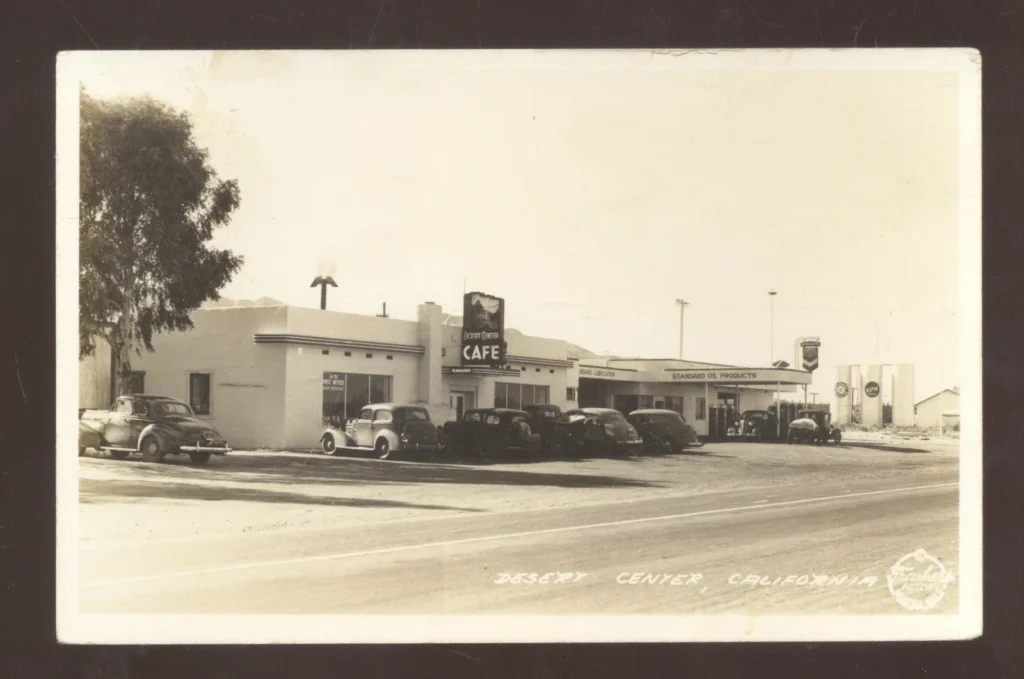
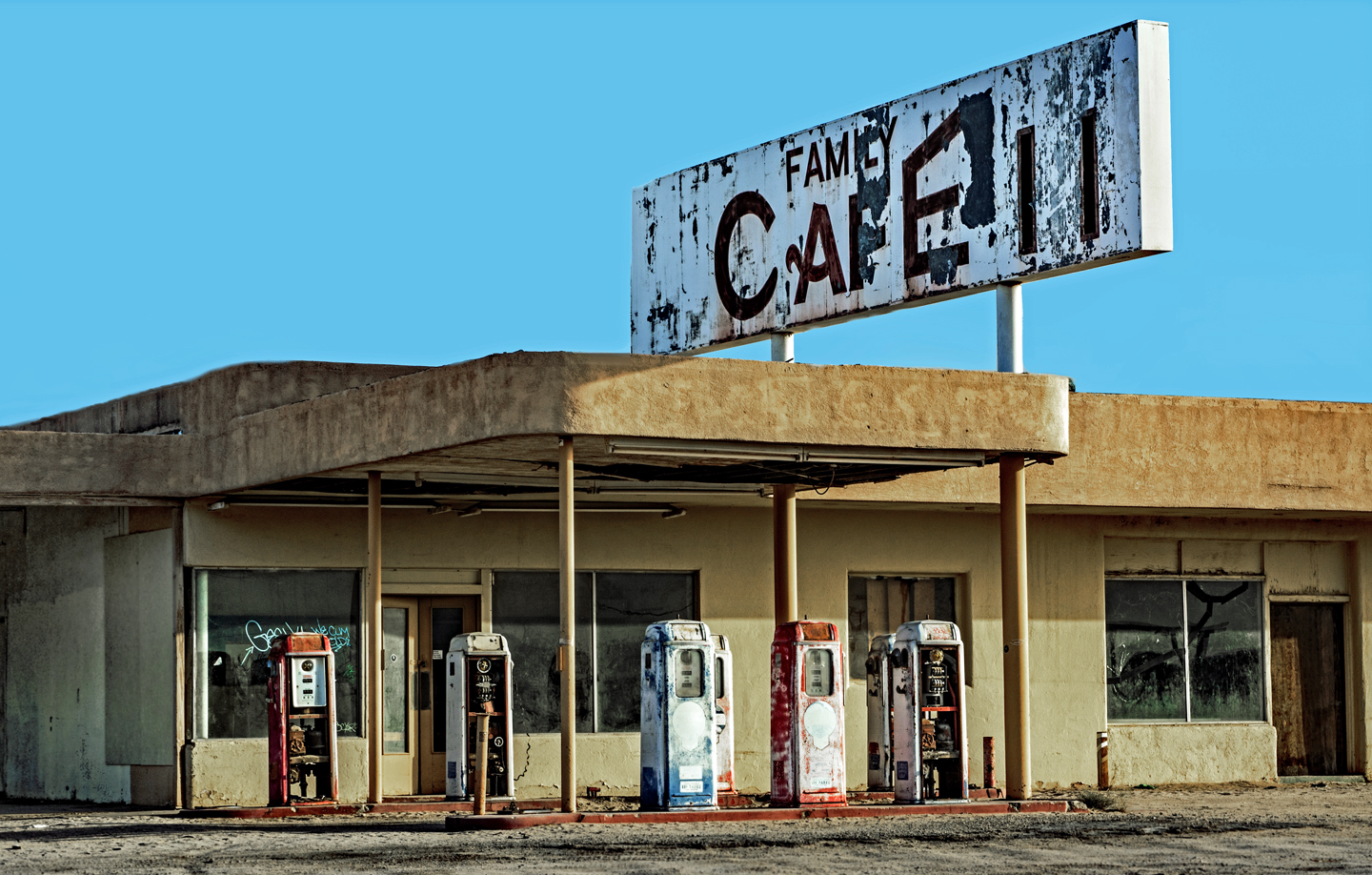
Desert Center Café. Photo courtesy of Frashers Fotos.
Desert Steve didn’t just own all the real estate, he basically was the local government. For years, he served as a deputy sheriff not only in Riverside County, but in San Bernardino and Imperial counties too. Because why settle for being the law in one county when you can collect badges like trendy Labubus.
Riverside College briefly became a family endeavor when Mr. and Mrs. Ragsdale, and their youngest son, Thurman, enrolled together. At 53, Father Ragsdale marched into classrooms for astronomy, psychology, English, and philosophy, determined to learn it all. Mother Ragsdale signed up for art and astronomy, matching his enthusiasm step for step. Although Thurman tried to keep up, illness forced him to withdraw. Still, Pa and Ma Ragsdale showed up every day, lugging their textbooks across campus until the very last exam was finished.
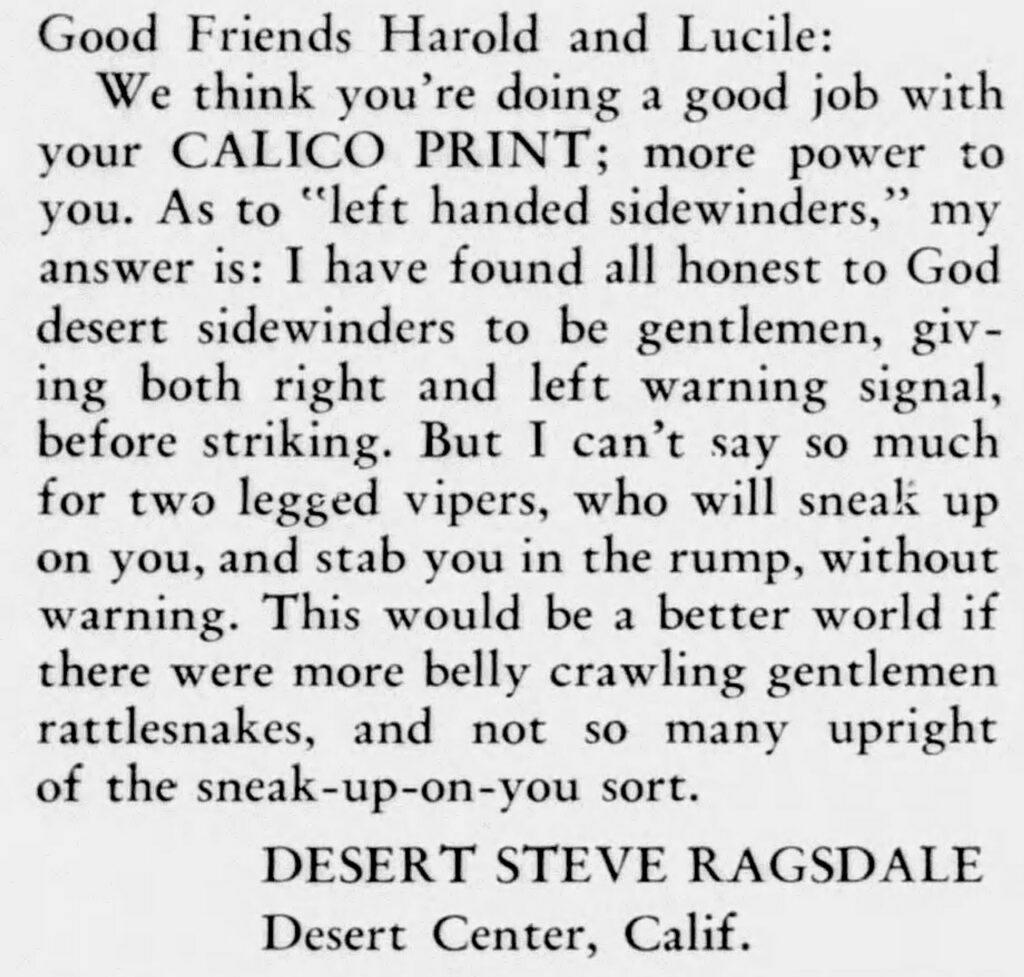
Calico Print, Aug 01, 1952
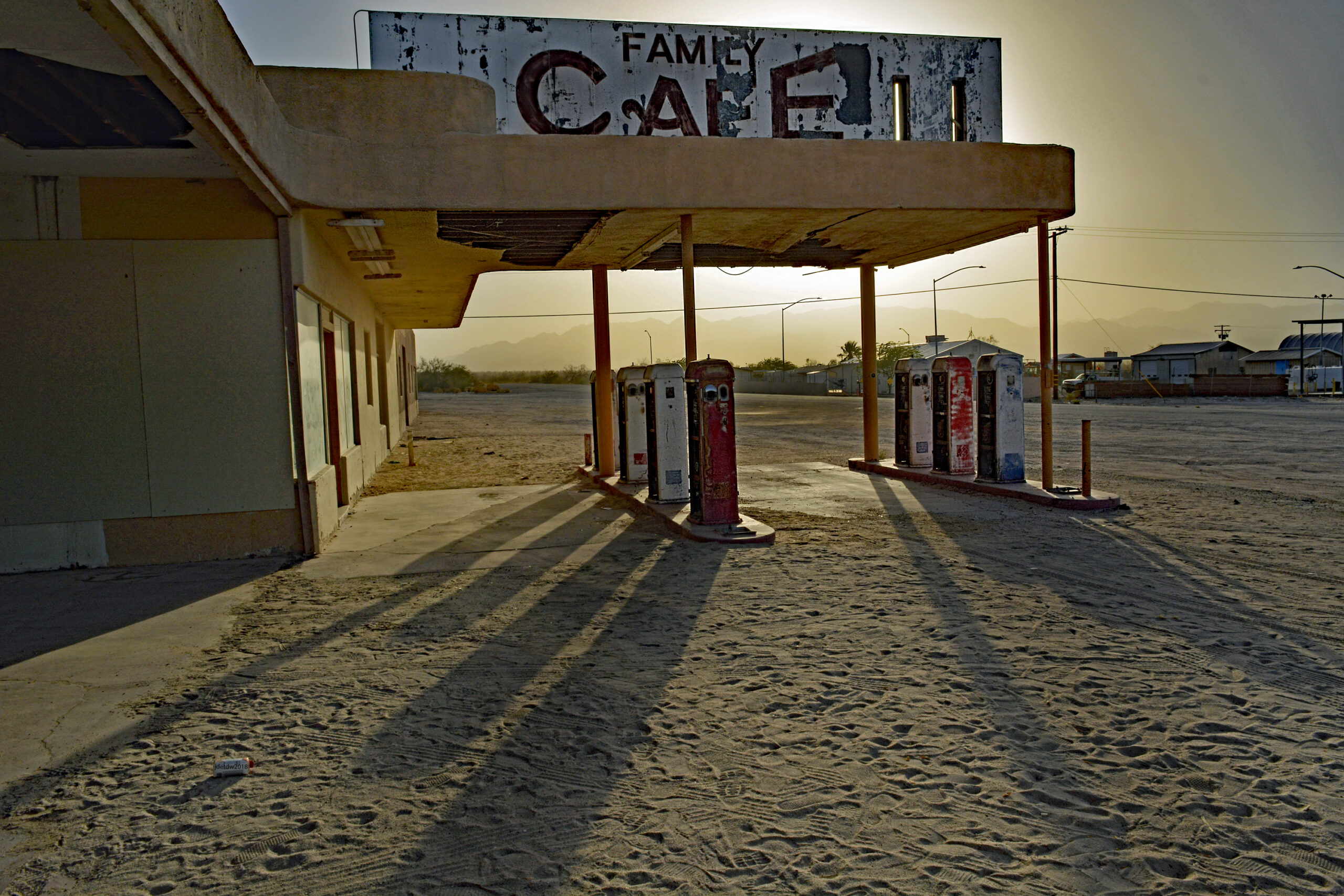
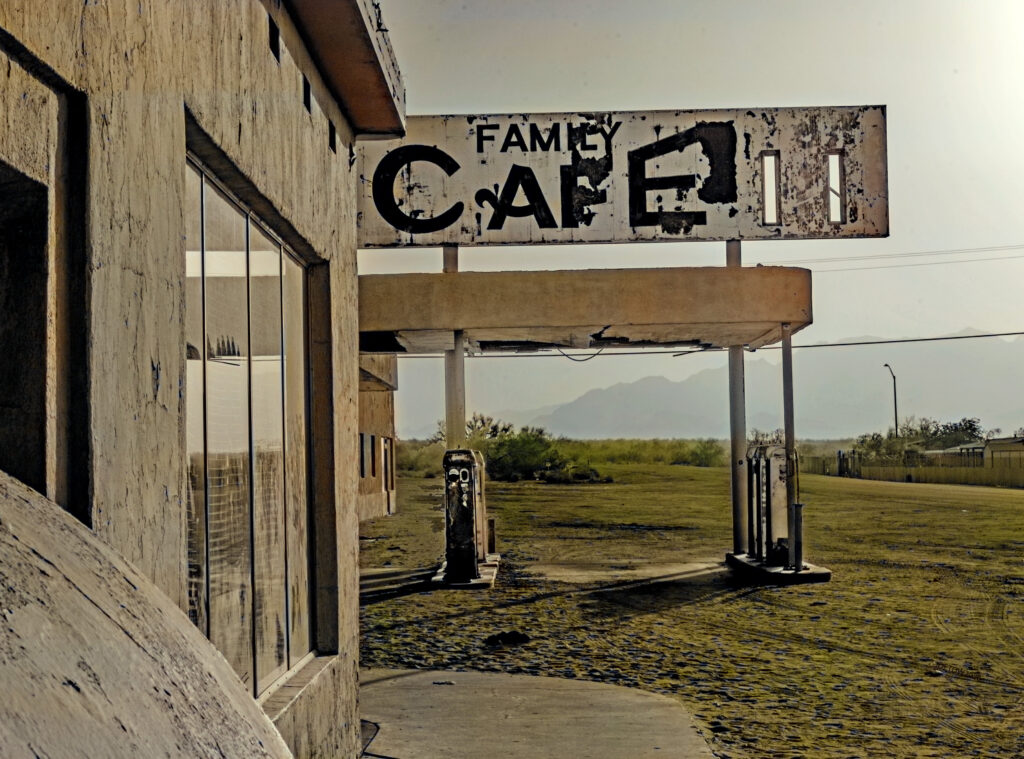
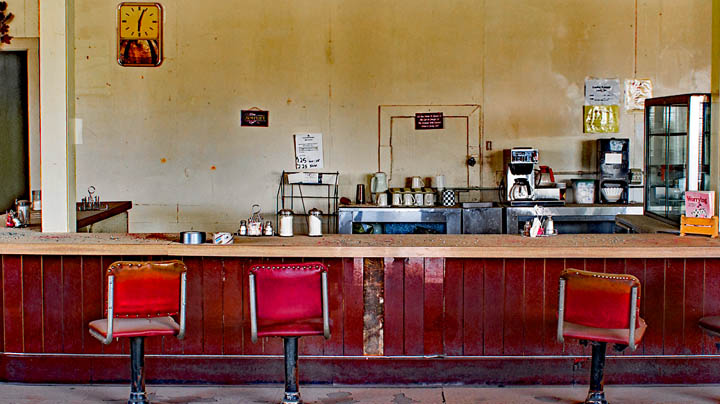
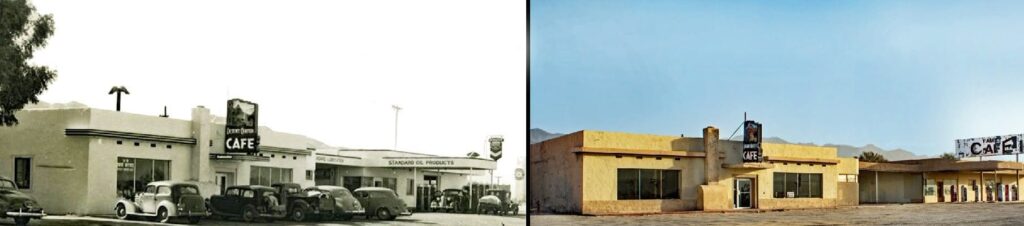
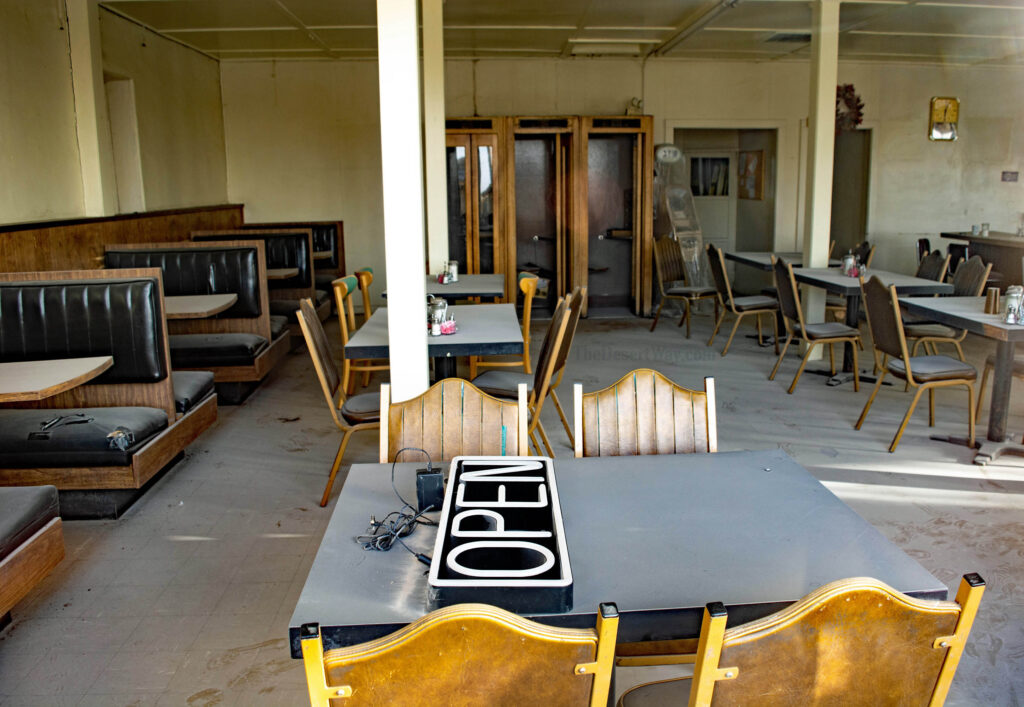
Desert Center’s extensive property included the weathered cafe building, a post office, and the gas station. In 1978, the remains of the old school, cattle trough, and gas station complex were said to exist although their condition was very poor. We were surprised, and a bit smitten, to find the abandoned café still mostly intact with much of its original furnishings when we visited it in 2018. The whole place exuded an aura of being stuck in a glorious time warp.
Desert Steve’s desire was to be laid to rest in Desert Center, so he erected his own memorial marker and had his grave dug by four men, but his plan was eventually thwarted by the county health department. The empty grave remained on the property.
The café was suspended by time since it closed in 2012. It fell into disrepair and became a victim to scavengers, wire strippers and vandals. We had hoped someone with imagination and deep pockets would turn the place into an interesting museum but alas everything in and around the vacant restaurant was finally auctioned off in an overdue probate sale in 2019, down to its landmark sign and rusted antique vehicles.
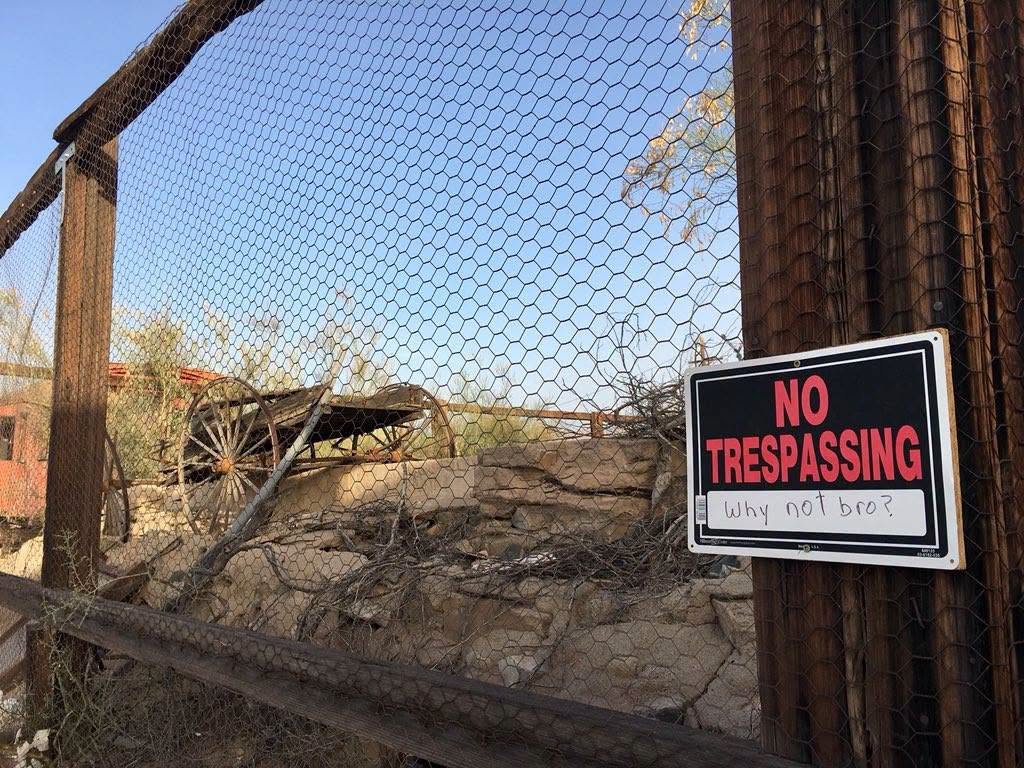
In 2019, the iconic neon café sign sold for $7,400 dollars and the nine vintage wooden bar stools went for $300 dollars. Rare wooden phone booths fetched $1,500. Antique gas pumps and old vehicles, farm implements and wooden wagons frozen in time out back were also successfully bid on and removed from the site.
The immense property was later sold in 2021. The winning $6.25 million bid came from Balwinder S. Wraich, owner of a private trucking company in Fontana, California, one hundred years after Desert Center was founded with an unexpected circuitous flair. Fontana, former home of Kaiser Steel, was founded by industrialist Henry J. Kaiser on December 1, 1941.
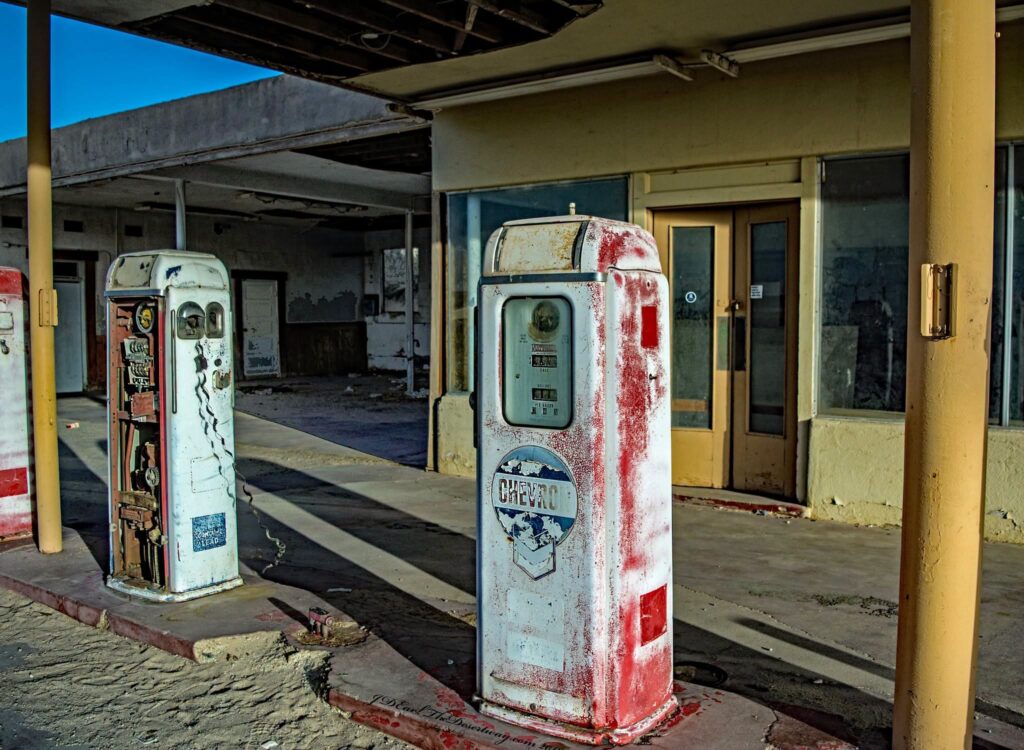
Desert Center, 2018.
Just when it seemed he was beyond reproach, Desert Steve had a fall from grace and dramatically exited the stage in 1950 when somebody spilled the tea that he’d been having an extramarital affair, proof that even a tiny desert outpost can deliver prime‑time drama. Some allege the paramour was a waitress at his restaurant. An Eagle Mountain Class III Field Survey later opined she was an office worker.
Desert Steve abruptly left Desert Center for his log cabin on 560 lush acres on Mount Santa Rosa. Some called it a retirement while others surmised it was a self-appointed exile. In the aftermath, ownership of Desert Center passed to his children, Stanley, Thurman and Thelma. Their brother Herman died in 1960. Ragsdale’s family remained in Desert Center.
The man who seemed larger-than-life died in 1971 and is buried at Coachella Valley Public Cemetery between Avenue 52 and Jackson Street in Indio, California. Desert Steve’s gravesite still features a famously opinionated, self-authored epitaph, one last screed from the desert pioneer. The cemetery is less than two miles from where the world-renowned music festival, Coachella, is held every year.
Stanley eventually purchased the entire town and ran the café and gas station for decades. He died in 1999 and probate of the property ensued beginning in 2000 for the next twenty-one years. The town remains as a waypoint on Interstate 10.
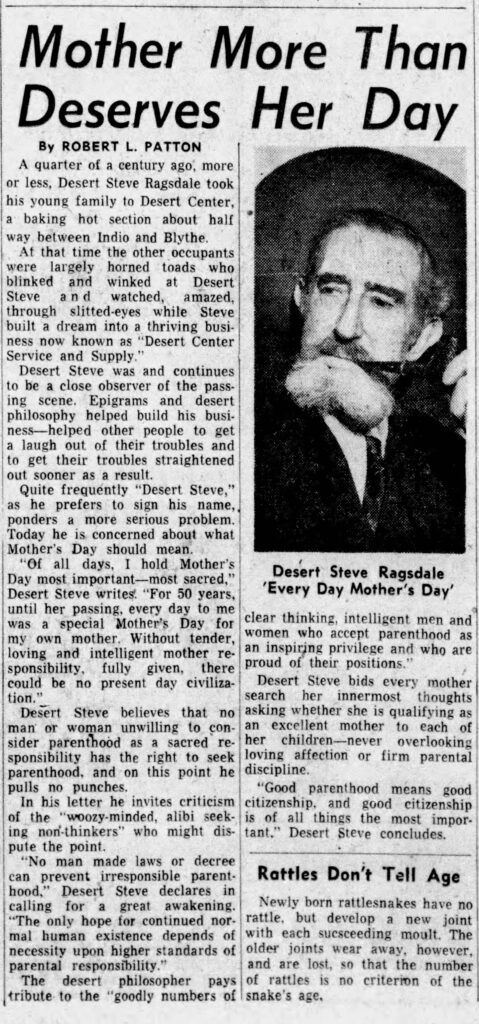
Riverside Daily Press, May 09, 1953.
Ragsdale was a prolific newspaper contributor, in addition to writing poetry called “Spasms.” His stories, editorials and observations are widely peppered in vintage newspapers. Pine trees along the winding route to his mountain property with cooler climes two hours from Desert Center served as towering tributes to Desert Steve’s flamboyant poetry. His quirky stanzas in aging paint are still legible on their peeling bark.
He cofounded the annual Peg Leg Smith liar’s contest in Anza Borrego, California. In 1947 “Desert Rat” Harry Oliver established the original Pegleg Smith Monument which was a sign that read “Let those who seek Pegleg’s gold add ten rocks to this pile.” Another memorial was erected by Desert Steve Ragsdale in 1949 next to Oliver’s original monument. The sign instructed anyone who wanted to seek Pegleg’s gold to leave ten rocks on the pile in the back. The mound of rocks continues to grow.
In the early 1990s, Stanley Ragsdale decided Desert Center needed a little zhuzhing, so he planted several hundred palm trees along the town’s Interstate 10 frontage — not in rows or grids, but in wonderfully baffling patterns that looked like the desert was trying to doodle.
When people asked what on earth he was doing, Stanley cheerfully explained that he’d always wanted a “tree‑ring circus,” as if that were the most natural dream in the world. After his death in 1999, the palms were left to their own devices, and many have since faded away, leaving behind the ghostly outlines of one man’s desert whimsy.
Movie studios have used Desert Center as a shooting location, including Tough Guys (1986), Terminator 2: Judgment Day (1991), H. G. Wells’ War of the Worlds (2005), Desert Road End (2006), Falling Objects (2006), Unknown (2006), and Battle of Los Angeles, which filmed scenes at the Eagle Mountain Mine site in 2011.
There are currently about 367 people living in Desert Center. Lake Tamarisk is a community about one and three quarter miles north of Interstate 10 off Kaiser Road. The landscape around Desert Center has transformed into a hub of solar power, with the Desert Sunlight Solar Farm spreading across the desert like a vast field of mirrors catching the sun, almost as vivid as the life of a man known as Desert Steve Ragsdale.
Note: The above photographs were taken by the Earls exclusively for The Desert Way in 2018.
Resources
https://en.wikipedia.org/wiki/Desert_Center,_California
https://mapasamerica.dices.net/usa/mobile/map-California-Gruendikes-Well-(historical)-1295166
https://www.swdeserts.com/index_htm_files/194001-DesertMagazine-1940-January.pdf (page 34)
https://dhshistoricalsociety.org/wp-content/uploads/2025/03/196305-DesertMagazine-1963-May.pdf (page 38)
https://www.findagrave.com/memorial/25367257/stephen_albert-ragsdale
https://www.blm.gov/sites/default/files/Desert%20Land%20Entries.pdf