The Mojave Desert has always been a place where ideas arrive quietly. They drift in like a shimmering mirage, settle into the sand, and wait for someone stubborn enough, or visionary enough, to pick them up. In Newberry Springs, one such idea took root four years ago: revive a forgotten stretch of Route 66, restore its landmarks, and turn a sleepy desert community into a destination again. What followed wasn’t just a plan. It was a movement.
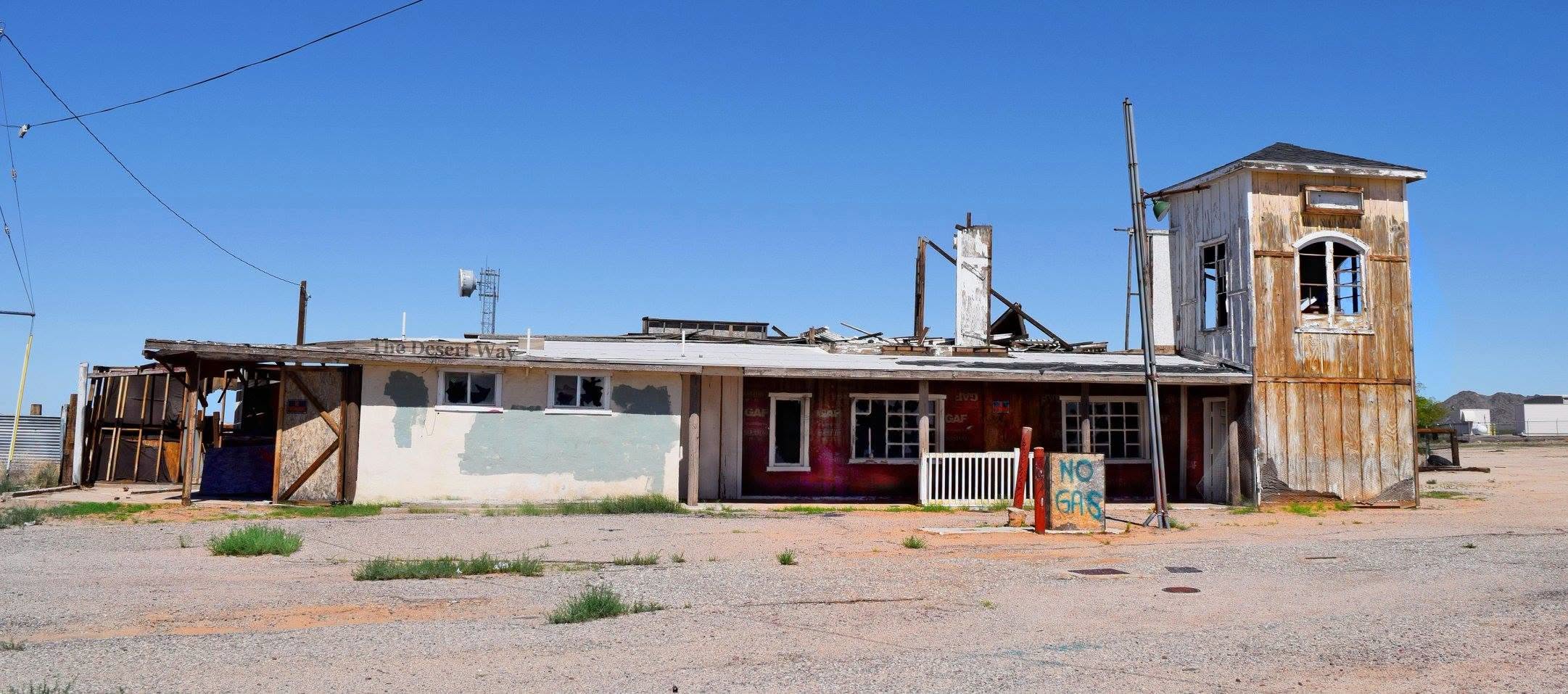
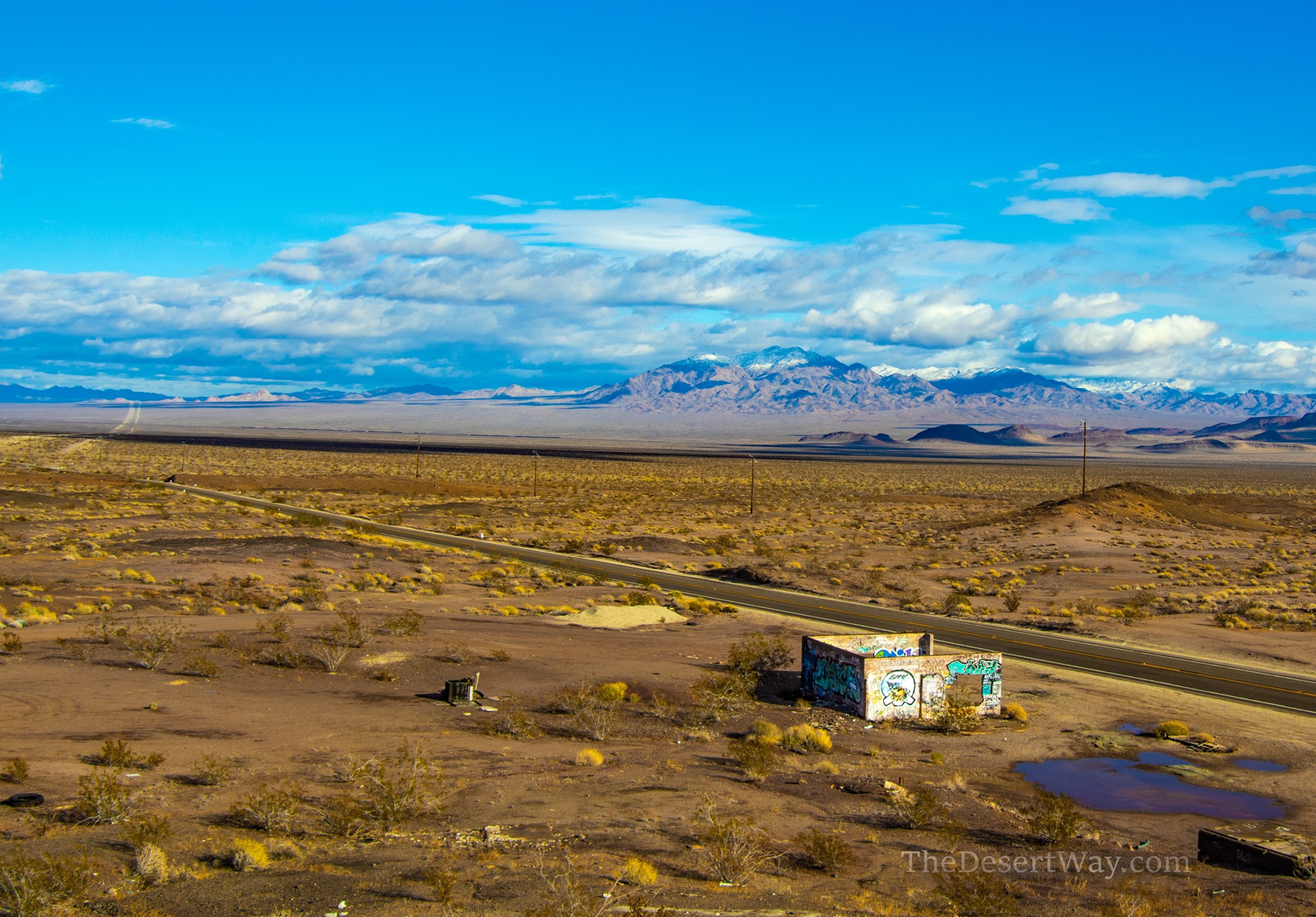
Tucked twenty miles east‑southeast of Barstow, Newberry Springs stretches across roughly 150 square miles of sun‑washed desert, an expanse shaped as much by the rails as by the wind. Its story begins on February 19, 1883, when the Southern Pacific Railroad pushed through the region and established a construction‑site post office called Watson, honoring its first postmaster, Josiah Watson.
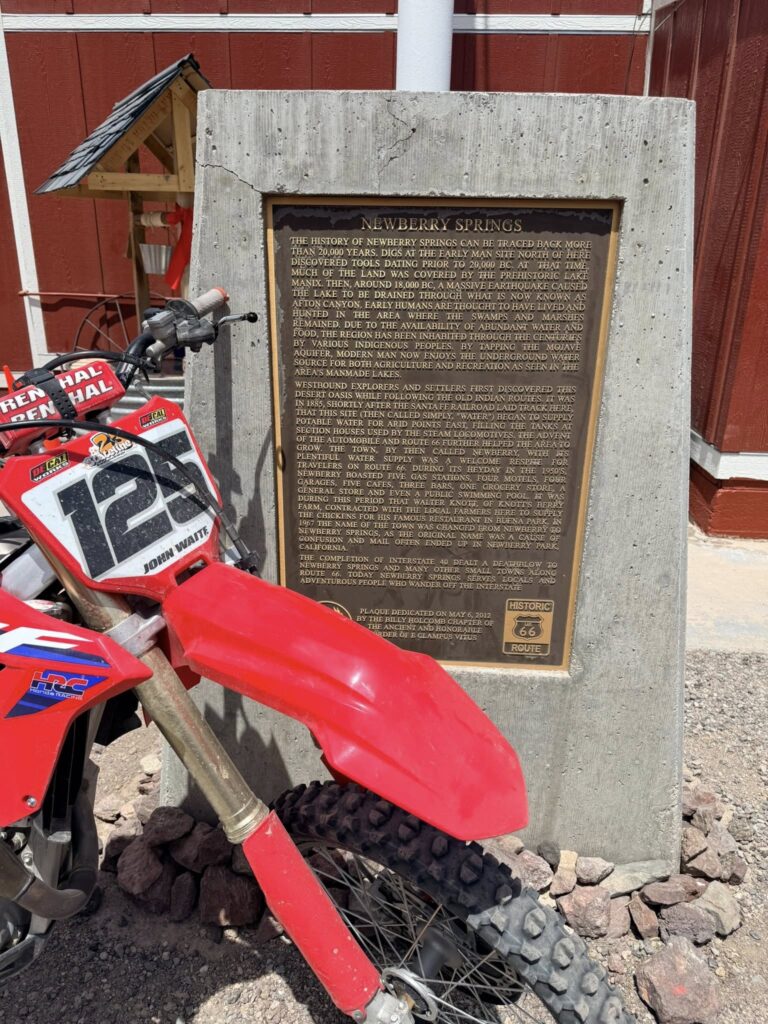
The railroad, however, had its own ideas. It christened its nearby station Newberry, and when the Watson post office closed, the railroad’s name slowly took hold as the identity of the growing settlement.
The post office returned briefly on March 11, 1899, this time under the name Newberry, only to be discontinued again just three months later. The community’s identity continued to shift with the desert winds: on October 12, 1911, the name changed to Wagner, recognizing landowner, grocer, and soon‑to‑be postmistress Madge Wagner.
Then came the railroad’s most utilitarian rebranding. On July 9, 1919, the Santa Fe renamed the station Water, a nod to the astonishing 300,000 to 500,000 gallons pumped daily to fuel steam locomotives crossing the Mojave.
Route 66, the legendary Mother Road established in 1926, stretched 2,448 miles across the American landscape, carrying travelers from the skyscraped bustle of Chicago all the way to the edge of the Pacific Ocean in Santa Monica. Route 66 was officially decommissioned in 1985.
In 1936, author John Steinbeck coined the phrase “The Mother Road” in The Grapes of Wrath, a name that has defined the highway’s mythology ever since.
Finally, on February 1, 1967, the community embraced the name it carries today: Newberry Springs. Older maps still show “Newberry” floating nearby like a ghost town that never quite existed, evidence of a place whose identity evolved with every era of the American West.
By 1973, all California segments of Route 66 had been reassigned to new highway numbers, and by 1984 the historic road had been completely replaced by Interstate 40 and portions of Interstate 15. The surviving original stretches were later redesignated as SR 66.
The stretch between Needles and San Bernardino was first constructed in 1914, following the railroad corridor because water was available roughly every ten miles. Over time, the route accumulated a variety of names: National Trails Highway, Old National Trails, Will Rogers Highway, America’s Main Street, The Mother Road, Route 66, Old Route 66, US 66, and SR 66, each reflecting a different era in the life of America’s most storied highway.
In more recent times, the resurgence of Newberry Springs began with a simple dream, to restore the 1929 Armstrong House into a visitor center, launch Route 66 Tours CA, and build lakeside wedding and event venues that could draw weekend travelers deeper into the desert to Newberry Springs. Armstrong Rock Shop was owned and operated by Ruth Armstrong in the 1950s and ’60s. The vision gained early momentum when its organizer, Karla Claus, received a $2,000 Extraordinary Women Micro Grant, a spark that signaled the universe was paying attention.
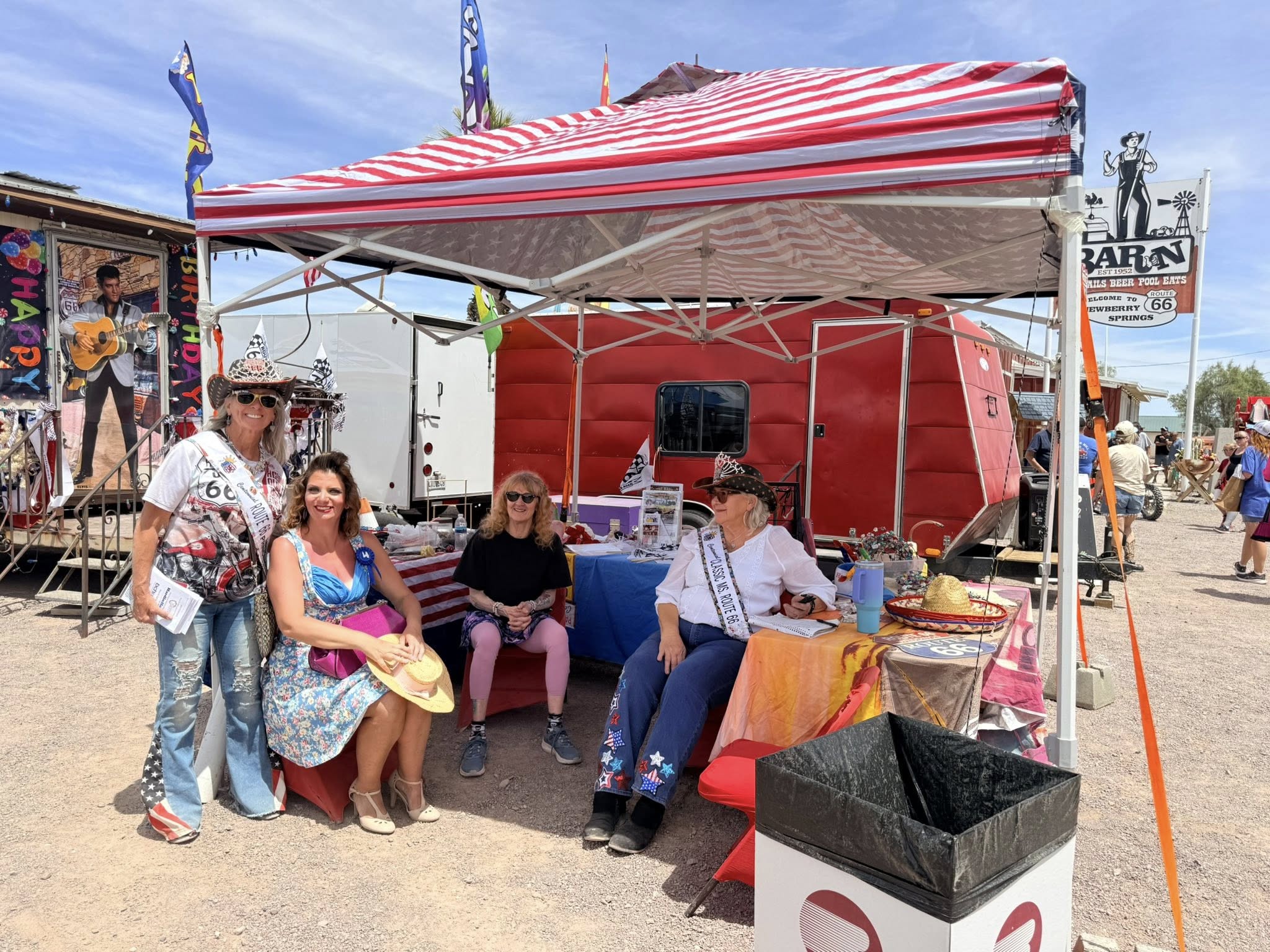
Then came the crown. In 2024, she entered the Route 66 Pageant and emerged as queen, a title she wielded not for glamour but for service. She greeted VIPs at the Bagdad Café, supported its post‑COVID restoration, and hosted a fan meetup for YouTube creator Sarah Jane Woodall, known popularly as Wonderhussy. That gathering became the catalyst for something bigger: a full‑scale Route 66 centennial celebration.
The idea was bold. The Chamber of Commerce debated it. But ultimately, the answer was yes, and the Newberry Springs began to shift.
According to historian Joe De Kehoe, author of Silence and the Sun, the beloved Bagdad Café in Newberry Springs has no historical connection to the long‑vanished town of Bagdad or its original café. For anyone serious about Route 66 history, he stresses, the two should not be conflated.
The confusion began in Hollywood fashion. When the 1987 cult classic Bagdad Café was filmed, the production didn’t head to Bagdad at all. Instead, cameras rolled at the Sidewinder Café, a modest roadside stop along old Route 66 in Newberry Springs. The film became an international sensation, and the name Bagdad Café clung to the weathered building like desert dust. The owners eventually embraced the fame, adopting the movie’s title as their own.
Meanwhile, the real Bagdad Cafe, located in the once‑bustling railroad town of Bagdad slipped into memory. Nothing remains of the original site except a tiny pioneer cemetery protected by the California Bureau of Land Management. The town itself was erased by time, demolition, and the shifting fortunes of the Mojave.
Today, Newberry Springs’ beloved little restaurant stands as a cinematic landmark rather than a historical one: a place where movie magic reshaped a desert diner’s identity, even as the true Bagdad faded into the sand.
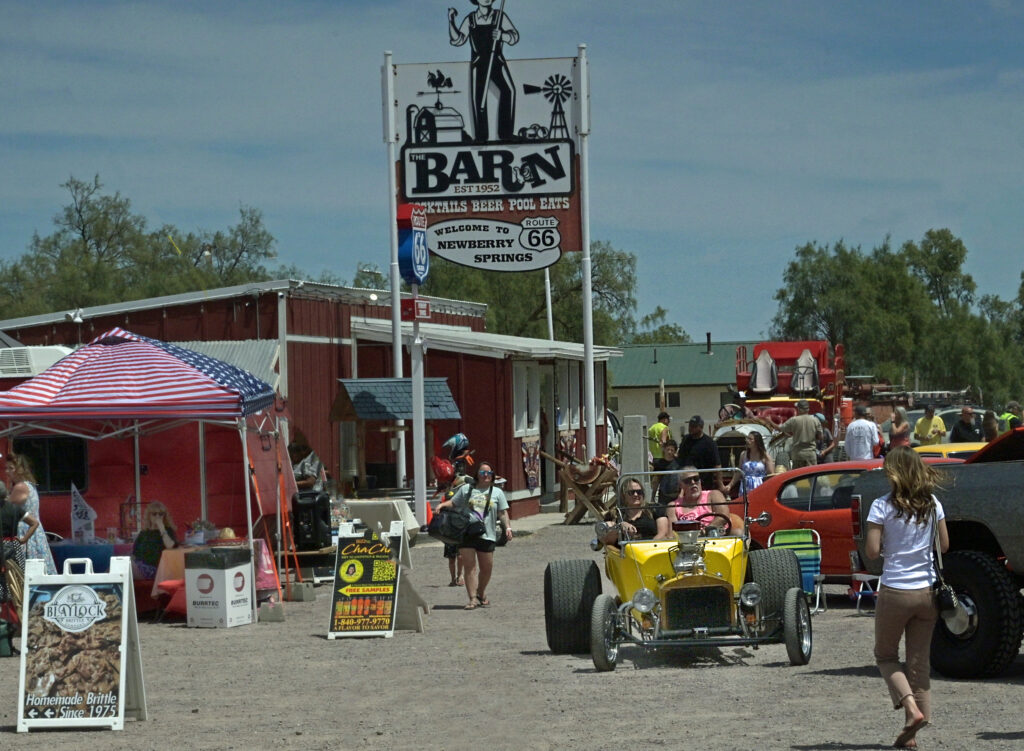
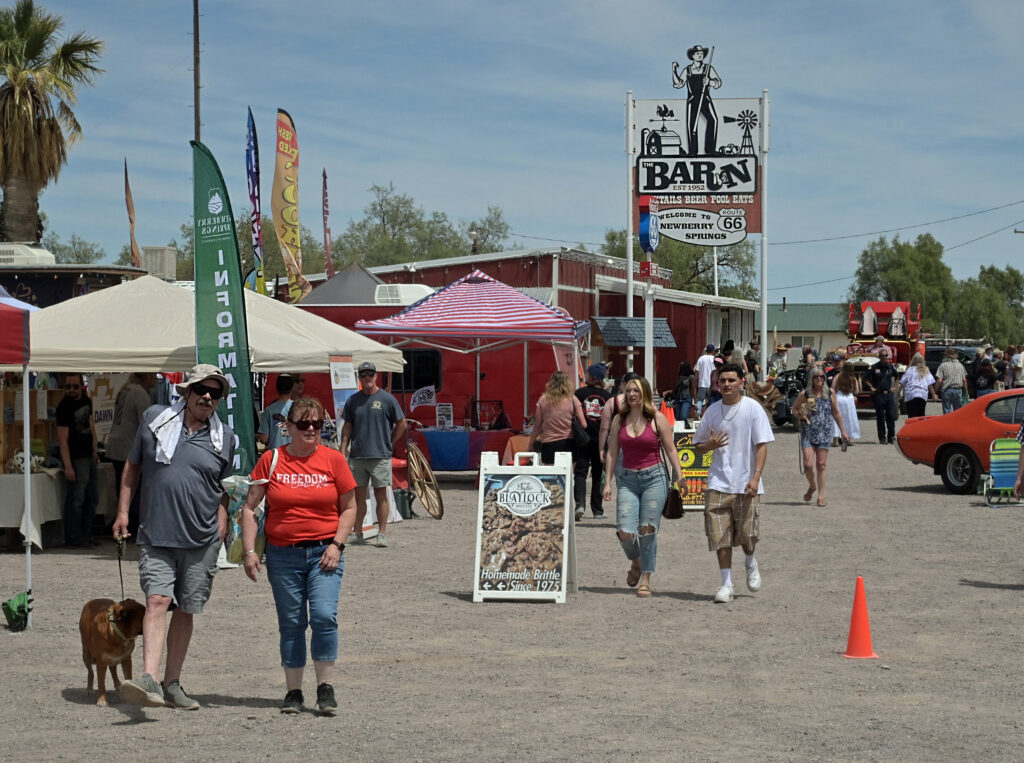
The remodel of The Barn, a local bar established in 1957 as a gas station, now the beating heart of the event grounds, unfolded in tandem with event planning thanks to owner, Renee Kaminski, who also serves as the president for the Newberry Springs Chamber of Commerce. The timing became the catalyst for a surge of volunteerism rarely seen in the region. People appeared out of nowhere, offering time, tools, equipment, and creativity.
Wonderhussy returned to perform Route 66 wedding skits in costume, including her own mock ceremony, adding a playful, celebratory tone to the launch.
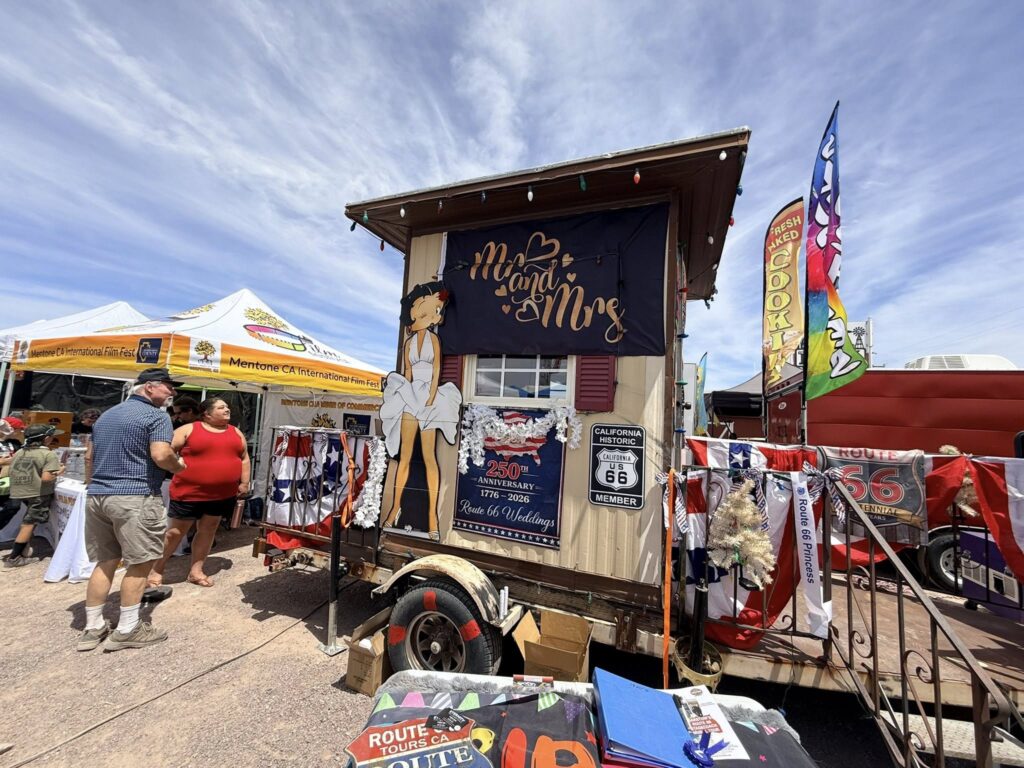
The event also served as the launchpad for a trio of new tourism ventures that are already reshaping how visitors experience the desert. Route66Weddings.com introduced travelers to the charm of Mother Road–themed ceremonies, while LakesideParties.com unveiled four scenic lakefront properties now available for celebrations and gatherings.
Rounding out the expansion, Route 66 Tours CA debuted as a guided experience offering travelers a deeper look at the region’s history, geology, and culture; introducing a new way to explore Newberry Springs beyond the highway’s edge.
The planning for Route 66’s Big Birthday Bash began unfolding in unexpected, almost enchanted ways, as if the desert itself were scripting a modern‑day Mother Road fairy tale.
A man delivered multiple loads of gravel for gas money alone. James, a local volunteer, worked daily during the final week and donated boxes of Beanie Babies for children. A construction team worked day and night to build stages, fencing, and new exterior paneling, supported by a SavingPlaces.org grant. The long‑awaited Monument Sign nearly didn’t make it, until Rose Beardshear pushed, prayed, and persisted. It was installed and lit just in time, with partial funding from Supervisor Dawn Rowe’s office.
A stranger arrived with a full tram‑train car, unannounced and unforgettable. A resident opened their property for helicopter tours, giving the event a literal lift‑off. Eagle Well Drilling rolled in with a massive rig, a giant flag, and floodlights that transformed the grounds into a frontier‑style festival. A friend loaned a commercial generator. Locals contributed sound systems.
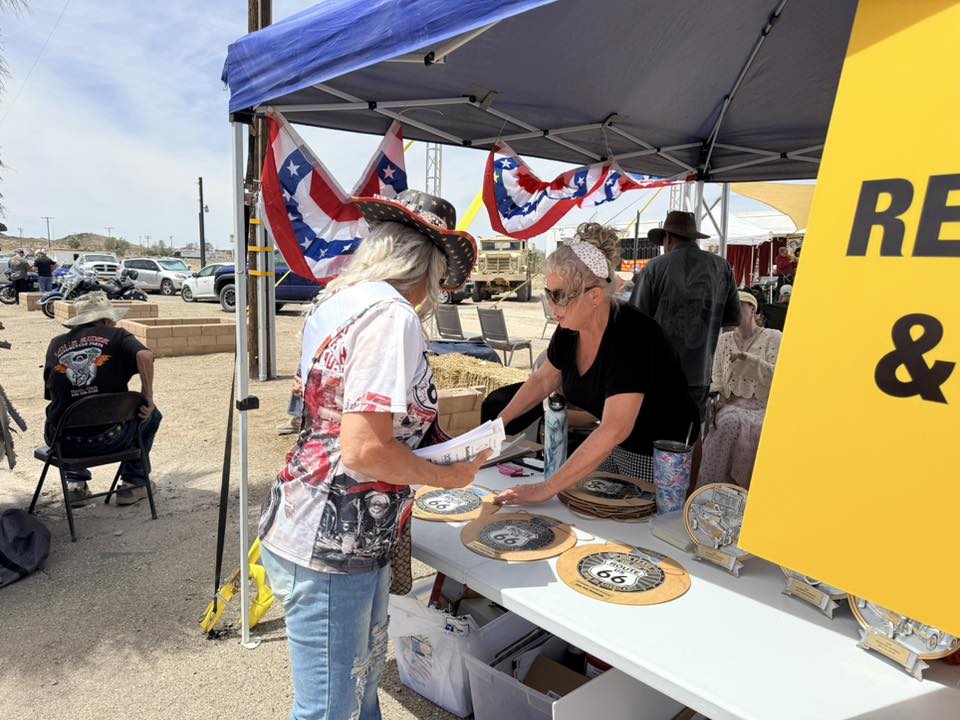
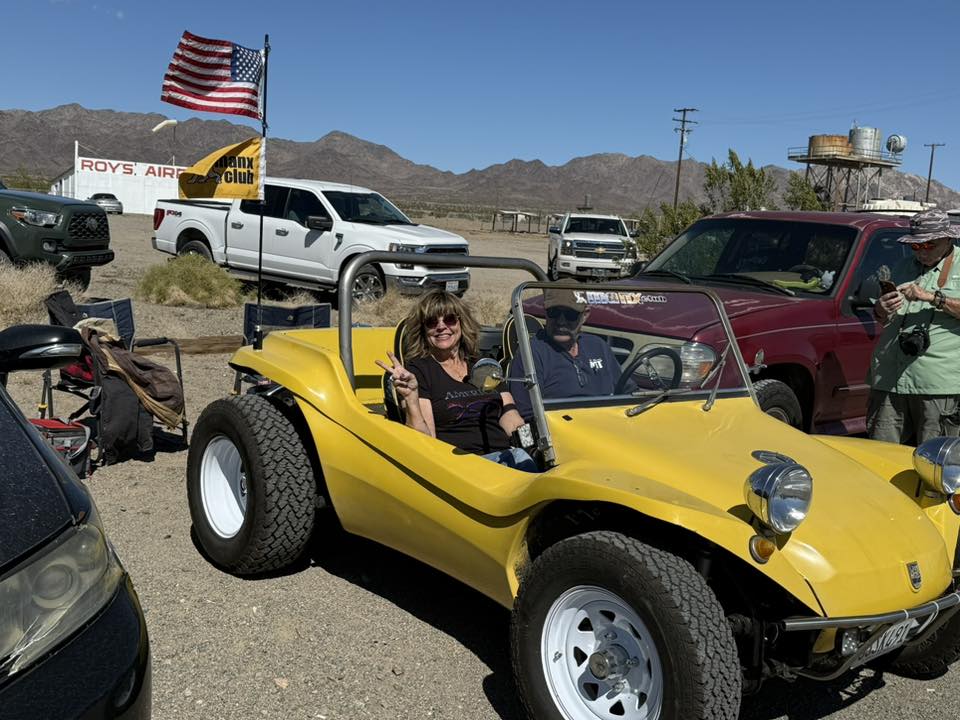
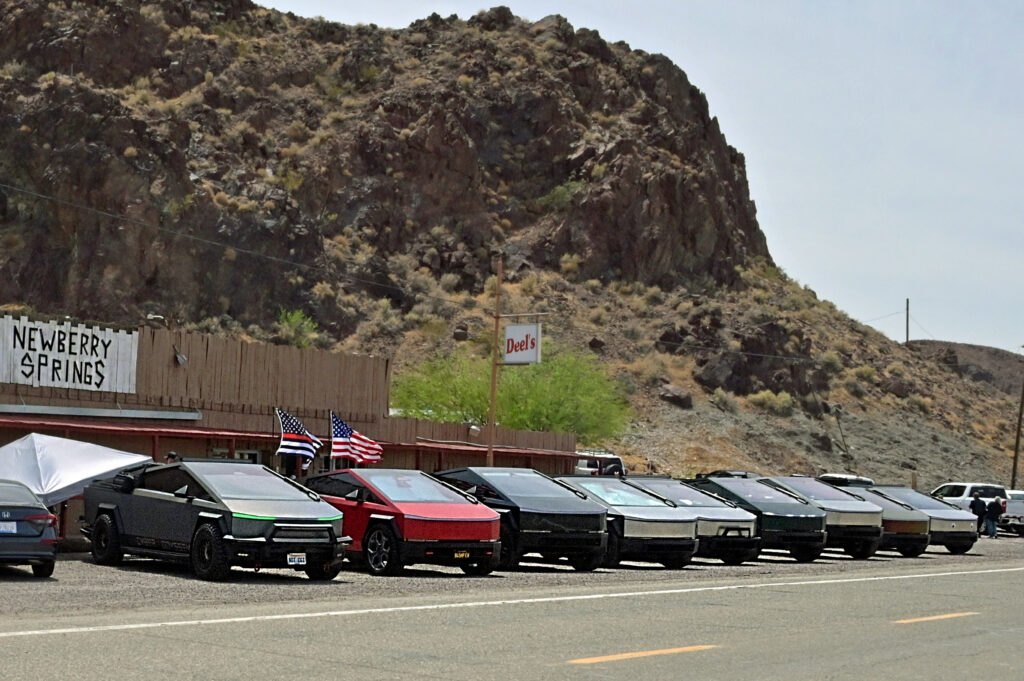
The County of San Bernardino stepped in with generous support for the Barn. American Legion Post 751 took charge of the car show. Pastor Charles and Gwen Patrick became shuttle drivers for guests. Cyber Odyssey USA, the Tesla Wagon travel group, arrived in support. Local talent coordinator Jane Laramore B organized children’s activities and performances.
Behind the scenes, a creative team transformed The Barn into a whimsical, photogenic landmark. Artist and musician Dano Thompkins crafted the now‑iconic installations: the wishing well, the tire‑worm, the minions, the well cover, and a gold‑panning station for kids. He also performed, adding music to his list of contributions.
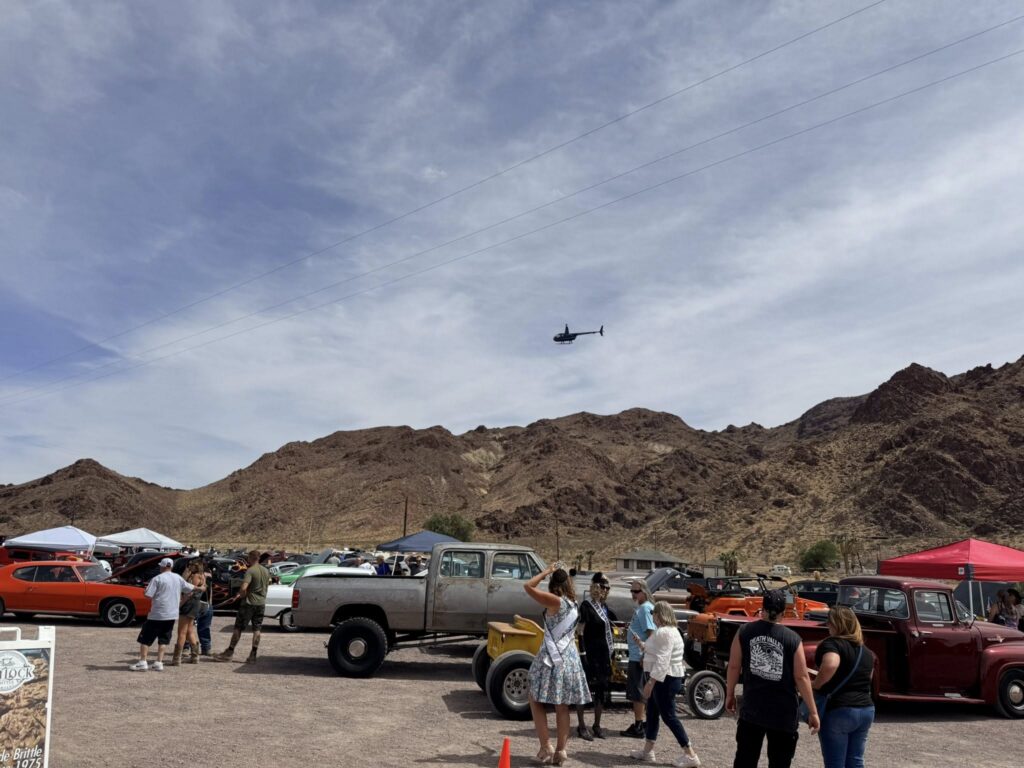
Dano teamed with Ton Forbes and Jackie McKaye to build a full cardboard train, a crowd favorite. Ton and Joe Cruz made multiple trips to Hawthorne to retrieve an estimated $40,000–$50,000 worth of props from a closing entertainment company. Funding came from Renee, the Chamber, and the organizer, who provided her boxcar and trailer for transport. Their work didn’t just decorate the event. It defined its identity.
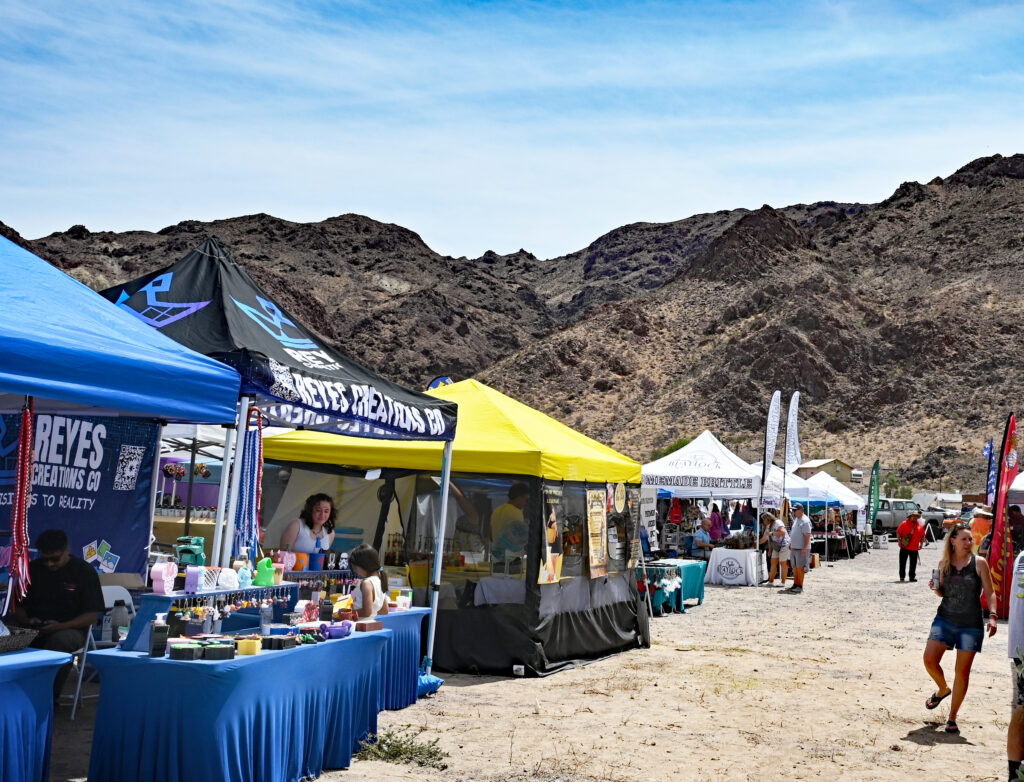
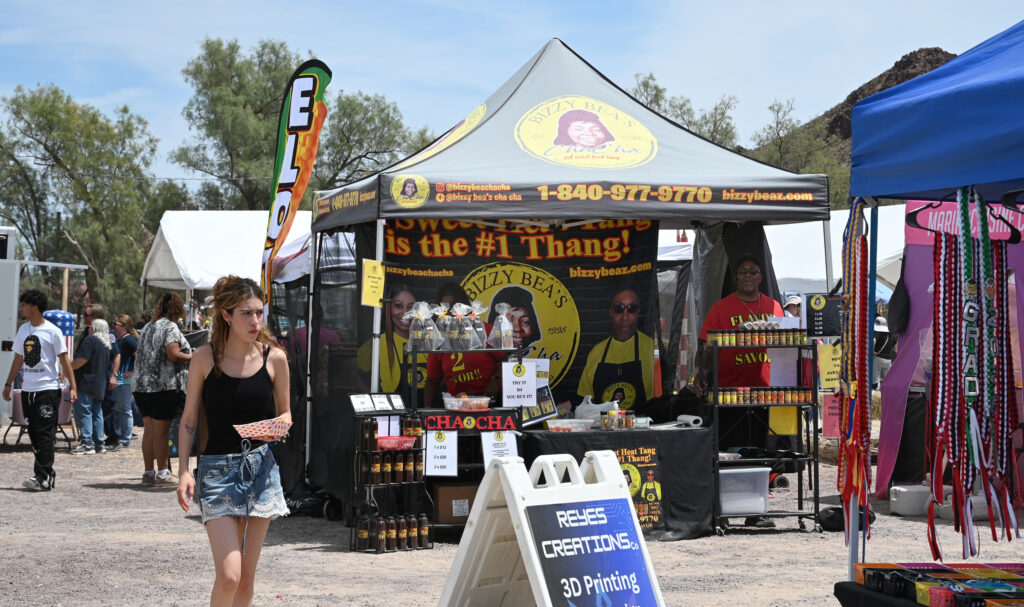
When the day finally arrived, Newberry Springs didn’t just host a celebration, it gifted Route 66 with a phenomenon. Karla counted 84 vendors. Forty-two cars entered the show. An estimated 4,000 people came to the Big Birthday Bash.
Among them was popular Wasteland Firebird himself, John Binns, and his girlfriend, Kelli Robinson, all the way from the land down under, Australia. His much-anticipated Great Route 66 Convergence that began on the Mother Road in Chicago to Santa Monica had just wrapped up with great fanfare on April 30, 2026 at Santa Monica Pier, culminating two years of planning. We highly recommend picking up a copy of Wasteland Firebird’s Big List of the 434 Best Things on Route 66, a travel guide.
Binns’ clever book highlights standout roadside attractions and memorable stops along the Mother Road, each paired with a QR code that lets travelers instantly map the location with their GPS. You will see many suggestions of quirky and interesting places along the route overlooked in other guides. It’s a modern companion for exploring America’s most iconic cross‑country route.
As of this writing, the voluminous little book Binns financed himself is free while supplies last! The second edition will be released about June 2026 for a small cost. Binns is already planning another Great Route 66 Convergence 2.0 this autumn.
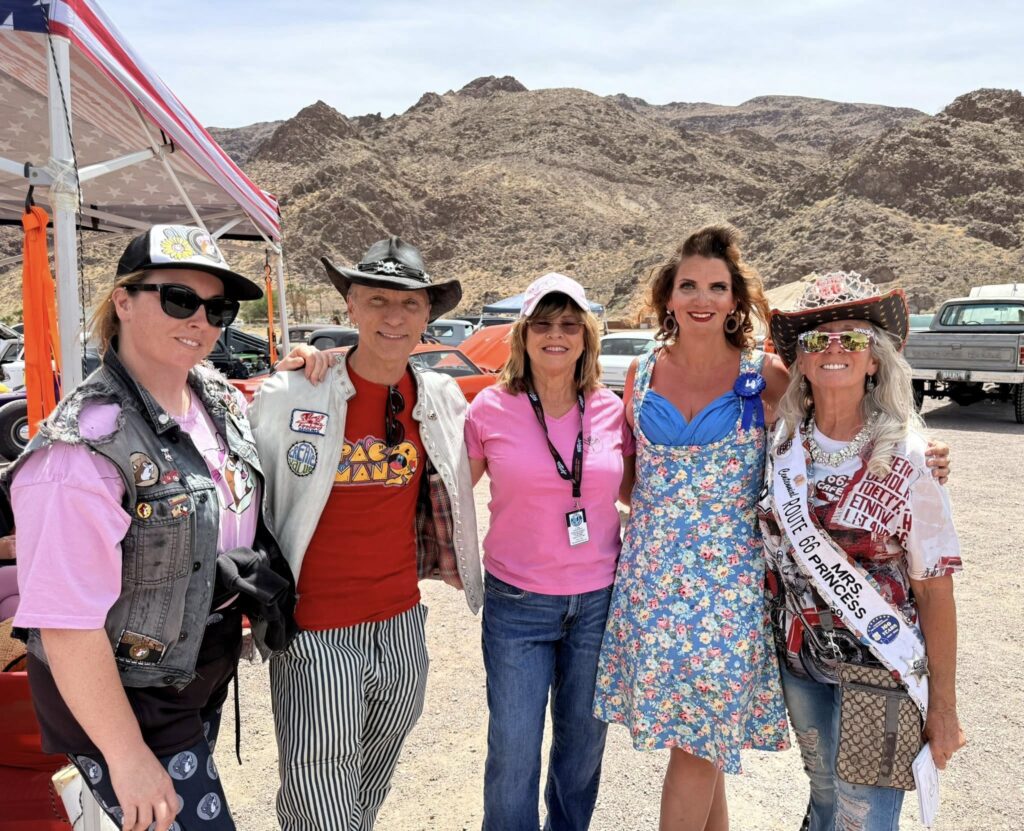
Another appreciated Route 66 luminary at the celebration was Jim Conkle, known as the Will Rogers of Route 66, Pulse Magazine publisher of Mother Road Enterprises, along with his lovely wife, Frances. Jim dubbed us happy wanderers years ago when we first met. Jim said we reminded him of the show starring Slim and Henrietta Barnard. We had never seen the show ourselves but liked its premise. The name fit and we’ve used it as an homage ever since.
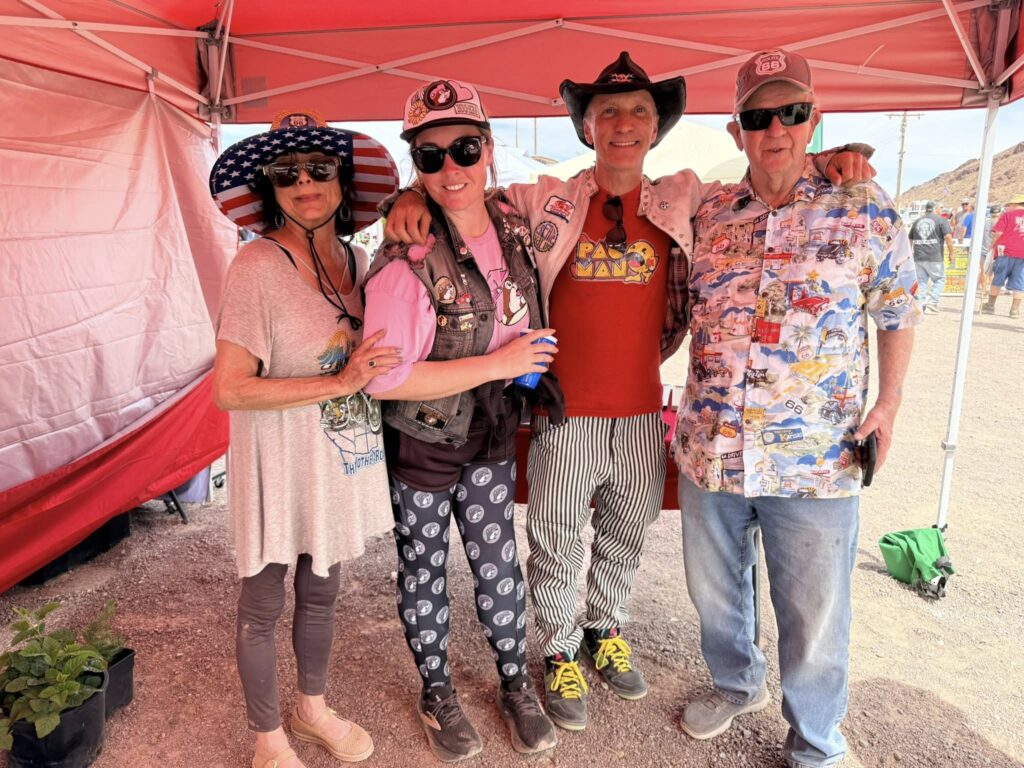
Also attending Newberry Spring’s event was YouTuber Art Torres from Drag It to Daggett fame with his daughter, Jennifer Torres-Cunningham. We bought the cutest little red souvenir bucket with their logo on it.
Local author of The Horseman, John Wease, also attended Route 66’s Big Birthday Bash. John and his wife didn’t just move into Newberry Springs; they let the desert take them in. You can see their fingerprints on the place: the community garden club they keep alive, the festivals where their laughter drifts across the dust and the cottage business where jars of homemade jam glow like little deset sunsets on a shelf.
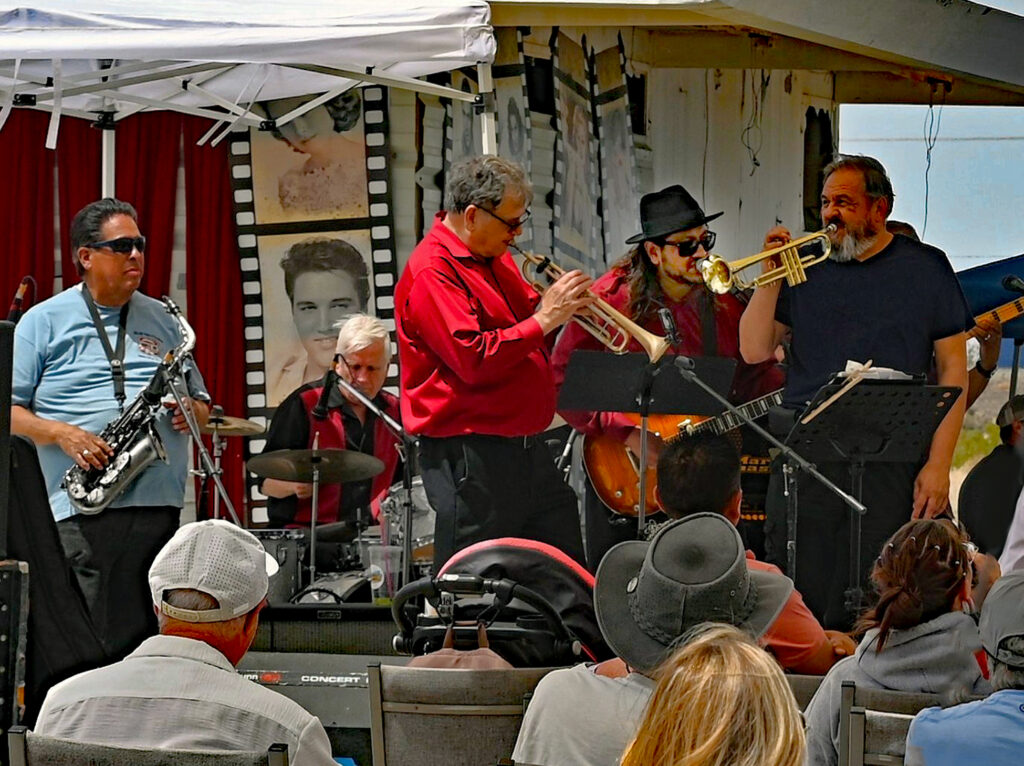
The Birthday Bash’s music lineup on The Barn Route 66 stage read less like a small‑town schedule and more like a mini-Coachella and Stagecoach festival bill, all rolled up into one. The day opened with the warm, easy charisma of country crooner Ryan Bodine, who celebrated his birthday onstage to cheers from locals and travelers alike. His popular song “Barstow to HB” continues to rise on nationwide charts. Other entertainment highlights included a Bagdad Cafe movie screening and an all-day a livestream provided by Al Hickey.
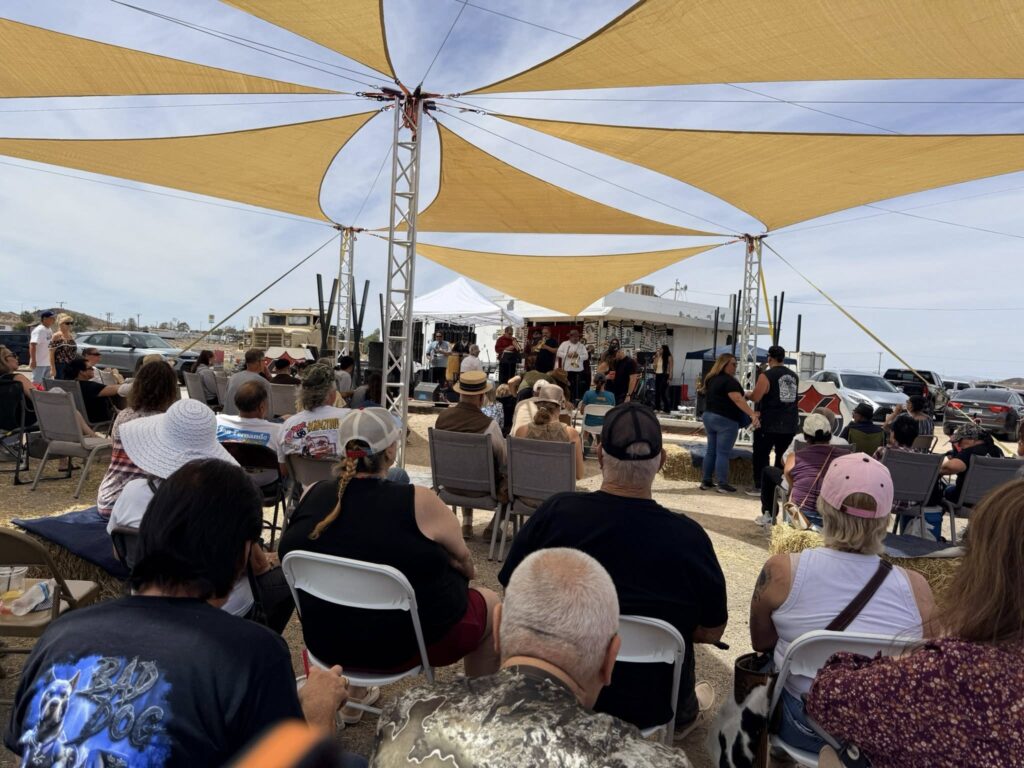
The energy surged as Latin Express brought their signature rhythm to the desert air on the Route 66 Stage, followed by the vintage‑Americana charm of June Cliva and the Ditty Boys.
Crowd favorite Joe Cruz kept the momentum rolling, while Lety Alvarez added soulful vocals that drifted across the festival grounds. Coyote Flats delivered the kind of desert‑rock energy that makes people forget how hot the sand is beneath their boots.
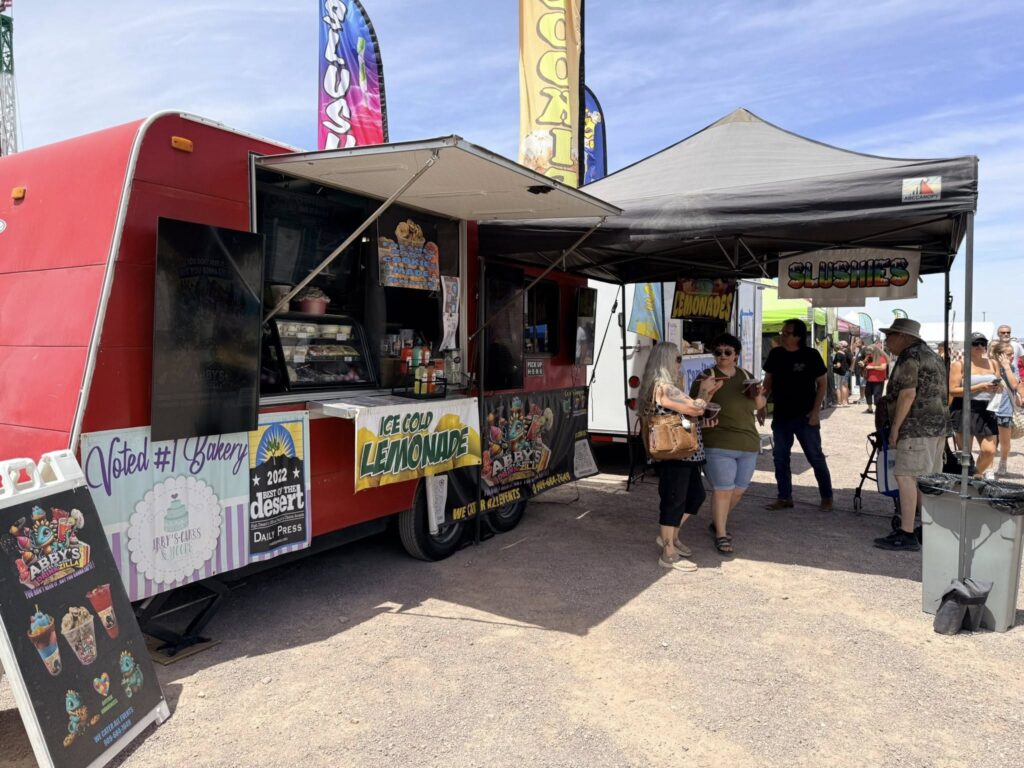
Adding a touch of classic Americana, a troupe of square dancers, the Thunderbird Dancing Group from Apple Valley, spun and stomped their way across the Maddie Rose Stage, drawing smiles from every corner of the crowd.
They were followed by the Route 66 Tappers then Southern Spirit, a popular rockabilly band. Throughout the day, a rotating roster of local performers curated by Jane kept the atmosphere vibrant, proving that Newberry Springs has more homegrown talent than most travelers ever realized.
Inside The Barn, historian and permaculturist Dr. Keller Horton, hailing from Irvine, California, and the newly formed Newberry Springs Historical Society delivered talks that turned the space into a living museum.
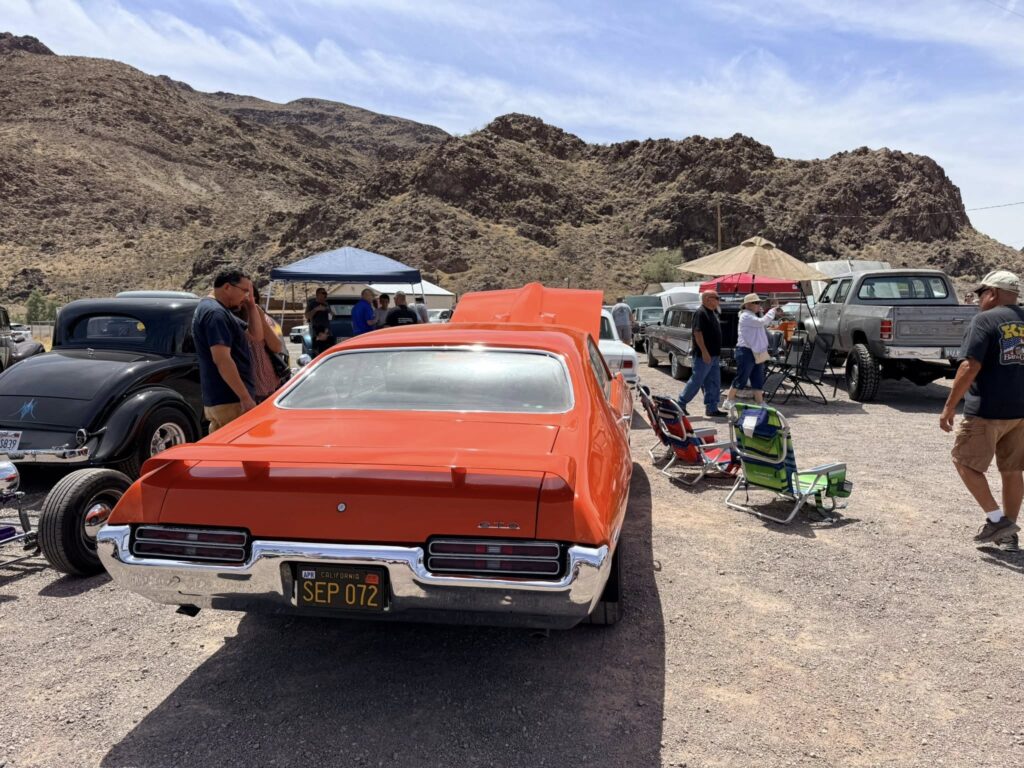
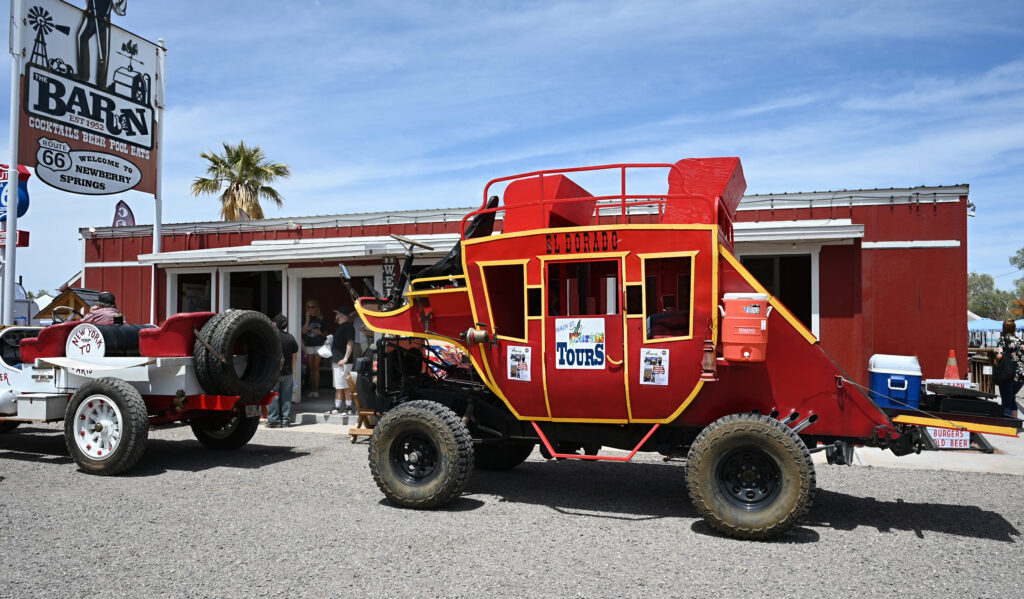
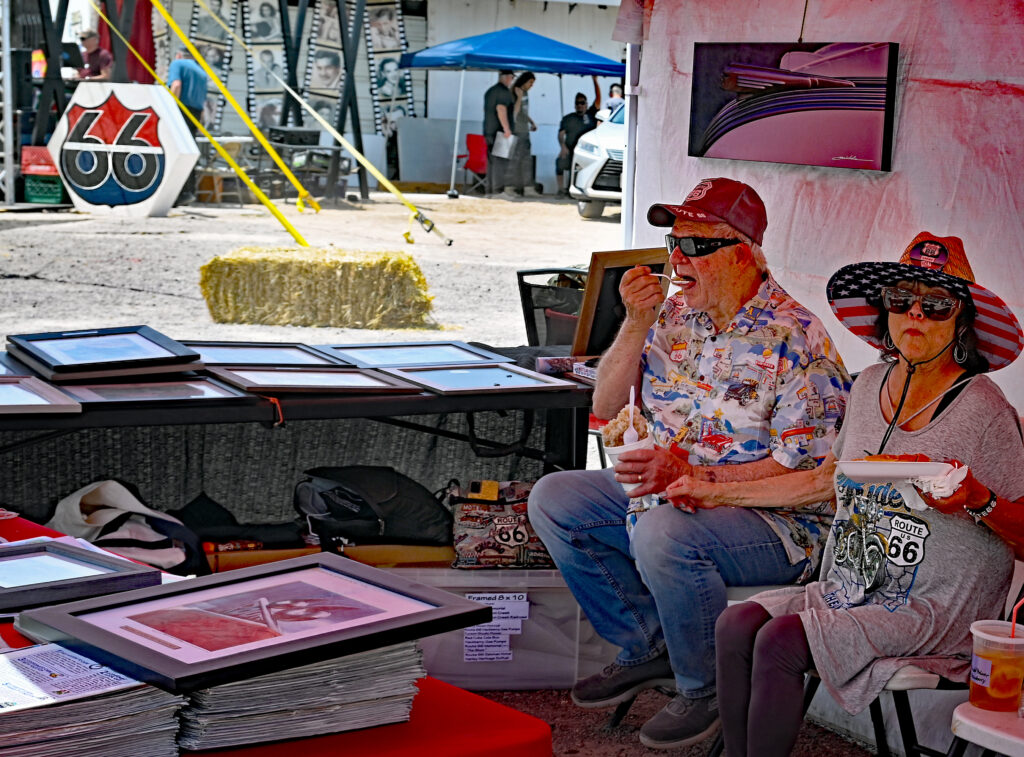
Outside, visitors explored attractions including Winslow, Arizona’s own Rodney Ruckers Customs, a stagecoach, and the historic Thomas Flyer; a reminder that Route 66 has always been a crossroads of past and present. The Thomas Flyer is a 1907 Model 35 with 4 cylinders and 60 horsepower, which won the 1908 New York to Paris Race, the first and only around-the-world automobile race ever held.
When I admired Karla’s handmade, bedazzled Route 66 sunglasses, she slipped them off without hesitation and pressed them into my hands, a small gesture that perfectly captures the effortless generosity Newberry Springs radiates. I bought them on the spot.
By evening, a sign lighting ceremony of the beautiful new Route 66 centennial monument in front of The Barn added to the excitement in the air.
In true Newberry Springs tradition, Ryan Bodine gave the closing performance. By the end of the celebration, Newberry Springs had become more than a dot on the map. It had become a beacon, a living example of what happens on Route 66 when a community rallies around a shared dream.
Volunteers, residents, travelers, artists, musicians, beauty queens, and Route 66 enthusiasts came together to build something larger than themselves. The Route 66 Centennial Big Birthday Bash didn’t just honor the past. It re-ignited Newberry Spring’s future.
Photos by Jaylyn and John Earl, May 2, 2026.
Last Updated: June 1, 2026.
References
De Kehoe, Joe, The Silence and the Sun, Second Ed, Trails End Publishing Company, 2012.
Schoffstall, Patricia, Mojave Desert Dictionary, Second Ed., published by Mojave River Valley Museum, 2014.
Bagdad Cafe, the Movie https://www.youtube.com/watch?v=6oQQgurM_jc
Pulse Publications https://issuu.com/pulsecustommagazines