Where does one go when the heart suddenly decides it craves foreign adventure and uncharted lands? In our minds, we’ve always been seasoned globetrotters — the kind of people who sip tiny coffees in distant plazas and nod knowingly at train schedules we can’t read. In reality, we have never stepped foot outside the United States, and we do not, at this time, possess anything resembling a passport. So much for our grand international escapades.
Well, there was that brief stint in Thailand John had in the 1970s, but that’s a story for another day.
We discovered our own global adventure practically in the backyard — a landlocked micronation known as the Republic of Slowjamastan, tucked along a desolate stretch of Highway 78. It’s practically a stone’s throw from Ocotillo Wells (assuming you’re Superman) and just a scenic cruise from the Coachella Valley.
When word spread that The Sultan himself was calling for foreign aid — specifically, volunteers willing to pick up roadside litter — we realized this was our moment. A perfect chance to explore Slowjamastan, meet its illustrious leader, and finally dip our toes into international relations… without ever needing a passport.
The Republic of Slowjamastan is an 11‑acre micronation born from a $19,000 impulse purchase — the kind only a true globetrotter could justify. Its founder, The Sultan, a man who has literally visited every country on Earth, found himself inspired not in Paris or Kathmandu or Timbuktu, but in the tiny Republic of Molassia.
Founded by Kevin Baugh near Dayton, Nevada, in 1977, it claims sovereignty over 11.3 acres. Molossia is not recognized by any other sovereign states but functions with its own government, laws, currency, and national institutions, serving as a blend of personal sovereignty, creativity, and political satire.
One visit there and the Sultan apparently thought, “Why not me? Why not now? Why not in the middle of Highway 78?” And thus, Slowjamastan was born, proof that international inspiration can strike anywhere, even in the desert.
As we rolled up the dusty approach road, the desert opened like a stage curtain, and there he was: The Sultan of Slowjamastan, standing in the sun as if he’d been waiting for this exact moment. His reflective sunglasses caught the light just right, throwing back a glint that suggested he’d seen every corner of the world and still chose this patch of sand to rule.
He lifted a hand in greeting — part statesman, part showman — and suddenly our first foray into international diplomacy felt less like a volunteer cleanup and more like the opening scene of a very specific, very dusty epic.
Some sources claim there have been as many as sixteen micronations within the United States. The exact number fluctuates as new micronations are founded and others fade away. Micronations are not recognized by international law or any United Nations member state.
A 2025 World Population Review report listed nine micronations in the U.S., including the Republic of Molossia, Conch Republic, Nation of Celestial Space and Republic of Slowjamastan.
Micronations, by definition, are not based in law and their activities do not grant any actual immunity from the law. In the case of Slowjamastan, its illustrious leader makes sure everything is tongue and cheek with a healthy dose of good humor. The ruling Sultan’s real name is Randy Williams, who lives in San Diego.
You may wonder how someone with such an unmistakably American name ended up with a royal title. In the world of micronations, however, the rules are more… flexible.
Randy — a beloved slow‑jam disc jockey with a voice made for late‑night dedications — simply declared himself The Sultan. The transformation was helped along by a delightfully theatrical foreign accent, a wardrobe of official‑looking uniforms, and an entourage of loyal citizens drawn from every imaginable walk of life.
In Slowjamastan, that’s all it takes to turn a man into a monarch.
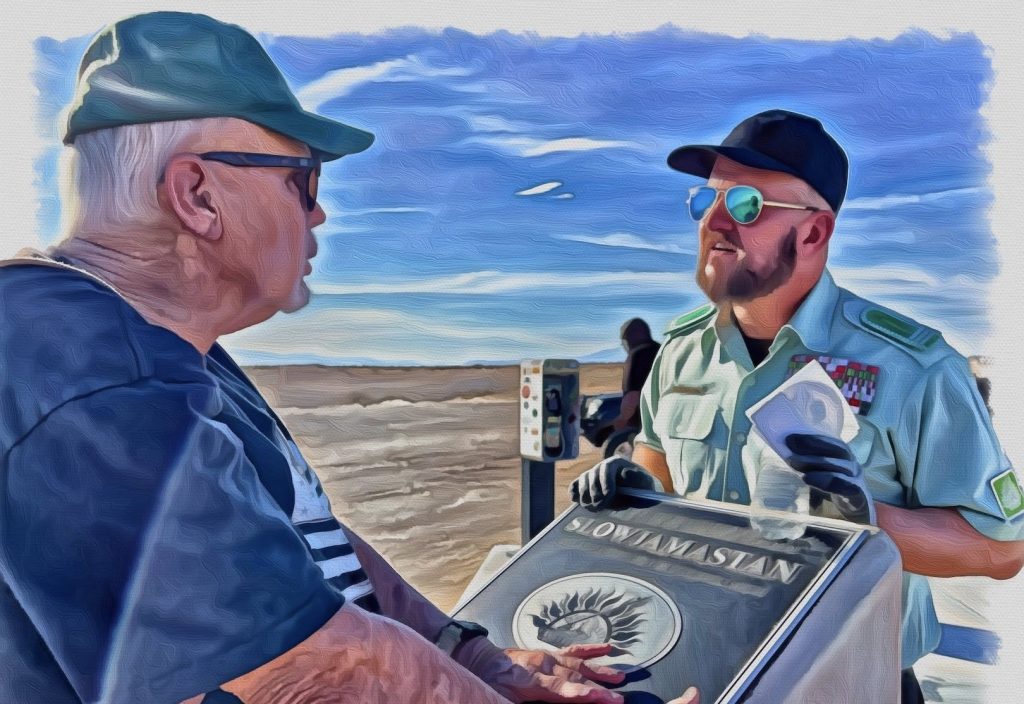
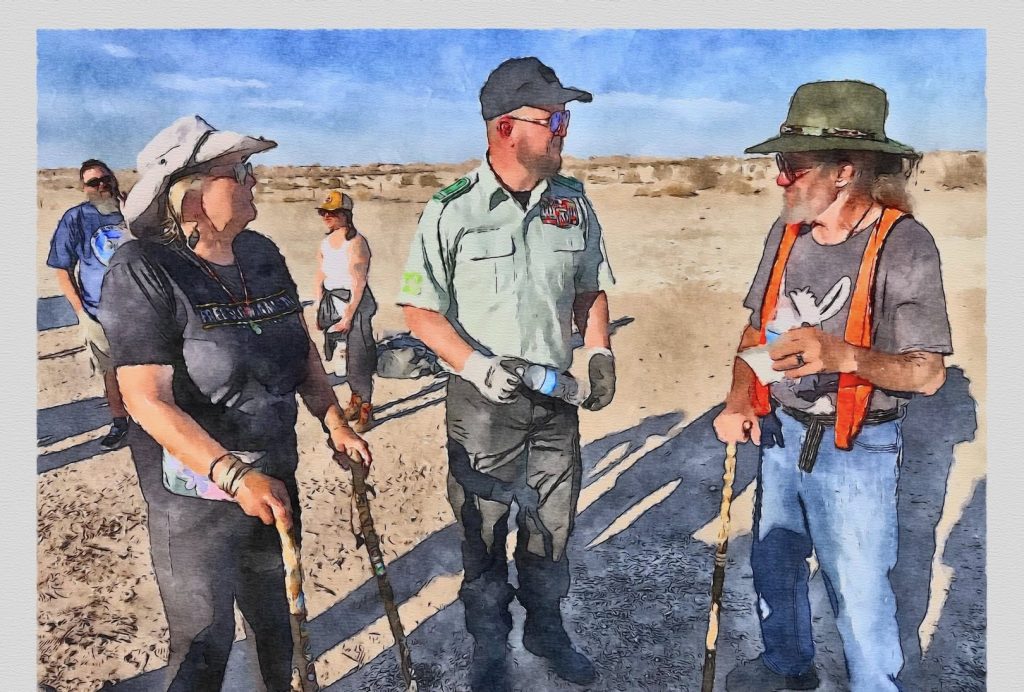
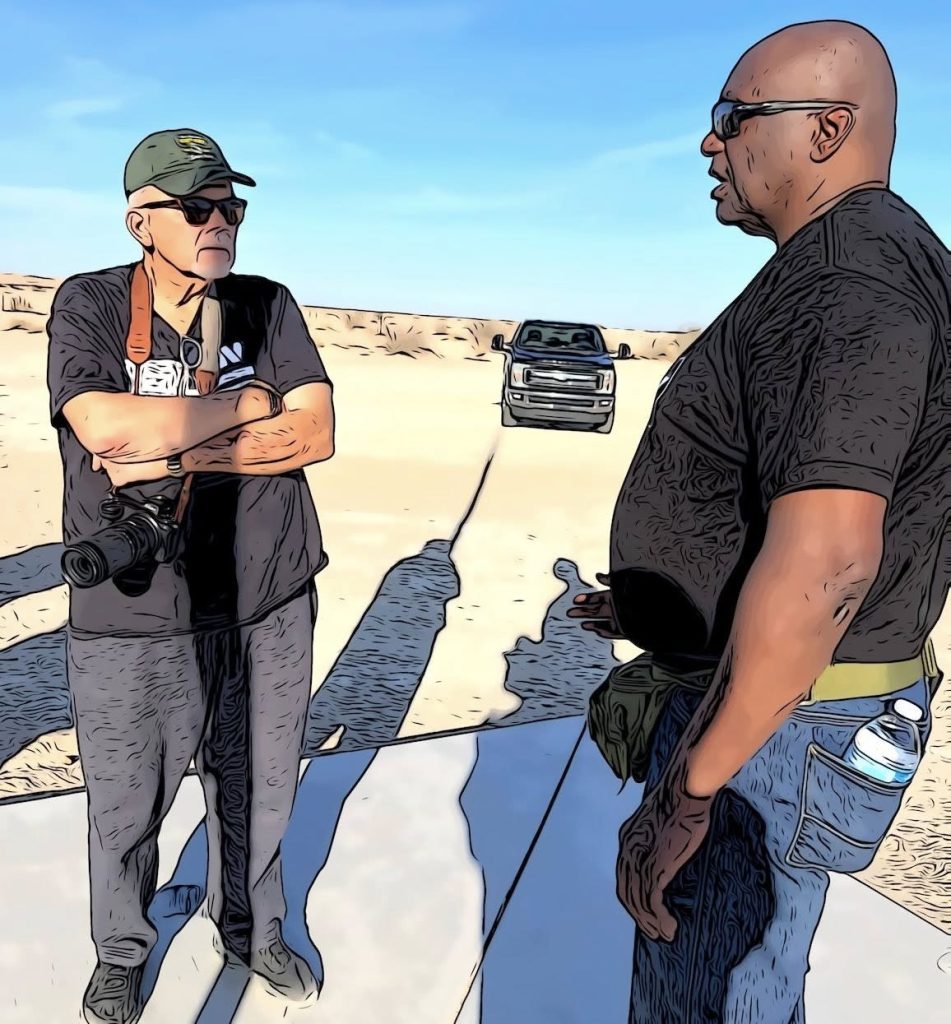
His Excellency Randy “R Dub!” Williams and John pause for chat about world peace, or good pizza.
There’s an important distinction to make here, and it’s one worth spelling out before anyone gets the wrong idea. Micronations are self‑declared, unrecognized countries that imitate the trappings of real nations — flags, titles, borders, national anthems, the whole delightful pageant.
Sovereign citizens, on the other hand, are individuals who insist the American government is illegitimate and that they’re personally exempt from its laws, paperwork, and general reality. One is whimsical; the other is… not. And just so we’re clear, neither will get you out of a ticket, no matter how official your Temu passport looks.
So now that we’ve cleared that up — micronations are fun, sovereign citizens are not (except on police bodycams), and neither will charm a highway patrol officer — we can get back to the good stuff. Because Slowjamastan wasn’t about loopholes or legal theories. It was about spectacle, sand, and one man’s unwavering commitment to ruling eleven acres like it was Monaco with better parking.
The idea of a micronation might sound mysterious, maybe even a little nefarious, but the Republic of Slowjamastan is anything but. It’s an open book with a fan base that grows by the day, each new citizen proudly pledging allegiance to eleven acres of pure desert spectacle.
The Sultan himself spoke of grand plans for his young nation — a Lazy River, for starters — and, in his own wonderfully unconventional way, he eventually delivered. Slowjamastan has a habit of turning Dad jokes into policy and daydreams into infrastructure.
While it’s true that remote Slowjamastan has no buildings in the traditional sense, it’s far from empty. There’s a security office, a proper gate, official signage, and a steadily growing roster of sites to claim as your own — the early bones of a nation that takes its eleven acres surprisingly seriously.
The Sultan regularly fields emails and phone calls from people all over the world asking if they can pack up their lives and move to Slowjamastan. He always responds with impeccable diplomacy — and a firm no.
Residency may be off the table, but citizenship is another story. By July 2024, more than 19,000 people had pledged allegiance to the desert kingdom, proudly calling themselves Slowjamastanis.
It turns out you don’t need borders or housing permits to build a nation — just a charismatic Sultan, a patch of sand, and a global fan base eager to be part of the joke, the dream, or a little of both.
Rescue Rick
Like any proud nation, Slowjamastan has endured its share of hostile incursions from foreign adversaries with questionable motives.
The most infamous came on December 14, 2024, when two adult men — trailed by reluctant minor children — slipped into the unoccupied Motherland under cover of darkness. They broke into a locked structure, made off with various items, and left a trail of petty vandalism in their wake.
One of the dastardly henchmen even tried to recruit the kids into his mischief, a detail that would later earn him zero points in the Court of Public Opinion. Worst of all, a beloved on‑property mannequin vanished that night and has not been seen since, becoming Slowjamastan’s first officially missing citizen.
Slowjamastan didn’t just file the incident away as a police report — it elevated it straight into national lore, the kind of story future Slowjamastanis will retell with the same reverence other countries reserve for great battles and founding myths.
The Sultan framed the whole affair as The Great Mannequin Heist, a cautionary tale about vigilance, valor, and the dangers of trusting men who spray‑paint their own Instagram handles at the scene of the crime.
Security footage became state‑approved educational material. The missing mannequin was honored as a fallen national hero. And the two culprits — Shane and Joe — were immortalized not as hardened criminals, but as the least competent invaders in Slowjamastani history.
By the time the dust settled, the incident had transformed into a foundational legend: proof that even a tiny desert nation can face adversity, triumph over it, and come away with a story far better than the one it started with. May we suggest parenting classes.
More fences and cameras now stand watch over the Motherland, funded entirely by a generous wave of Slowjamastani supporters who rallied behind the cause. In true national‑spirit fashion, the people spoke — and the security budget listened.
All of their names, including ours, now appear on a plaque proudly displayed at the gated entrance.
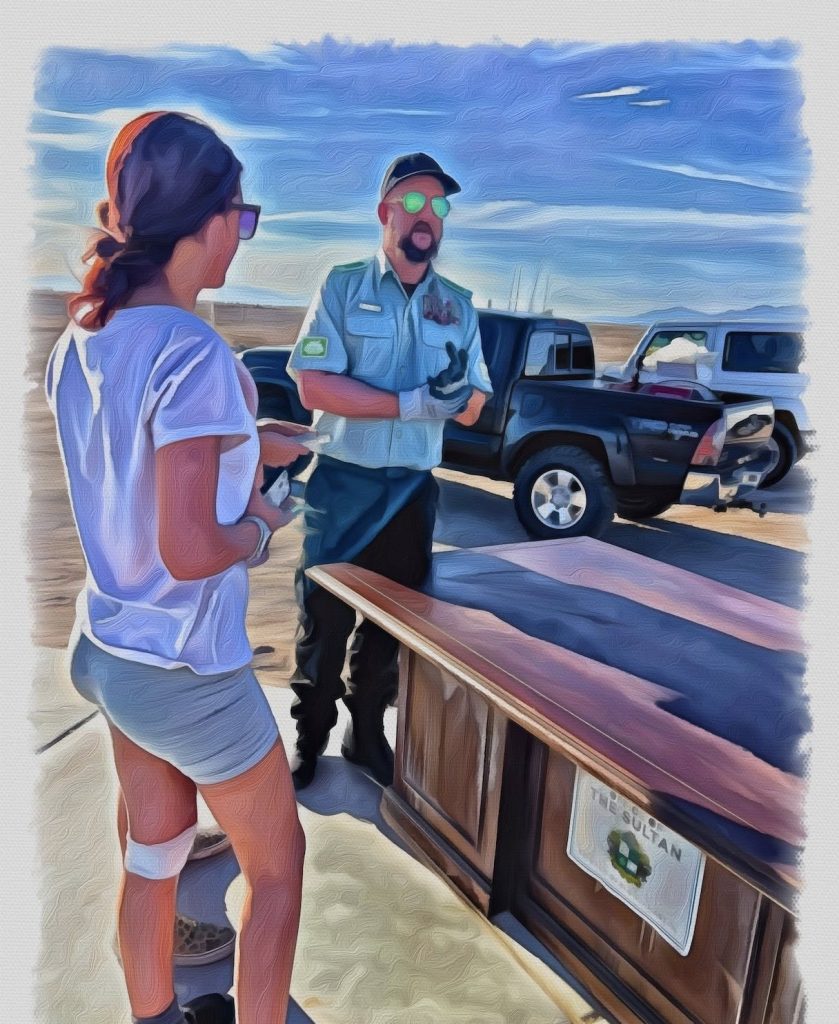
When we rolled into Slowjamastan on a bright May morning, a small crowd had already gathered — volunteers of every age clustered around The Sultan’s stately outdoor desk as he delivered a safety briefing with all the gravitas of a head of state preparing his citizens for a noble mission.
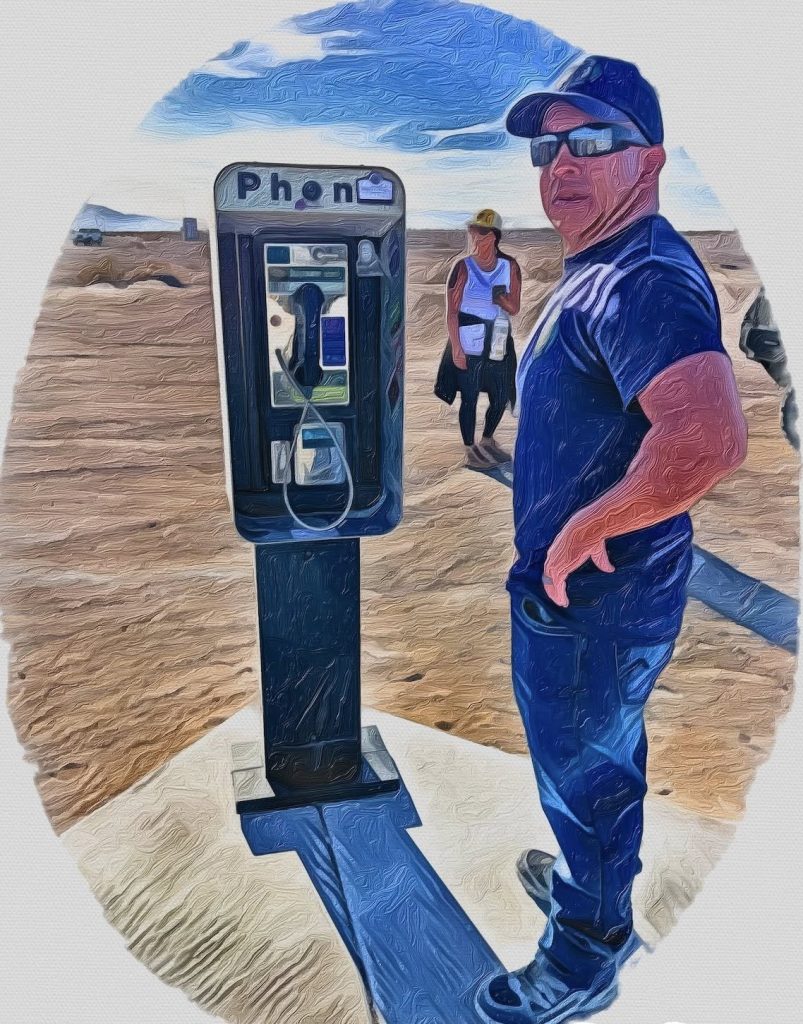
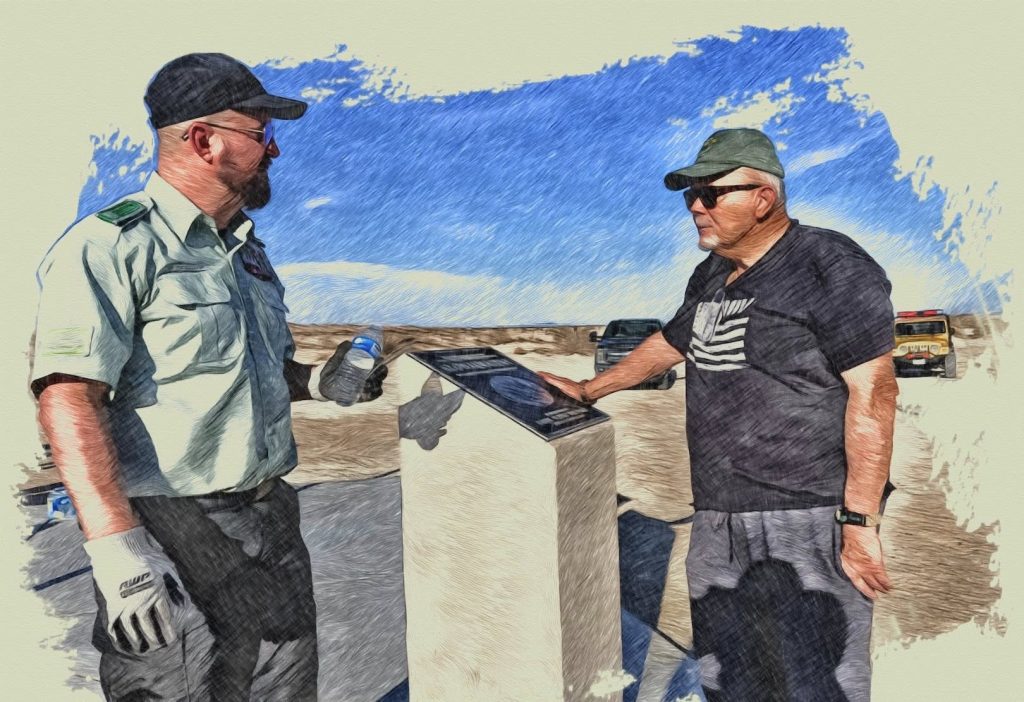
Gear was handed out, instructions were given, and the whole scene felt delightfully official for a nation with no buildings. Just a few steps away stood a relic from another era: an honest‑to‑goodness working payphone, gleaming in the sun like it had been waiting decades for someone to notice it again.
The scene shifted with a kind of quiet, cinematic inevitability — the moment right before a mission begins, when everyone knows what’s coming but the desert still holds its breath.
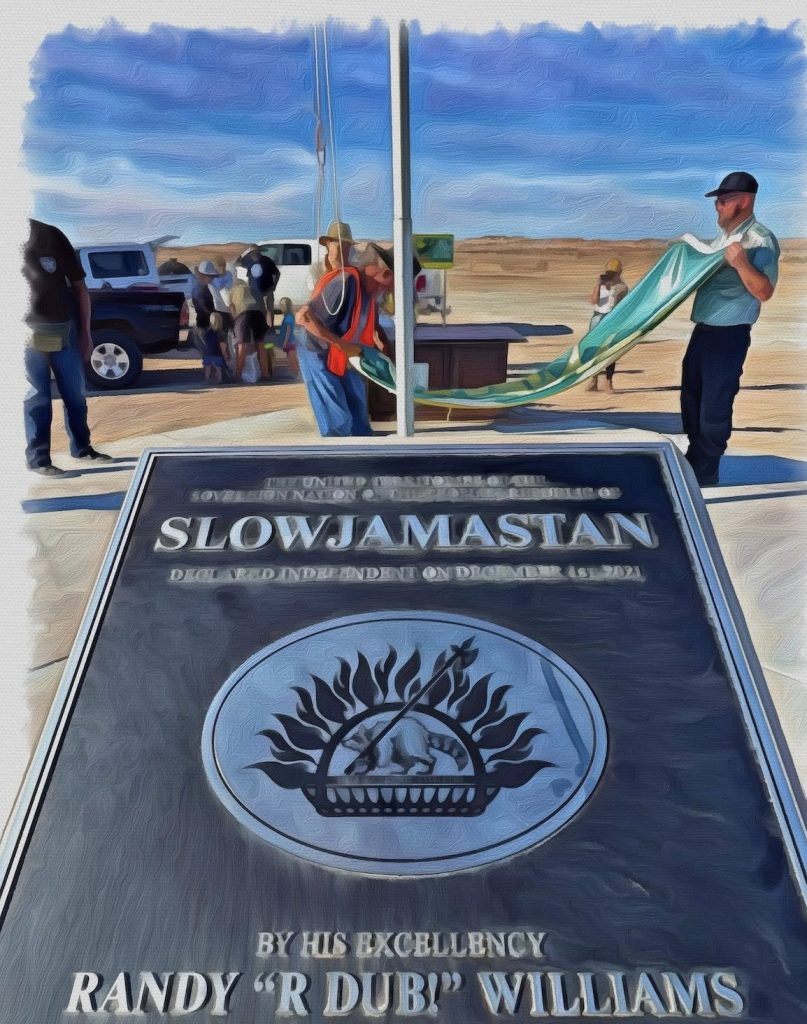
The Slowjamastan flag snapped overhead, the spring breeze carrying just enough swagger to make it feel like the Motherland itself was giving us a nod.
Road captains tightened their gloves, volunteers adjusted their gear, and The Sultan — relaxed uniform, sharp grin, full command of the moment — stepped back from his outdoor desk like a general releasing his troops.
And then, with passports on the line and the sun rays growing warmer by the minute, the cleanup mission began to hum to life. International relations, Slowjamastan‑style.
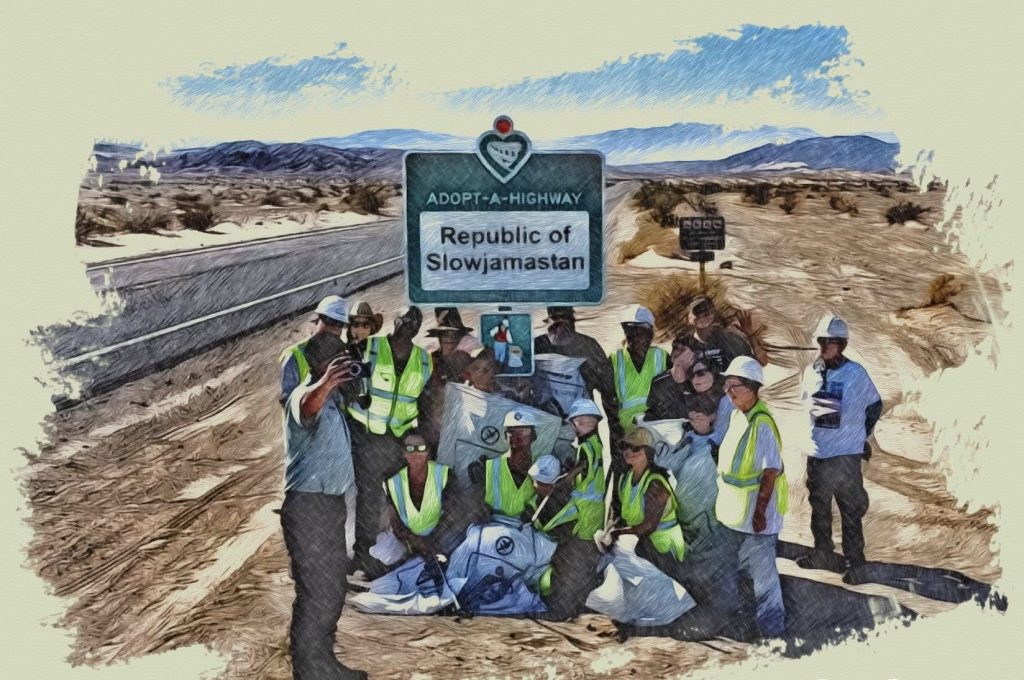
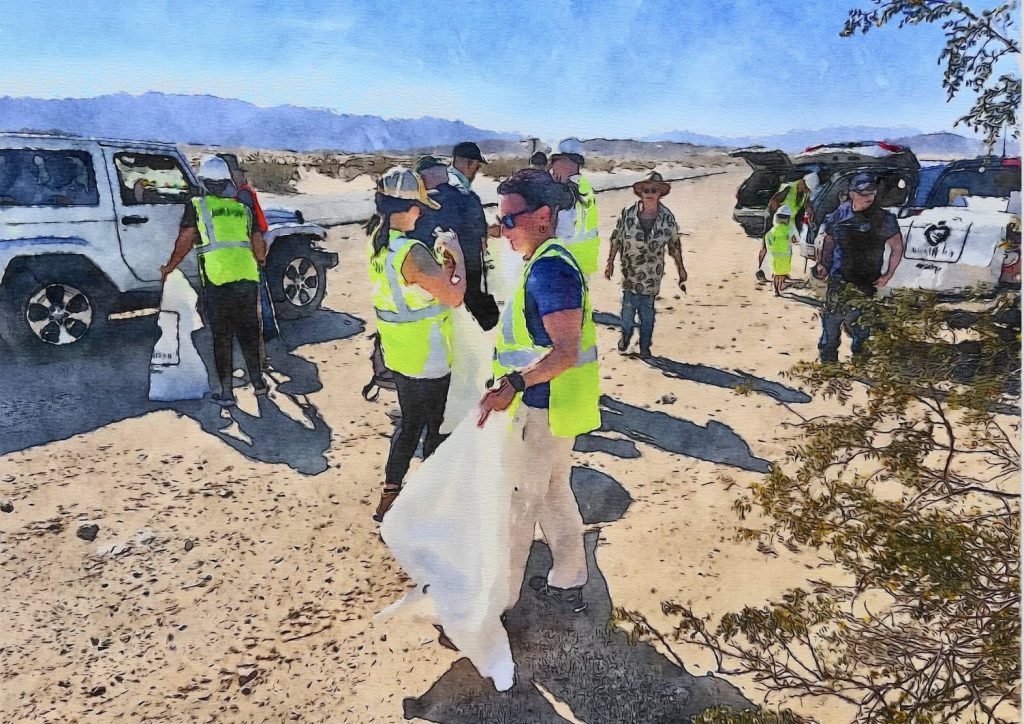
As the blazing sun climbed higher, we stepped beyond the borders of Slowjamastan and onto the shoulder of Highway 78, armed with trash bags, gloves, day‑glow vests, extended‑arm grabbers, and an unreasonable amount of optimism.
The Sultan led the charge, proving he wasn’t just a figurehead in a sharp uniform — he worked the line with the rest of us, scooping up debris with the efficiency of a man who takes national pride very seriously.
We fanned out along the roadside, filling our bags with the sad evidence of terrible humans who treat car windows like trash chutes.
Between grabs, we soaked in the vast desert vistas — the kind that make even litter‑picking feel noble — and kept an eye on one another, offering cold water whenever someone looked a little too sun‑toasted.
I brought along a bag of tangerines, and they became our unofficial morale boosters, passed around like bright little bursts of citrus diplomacy.
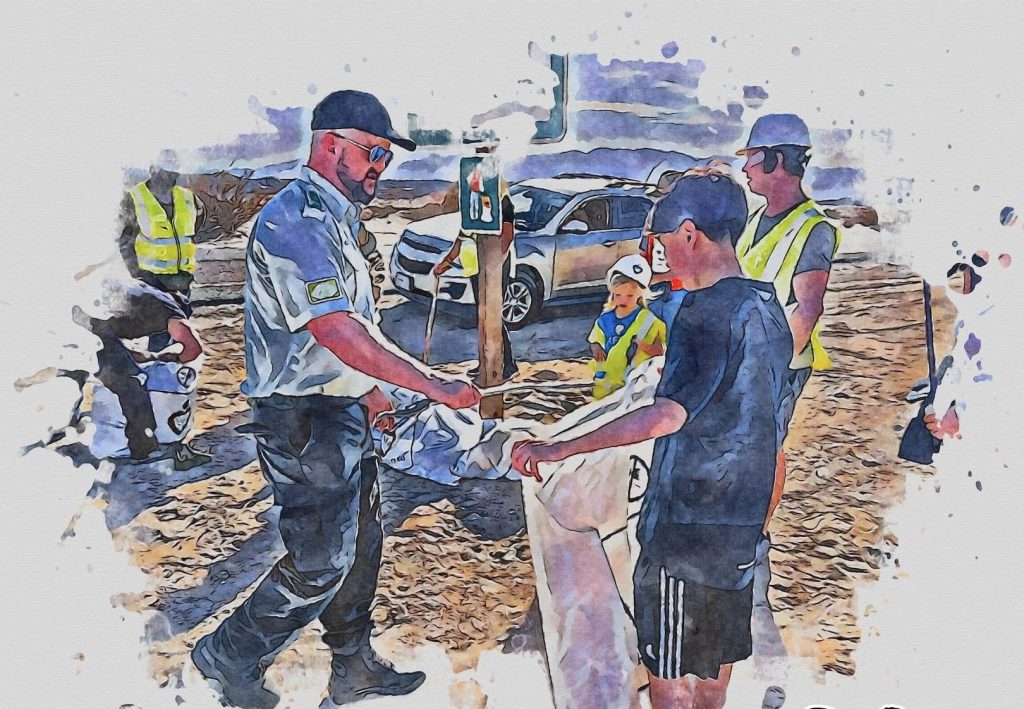
Very little traffic passed us in the next couple of hours — typical for this lonely stretch of desert highway.
The few wide‑eyed drivers who did roll by slowed down, stared at the spectacle of Slowjamastanis in day‑glow vests, and offered friendly waves as if unsure whether they were witnessing community service or a very organized mirage.
Eventually we crossed the road to tackle the opposite shoulder, the sun climbing and our shadows shrinking as the bags grew heavier.
By the time the cleanup party wrapped, we were hot, dusty, and thoroughly sweat‑seasoned — but both sides of Highway 78 near Slowjamastan were spotless.
Not a scrap of trash in sight. For a brief, shining moment, the Motherland had the cleanest borders in the desert.
If you were wondering, Slowjamastan does enforce laws contrary to American ones. For instance, wearing Crocs anywhere in the country of Slowjamastan is strictly prohibited.
Offenders will have their Crocs confiscated and will likely have a speedy jury trial made up of their grinning Slowjamastan peers.
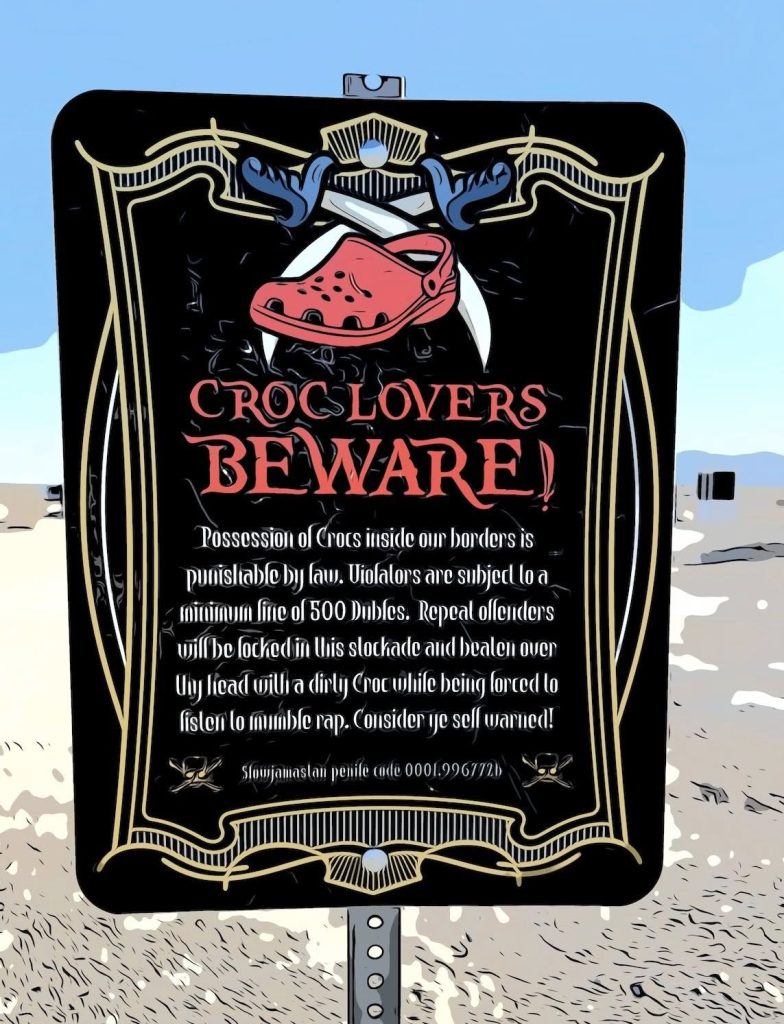
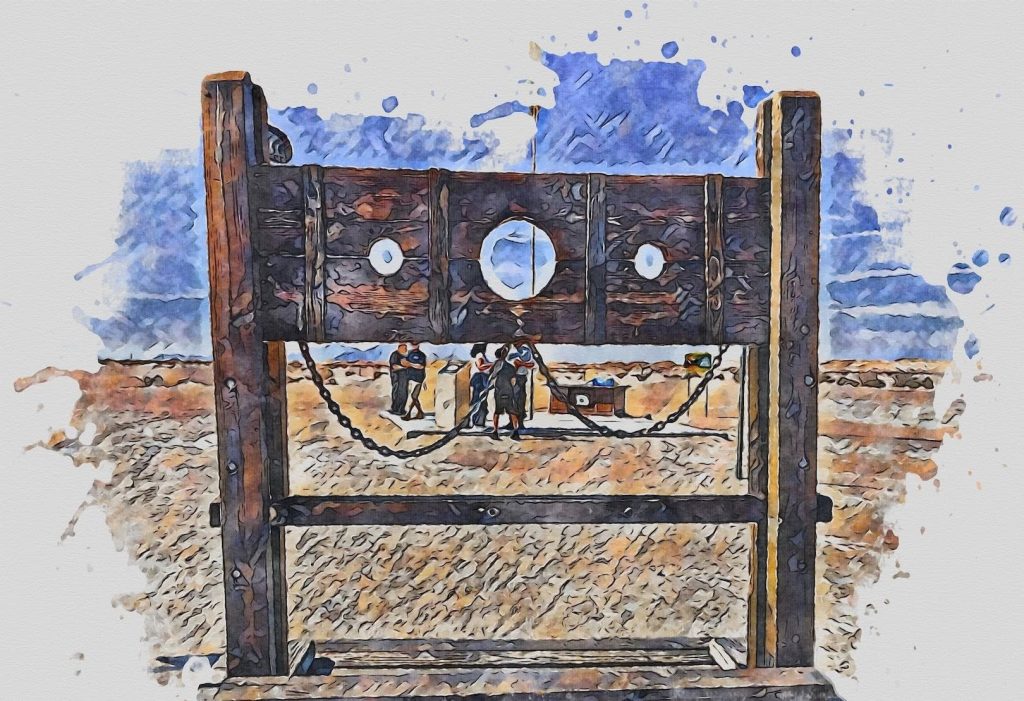
Penalties in Slowjamastan could include a brief stint in the pillory, but the device is rarely used — and when it is, it’s strictly for laughs. Still, its very presence serves as a gentle reminder that Slowjamastan’s laws are not to be trifled with.
Most visitors treat it less like a punishment and more like a prop, happily volunteering for photo ops and leaving with a story that proves they survived Slowjamastani justice.
A pillory is a punitive device made of a wooden or metal framework erected on a post, with holes for securing the head and hands, used during the medieval times. Although people may refer to the formidable apparatus as stocks, it differs. A pillory is considered more severe.
Slowjamastan’s legal code also includes one of its most sacred statutes: thou shalt not bite string cheese. Protocol is clear — it must be peeled and nibbled with dignity, not chomped into like a madman on a lactose‑fueled rampage.
It’s less a law and more a cultural cornerstone, a reminder that even in a desert micronation, civilization must prevail.
The Sultan publicizes banishments for offenses from refusing to shake The Sultan’s hand, to failing to provide raccoons with a grub smorgasbord.

Slowjamastan’s approach to governance is less “iron fist” and more “rubber chicken with a crown.” It’s a dictatorship in name, sure, but one powered by theatrical flair, community spirit, and a ruler who understands that absolute authority pairs best with a sense of humor.
The Sultan presides with full sovereign swagger, yet he’s also the kind of leader who circulates a suggestion box like it’s a national referendum — a wonderfully absurd blend of ceremony and crowd‑sourced policymaking.
Slowjamastan leans all the way into nationhood with the kind of gusto only an eleven‑acre republic can muster.
It has its own collectible stamps and its own currency — the illustrious Duble — each note proudly emblazoned with the unmistakable visage of His Excellency The Sultan. It’s legal tender mostly in spirit, but in Slowjamastan, spirit counts for a lot.
The micronation even boasts a national anthem, a fully sanctioned musical tribute that adds just the right amount of pomp to passport ceremonies, flag‑raisings, and any moment The Sultan deems worthy of fanfare.
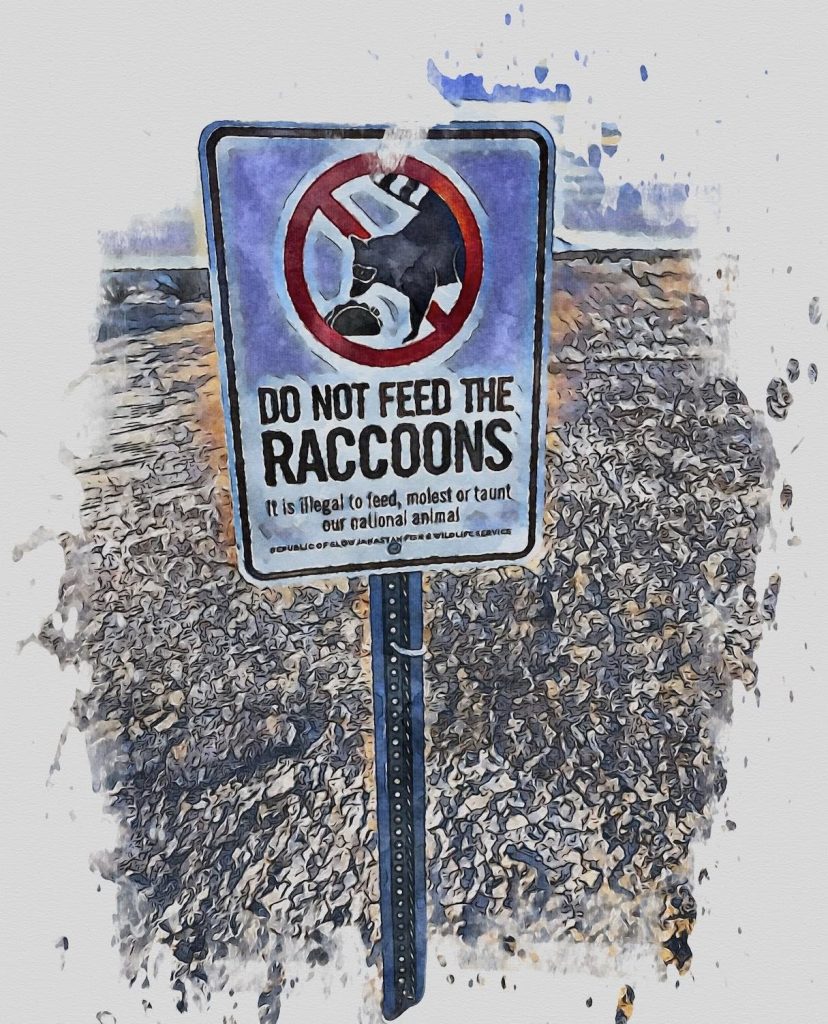
Slowjamastan’s national mascot is the raccoon — occasionally elevated to the more distinguished title of ringtail — and it proudly adorns both the micronation’s coat of arms and its unmistakable teal flag.
It’s the perfect emblem for a country that thrives on mischief, charm, and a touch of desert whimsy. The raccoon embodies Slowjamastan’s spirit: resourceful, curious, unbothered by the odds, and always ready to rummage through whatever life leaves lying around.
The bandit-masked creature is depicted holding an axe and surrounded by the sun. The design of Slowjamastan’s flag began in the summer of 2021.
In one of its many quirky rules, Slowjamastan has a law that makes it illegal to “molest, taunt, or feed” the national animal. The raccoon embodies the satirical, fun-loving spirit of the project.
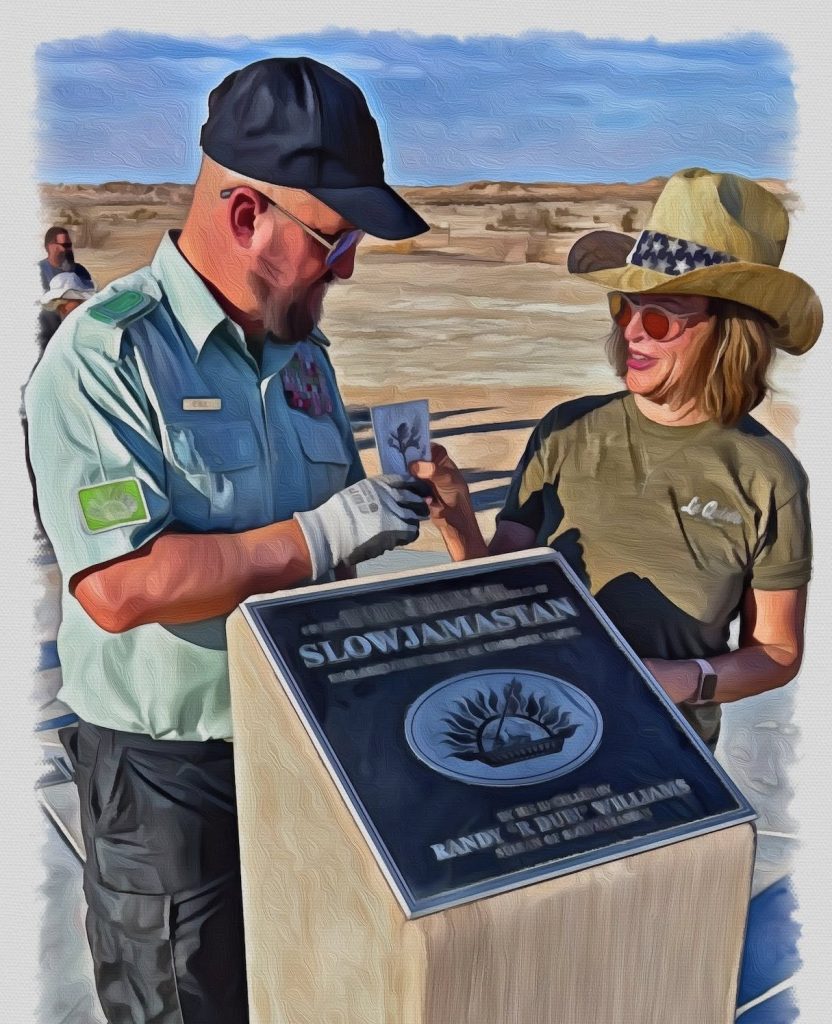
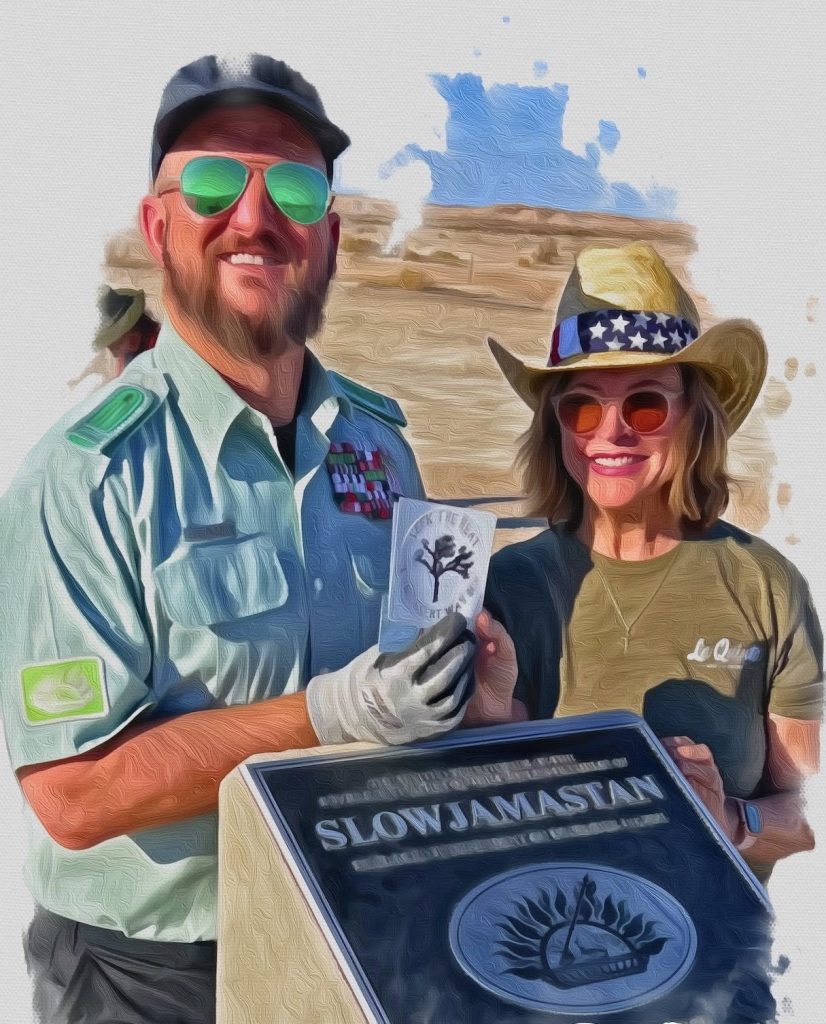
Meeting His Excellency felt like the culmination of years of admiration — the moment when a long‑running legend steps out of the realm of stories and stands right in front of you, desert sun at his back, every bit as charismatic as the micronation he built.
Presenting him with our Desert Way decal had the energy of a diplomatic exchange between friendly nations, a tiny ceremony carried out on sand instead of marble.
And then came the gesture that sealed the moment: The Sultan, in full benevolent‑dictator form, bestowing Slowjamastan passports upon us both as a symbol of goodwill and mutual respect.
For self‑proclaimed desert ambassadors, it was the perfect honor — a recognition of shared love for the wide‑open spaces, the lore, and the laughter that Slowjamastan inspires.
A simple “Thank you, Your Majesty” feels exactly right — sincere, a little theatrical, and fully in the spirit of the Motherland. At least we didn’t have to kiss anybody’s ring or curtsy.
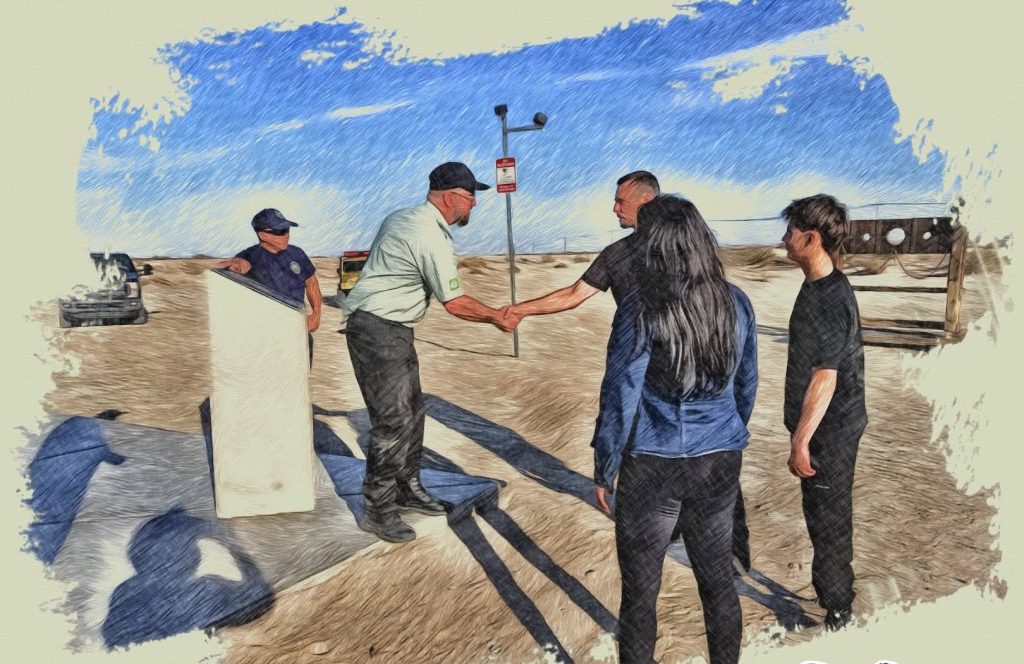
Small clusters of curious visitors drifted in throughout our diplomatic visit, each one greeted personally by The Sultan with the same warmth and theatrical flourish he reserves for state occasions. It gave the whole scene the feel of an open‑air embassy — a place where anyone could wander in, shake hands with a head of state, and leave with a story no one back home would believe.
The Sultan is unfailingly friendly and gregarious, greeting every newcomer as if they were an honored delegate rather than a curious traveler who wandered in off Highway 78. He launches into the history of Slowjamastan with the enthusiasm of a showman‑scholar, weaving facts, jokes, and national lore into a performance that feels equal parts state briefing and stand‑up routine. He answers every question with patience and flair, never rushing, always making each visitor feel like they’ve stumbled into something special.
By the time people drifted back to their cars, every single one wore the same expression — that wide, slightly disbelieving smile you get after an unexpected brush with royalty. It’s impossible not to like the man. His charisma is real, his commitment to the bit is absolute, and the whole encounter leaves you feeling as if you’ve just participated in a tiny, joyful piece of desert theater.
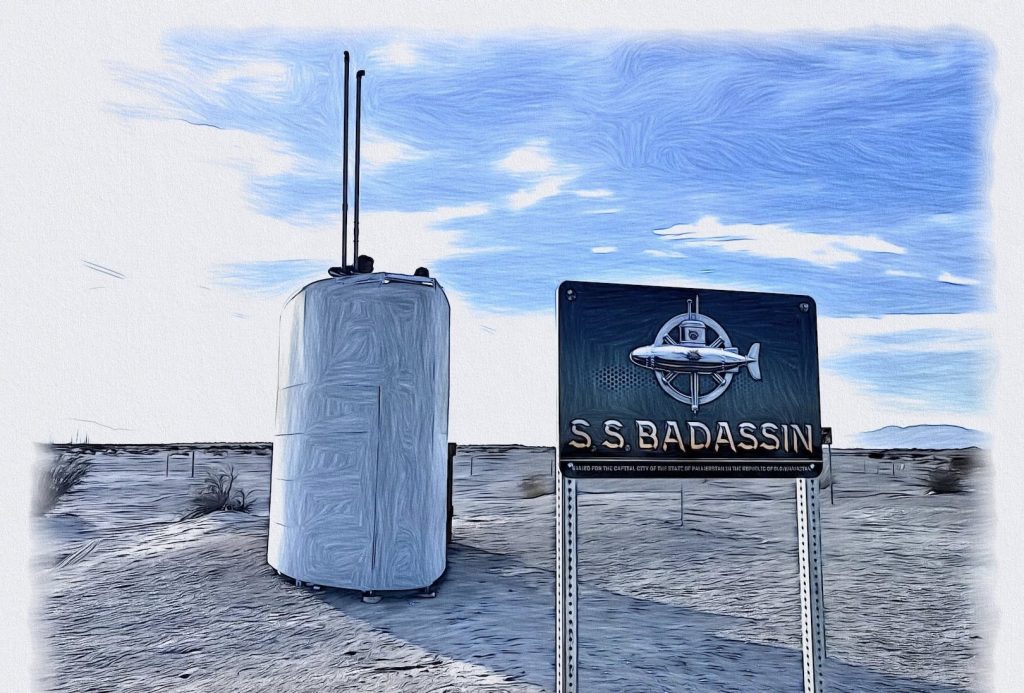
Slowjamastan is a developing country that takes its self‑defense very seriously — or at least, as seriously as a nation with a flair for theatrical security can. Its most formidable military asset is the SS Badassin, a sand submarine proudly stationed on the property.
This steel vessel is allegedly tasked with protecting the Motherland from smugglers attempting to sneak contraband “Crocs” in through a nearby waterway… despite the minor detail that Slowjamastan is entirely landlocked in the middle of the desert.
The result is perfect Slowjamastani logic: if a threat could exist, then the nation shall be prepared. And nothing says preparedness like a submarine parked confidently on dry sand, ready to defend the borders from imaginary aquatic incursions.
It was introduced to the “Royal River” by the micronation’s leader and is named after the capital of Palmerstan, a state within Slowjamastan. Visitors can climb a staircase and stand atop the sub. The Sultan has his eye on bigger bodies of water and expects the Salton Sea will someday be renamed the Sultan Sea in his honor.
Slowjamastan’s territorial layout is one of its most charming quirks: thirteen states arranged like a protective ring around the capital, Dublândia — a capital city that exists more in spirit than infrastructure, yet carries all the gravitas of a geopolitical hub.
These states were first imagined and mapped by the micronation’s founder, Randy “R Dub!” Williams, whose cartographic creativity rivals his flair for nation‑building. Over time, several states have earned their names through public offerings and sponsorships, turning the map of Slowjamastan into a patchwork of inside jokes, civic pride, and citizen‑driven whimsy.
All states, with names like Field of Dreams, Bucksylvania and DonSamWadi, have their own governors. Currently, four states within the Republic of Slowjamastan are available to rule.
It’s a system that blends satire with participation — a place where geography is democratic, naming rights are a national pastime, and every new state title adds another layer to the Motherland’s growing mythology.

Slowjamastan does occasionally brush up against “controversy,” but almost always on its own terms — the kind it manufactures with a wink, a punchline, and a perfectly timed press release. As a self‑described micronation and performance‑art project, it treats controversy the same way it treats governance, borders, and submarines: as raw material for satire.
Most of the so‑called uproar comes from playful stunts, tongue‑in‑cheek laws, or exaggerated diplomatic proclamations that are designed to look dramatic while remaining entirely harmless. The Sultan leans into this theatrical friction, using it to keep the Motherland in the public imagination and to remind everyone that Slowjamastan’s greatest export is joyfully absurd storytelling.
While it has faced criticism from other micronations and has had staged “disputes,” these events are part of its satirical identity rather than genuine, serious international incidents. For example, the Sultan responded to criticism from the Emperor of Stomaria, who called Slowjamastan a “joke” nation, by creating a music video mocking the emperor.
The satirical nature of Slowjamastan’s “controversies” makes it difficult for a real-world, non-humorous scandal to arise. As a performance art piece, its absurd policies—such as a law requiring people to clear a microwave’s timer—are intended to mock the peculiarities of actual governments and human behavior.
The Sultan takes his leadership responsibilities seriously — and nothing proves that quite like his appearance at the 2024 NATO Summit in Washington, D.C. In July of that year, he strode into the capital with the confidence of a man representing a nation eleven acres wide but immeasurable in spirit.
His itinerary included a guided tour of iconic landmarks such as the Washington Monument and the Lincoln Memorial, led by WTOP reporter Matt Kaufax alongside a National Park Service ranger.
The visit wasn’t just sightseeing. It was strategic theater — a chance to spotlight Slowjamastan on a global stage, showcase its wonderfully peculiar culture and laws, and remind the world that micronations can punch far above their geographic weight.
By placing himself in the orbit of major international players, The Sultan reinforced Slowjamastan’s identity as a performance‑art state with diplomatic ambitions and a leader who knows how to turn a photo op into national mythmaking.
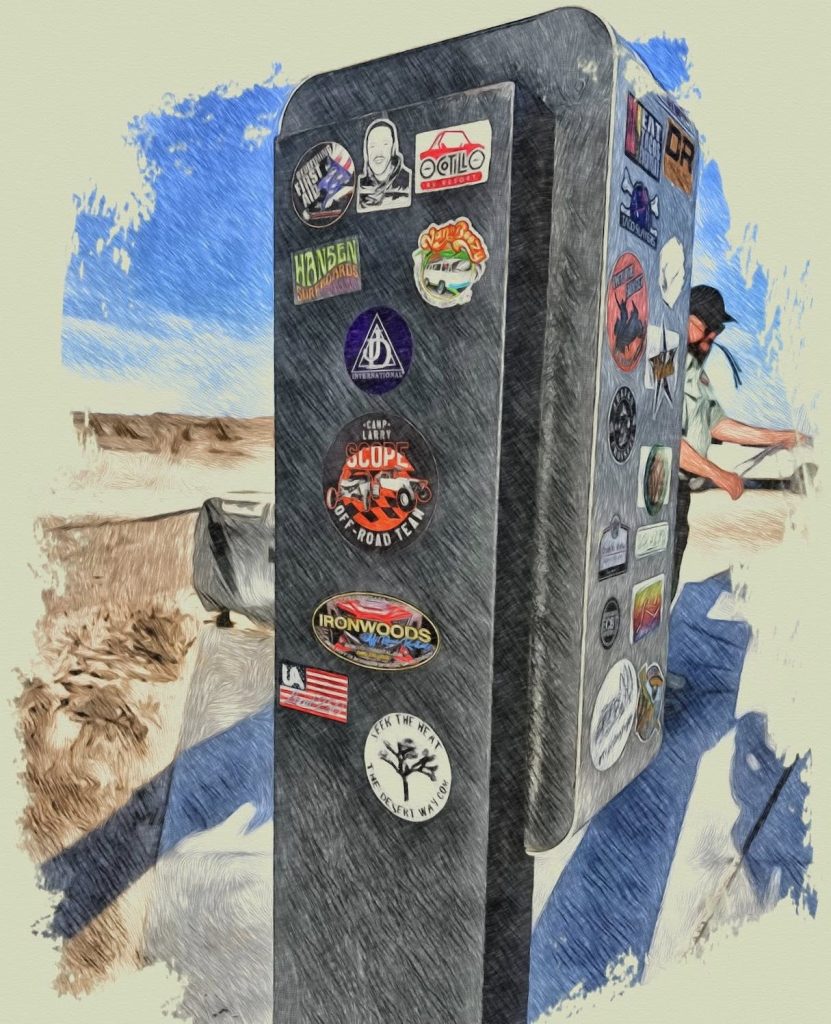
Many thanks to His Excellency for allowing us to add our Desert Way sticker to his phone booth.
Nevertheless, real controversies have occasionally arisen. Even genius’ sometimes get misunderstood. One main school-related “controversy” stems from a podcast episode titled “The Sultan, The School, and the Karen Catastrophe,” which recounts a visit by the Sultan to a school.
The Sultan’s commitment to civic education occasionally leads him into situations that are as memorable as they are mildly chaotic. During a civics lesson on micronations, he arrived in full official regalia — the whole Slowjamastani spectacle — and delivered an enthusiastic primer on sovereignty, borders, and the art of building a country out of imagination and desert sand.
Students loved it. Teachers loved it. The room buzzed with that rare mix of learning and pure delight that only a costumed head of state can generate.
But as with any good Slowjamastani story, a touch of “controversy” wasn’t far behind. One parent reportedly took offense at the unexpected royal appearance and contacted the media, briefly transforming a harmless civics lesson into a miniature diplomatic incident.
True to form, the situation was resolved amicably, with no lasting fallout — just another chapter in the micronation’s ongoing saga of playful governance meeting real‑world reactions.
During another school appearance, Slowjamastan managed to stir up a bit of unintentional chaos — the kind only a micronation with a flair for theatrical law enforcement could produce.
A Slowjamastan “Porder Batrol” car parked in the school lot caught the attention of students and staff, its official‑looking decals and lights giving it just enough authority to raise eyebrows.
The situation escalated into a minor ruckus when Chief Porder Agent Mark Corona, accompanying The Sultan in full Slowjamastani capacity, was momentarily mistaken for a federal ICE agent.
The confusion was brief, harmless, and very on‑brand for a nation whose security apparatus is equal parts costume, commitment, and comedy. Once the mix‑up was cleared, the moment slipped neatly into Slowjamastan lore — another story where earnest performance art collided with real‑world assumptions, producing a flash of unintended diplomacy.
Slowjamastan’s long‑awaited Lazy River finally “opened” on August 26, 2025 — though not quite in the way anyone expected. After years of The Sultan teasing the idea with the straight‑faced confidence only he can muster, a monsoon swept through the region and delivered a sudden, glorious flash flood right through the heart of the Motherland.
Nature itself became the contractor, ribbon‑cutter, and water‑park engineer.
The moment was too perfect to waste. A celebratory bluegrass tune kicked in, a hilarious reel was filmed, and Slowjamastan officially declared the Lazy River open for business — at least for the duration of the flood.
It was peak Slowjamastan: a promise fulfilled, a joke elevated to national achievement, and a reminder that even the weather seems to be in on the performance art.
All joking aside, flash floods in the desert move with a speed and force that catch even seasoned locals off guard.
What looks like a shallow sheet of water can hide a deep, fast‑moving current capable of sweeping away a vehicle in seconds. That’s why the old saying turn around, don’t drown exists — it’s not melodrama, it’s survival wisdom carved from hard experience.
Take the warning seriously. As one particularly wise man named John once put it, never FAFO with Mother Nature. She always wins, and she doesn’t negotiate. She’s worse than a wife.
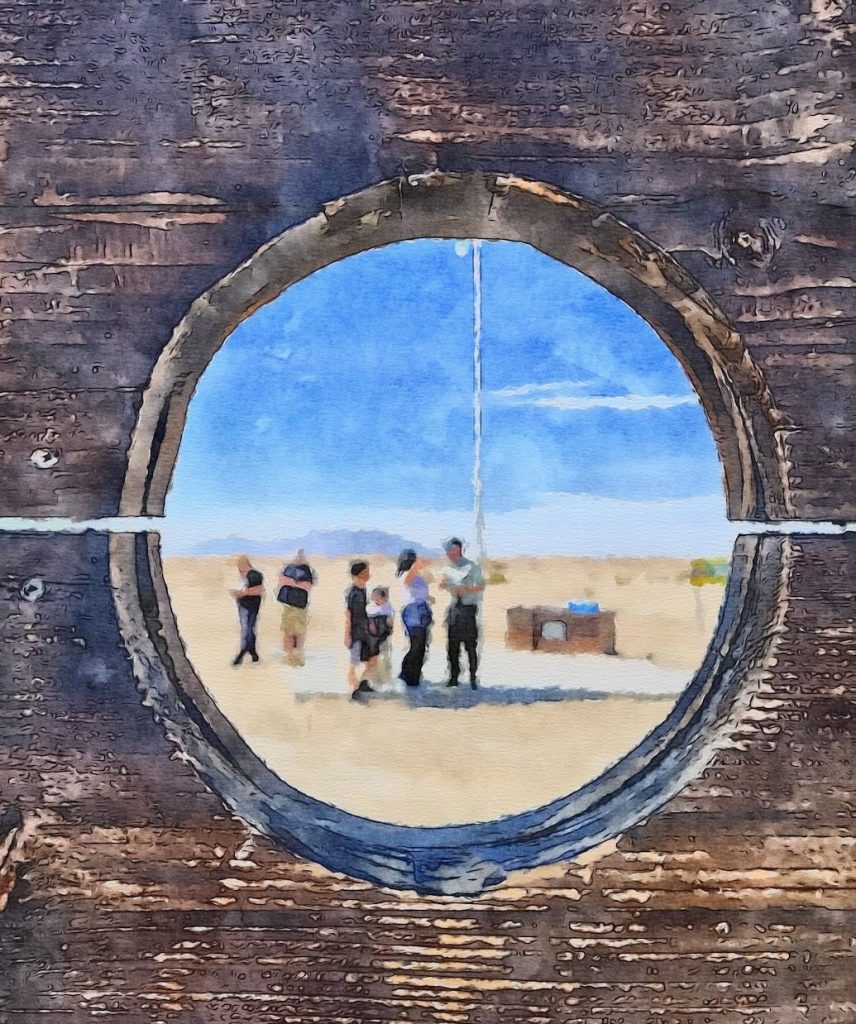
View from Slowjamastan’s pillory of bad decisions.
Visiting Slowjamastan without official permission or a guide is forbidden, although taking selfies in front of the border signs is encouraged.
The micronation’s signage reminds visitors it is protected by “landmines and wild raccoons.” The best time to visit is during one of the sporadic events Slowjamastan sponsors, like we did. Sign up for their free newsletter to keep up with the latest haps.
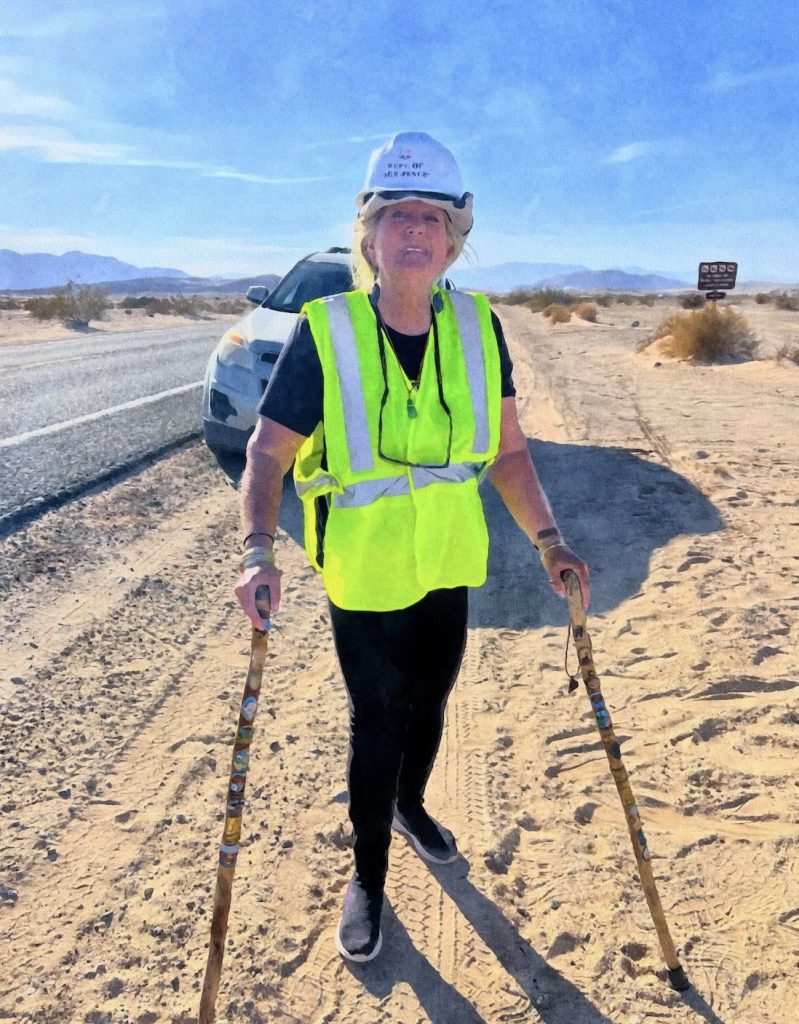
Founding a neighboring micronation called Crocastan feels exactly like the kind of diplomatic mischief Slowjamastan was born to inspire.
The idea alone would send The Sultan into a delighted spiral of mock‑outrage, emergency proclamations, and maybe even a Porder Batrol press conference. And honestly, if anyone could rule a tiny desert realm while rocking a tiara with regal confidence, it’s former state beauty pageant queen Jaylyn.
But of course — just kidding, Your Majesty! Slowjamastan forever. Loyalty to the Motherland remains unshaken, passports in hand, citizenship proudly displayed, and no secessionist movements planned… at least not today.
Crocastan can stay a playful whisper on the wind, a friendly nudge to keep Slowjamastan on its toes, and a reminder that the desert has room for all kinds of imagination.
And remember…
“We can dance if we want to. We can leave your friends behind. Because your friends don’t dance and if they don’t dance, well, they’re no friends of mine.” (Courtesy, Men Without Hats – The Safety Dance)
Directions: About 15 miles east of Ocotillo Wells on the north side of CA-78.
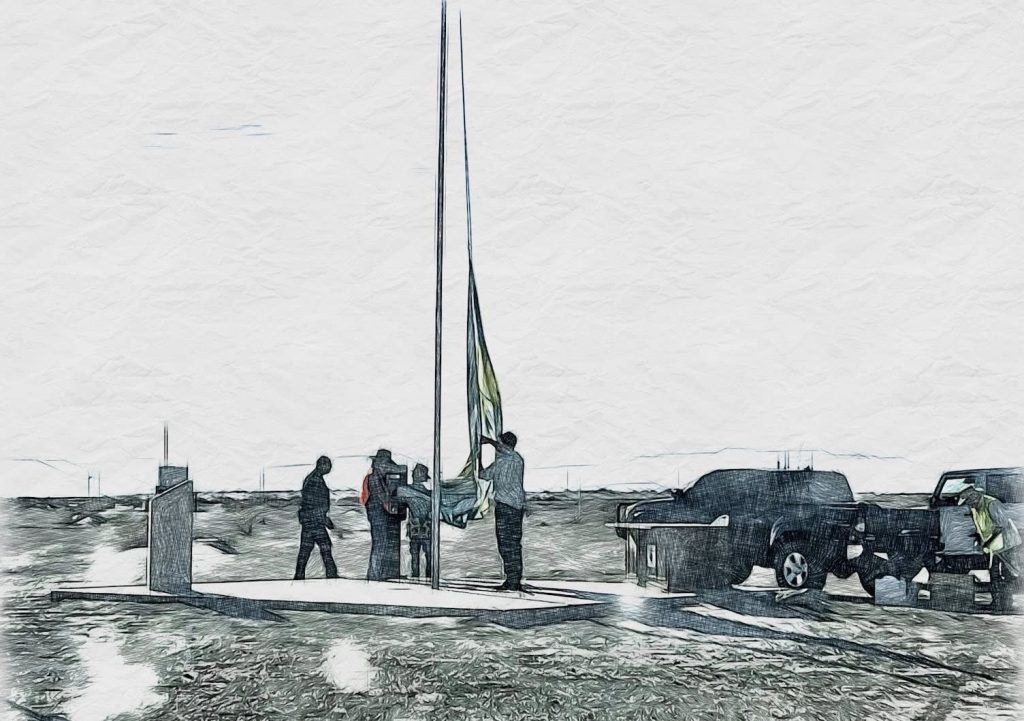
The Sultan lowers Slowjamastan’s flag at the conclusion of the day.
Bonus! The Humphrey Bogart movie Sahara (1943) was filmed in various desert locations, including the Imperial Valley, California, the Anza-Borrego Desert State Park, near the Salton Sea, in Brawley and at the Yuma sand dunes in Arizona. The production spent eleven weeks in California’s Imperial County, with the town of Brawley serving as a base for the cast and crew.
Top Photo: Courtesy of His Excellency Randy “R Dub!” Williams
Last Update: January 10, 2026.
References
https://www.facebook.com/slowjamastan
https://www.facebook.com/reel/781543744377533
https://en.wikipedia.org/wiki/Republic_of_Slowjamastan