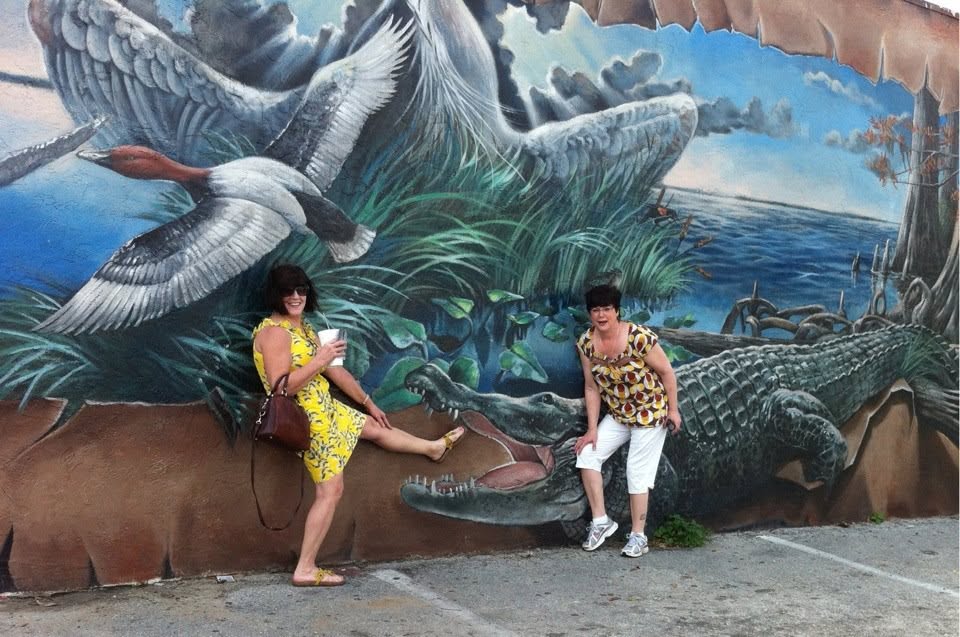
This story is dedicated to my parents, former Lake Placid residents, Jerry and Geneva Nugent. They loved their many years together living in Lake Placid, Florida — known as The Caladium Capital of the World, as well as the Town of Murals. A title earned leaf by leaf, field by field that transcended into art. And with an industry that defines a town, a festival was inevitable. Lake Placid celebrates the local farms that grow roughly 95% of the world’s caladium bulbs. Caladiums are native to the tropical forests of South and Central America where they thrive in high heat and humidity. Lake Placid fits the bill beautifully.
Not only did I attend the first festival at Happiness Farms in 1990, I was able to go to the next decade of festivals. The festival wasn’t just an event; it was an experience we anticipated for our whole family. There’s something for everyone. Every bite of food comes from a local vendor, hand‑picked by the Caladium Committee, which keeps the lineup well-organized and free of duplicates. With only 100 booth spaces, the demand is fierce. Artists and crafters wait years for a chance, and at least half the spots stay caladium‑focused, honoring the plant that built the town.
In 1990, two rival grower families made a surprising choice: they joined forces. Carolyn Phypers of Happiness Farms and Dot Bates of Bates Sons and Daughters Caladiums took the lead.The first festival unfolded at Happiness Farms. Phypers and Bates drove a pickup down Highway 621 to Lake Blue, knocked on doors and handed out bags of caladium bulbs to anyone willing to plant them. Their mission: turn the town into a living showcase for bus tours rolling through the fields.
Two years later, they expanded to WatersEdge, leaving trays of bulbs in the cul‑de‑sac — an open invitation for neighbors to join the transformation. A small idea becomes a tradition. A crop becomes a culture. The festival’s first year was small: one bus, two runs, but the spark was unmistakable. Soon, that single bus grew into dozens of tours, some making five loops a day as crowds poured in to see the caladium fields.
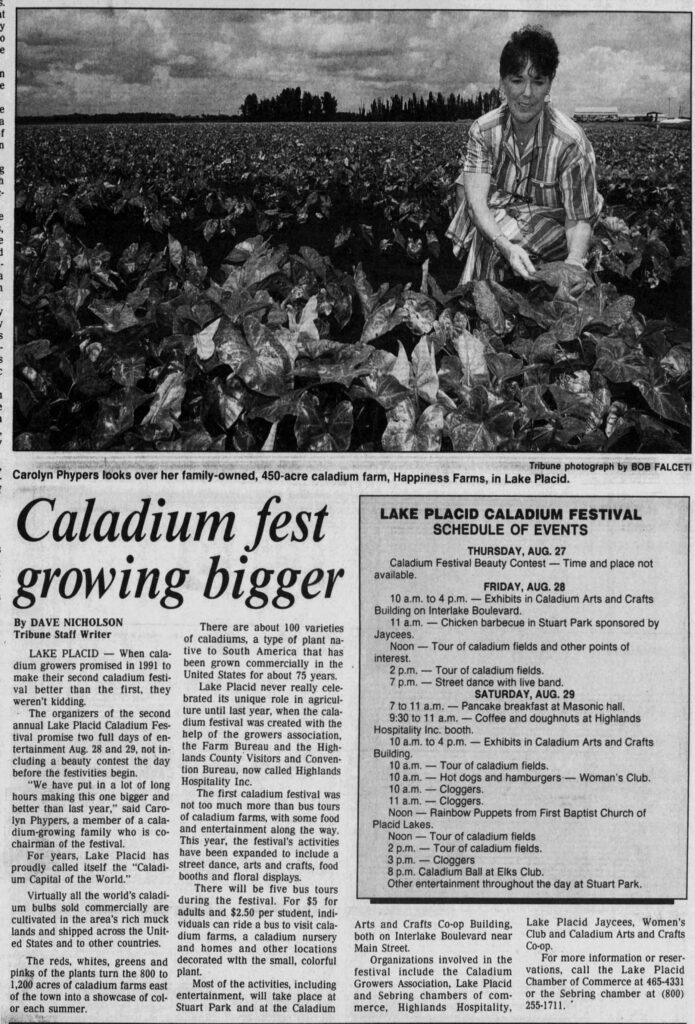
Tampa Tribune, August 17, 1992.
Every grower had a job, every grower had a table, from Bates and Phypers to D & L Cooper’s, Joiners, Lake Huntley, Parker Island, Hendry, Sapp, Scarborough, Caladium World, and Buddy’s of Sebring. The heart of the festival was its promise to honor the first‑generation pioneers: Emmett and Mildred Bates, Paul Phypers Sr., Boots Holmes, and Zena Hendry. You’d find them in rocking chairs at the Caladium Co‑Op, telling stories, answering questions, and passing down the history leaf by leaf.
A crucial boost came early: Sun Bank’s $3,000 donation, the fuel that launched the festival and kept it alive in its early years. On the grounds, the energy was electric. Vera, Rose, and Julia Sapp clogged for cheering crowds. Visitors packed into a barn to watch a film about the caladium industry. Norma Stokes and the Farm Bureau ladies fed everyone who showed up.
What truly sets this festival apart is how it treats its people. At dawn, vendors arrive to serve coffee, donuts, and fresh orange juice, a warm welcome before the crowds pour in. Throughout the day, volunteers deliver water, check in, and make sure every booth feels valued. And when the sun sets, each vendor leaves with a bag of caladiums, a living souvenir of Lake Placid’s roots.
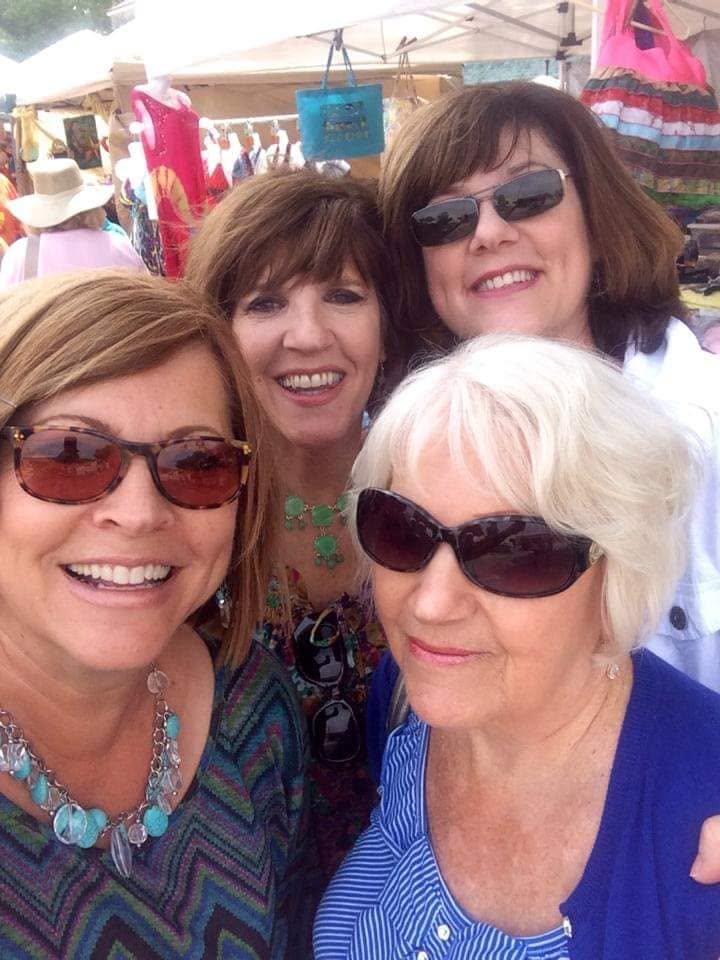
It’s no surprise vendors want to return, again and again. Most apply for next year before they even pack up. For many, Lake Placid isn’t just another stop, it’s the first and favorite venue of their season. The spark came from Doris Gentry, then caught fire when Ann Bond and Audrey Vickers of the Convention and Visitors Bureau pushed the idea forward. They chose September, when caladiums explode into full color and local merchants need the lift.
The festival has always depended on the strength of its community. Volunteers step forward year after year, each one carrying a piece of the tradition. At the center is Marge Callas, keeping the books with steady hands under the Caladium Arts and Crafts Co‑Op.
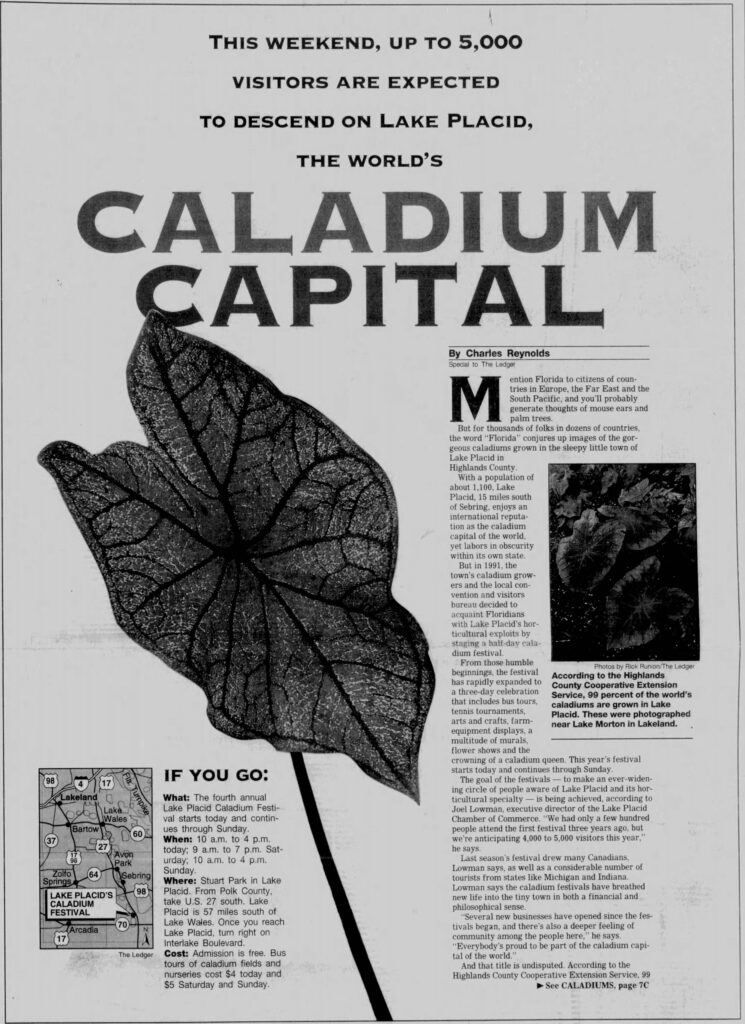
The Ledger, September 30, 1994.
The money brought in is shared evenly between the two groups, a partnership that has held from the beginning. Debbie Rutledge works tirelessly to secure entertainment for the weekend, making sure the festival never loses its rhythm. And in the early days, Hector Hernandez served as the first treasurer, helping build the structure the festival still relies on.
Support stretches beyond the committee. The town and Highlands County step in every year, closing streets, managing traffic, and providing free garbage pickup, small acts that make a massive difference when thousands of visitors fill the streets. It’s a reminder that this festival isn’t powered by caladiums alone. It’s powered by people — neighbors, volunteers, and a community that shows up every time.
Florida, officially known as the “Sunshine State,” was dubbed the “Plywood State” by the media after it was battered by four hurricanes in only six weeks during the 2004 hurricane season. Nearly every square inch of Florida felt the impacts from at least one of those four storms, including the caladium fields in Lake Placid. So fierce were the names Charley, Frances, Ivan, and Jeanne that they were retired by the World Meteorological Organization. But enough survived — a show of Florida resilience and grit, to keep the story alive.
The caladium festival shifted from September to the summer, typically late July years ago, to avoid the peak of Florida’s hurricane season. The festival was turned over to the Chamber of Commerce in 2007. Today, the historical exhibit lives inside the Co‑Op, guided by Dot and Maxine Kelley. Maxine’s family helped build the industry — and her granddaughter, Heidi (Head) Davis, became the first Caladium Queen. A legacy rooted in soil, carried forward by the people who shaped it.
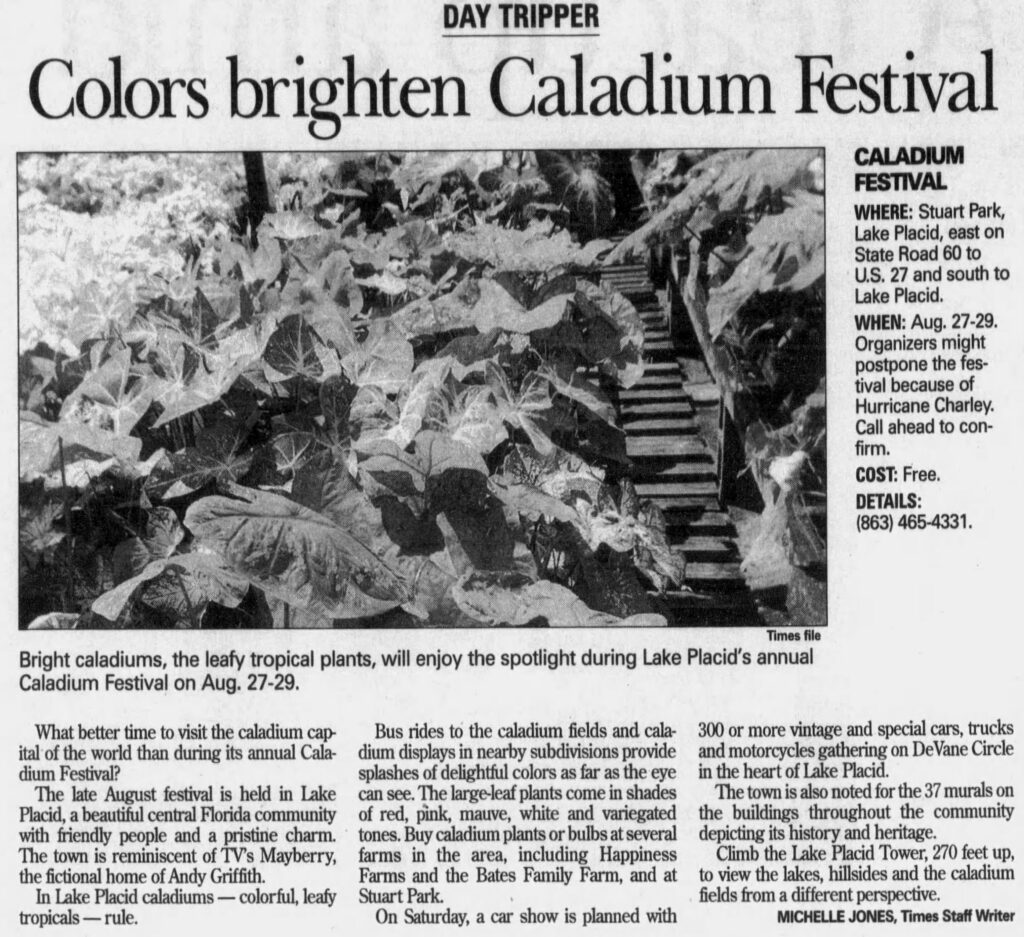
Tampa Bay Times, August 20, 2004.
Though my parents passed in 2019, Lake Placid still rises in my memory like a sunlit reel of moments: brilliant caladium fields glowing against the horizon, the easy warmth of its people, Publix sandwiches eaten on the go, the sweet, heady perfume of orange groves in bloom, the murals, the tower, and the Caladium Festival that stitched the whole town together.
My two sisters and I carry their legacy now — the land they loved, the place they chose, entrusted to their three daughters. And no matter where life takes us, Lake Placid, Florida stays with us, rooted deep, vivid as ever.
This year’s annual caladium festival and car and bike show takes place July 24, 25, & 26, 2026, Friday & Saturday 9 AM – 4 PM and Sunday 10 AM – 3 PM in Stuart Park at 113 E Interlake Blvd in Lake Placid. Florida in July is hot and humid. Wear plenty of sunscreen, bring water, and arrive early in the morning before the afternoon thunderstorms roll in. Enjoy the festival, and make lifelong memories.
References
https://www.caladiumfestival.org/history
https://visitsebring.com/event/annual-caladium-festival/
https://www.noaa.gov/stories/4-hurricanes-in-6-weeks-it-happened-to-one-state-in-2004
https://www.accuweather.com/en/us/lake-placid/33852/weather-forecast/2243376