

LIVING LARGE IN ARIZONA
Jerome, Arizona. Just a small town with a killer view. Can you hear the sounds? Can you feel the energy? Walk down almost any road in town and let your imagination run loose. You might experience the past if you’re lucky. Jerome will grow on you. Who knows, you might not ever want to leave. Even after you kick the bucket. You wouldn’t be the first.
The “Wild West” of legend still lives on in this place, perhaps like no other you’ve ever been. It’s always been this way. Now the home of artists, writers and a variety of shops catering to tourists, “The Gomorrah of Arizona” as Jerome was known in the late 1800s still remains a happening place. It’s our favorite ‘real’ ghost town to visit, and it might be yours. Take a look around and find out.
THE BEGINNING
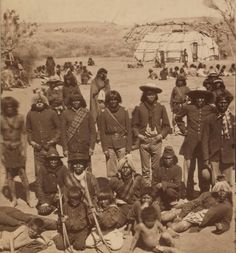
As the U.S. Civil War was raging in the east, miners seeking their fortune discovered the place we now call Jerome. Actually, the Yavapai Indians discovered it first, and the miners sort of “discovered” it away from them. Funny how that works. Unless you were Yavapai, of course, and then it probably wasn’t funny at all.
NOT THE FIRST AND NOT THE LAST
The Yavapai weren’t the first to live in the Verde Valley and on Cleopatra Hill, where Jerome is found. Long before them, the land was occupied by the Hohokam, Anasazi, Apache and other native peoples. They all knew well of the rich mineral resources found there.
It was the quest for the minerals in these mountains that later attracted those who we call “the miners.” Even so, the miners and their kind weren’t the first European-Americans to visit the area. Explorers from other shores first visited the Verde Valley in the 16th century, way before there was a Jerome.
ONWARD CONQUERING CONQUISTADORS
When the Spanish explorer, Antonio de Espejo, and his conquistadors showed up in 1582-83, looking for silver, the Yavapai readily, and perhaps warily, showed them their mining operations. The Yavapai and other tribes were mining copper. Antonio wanted silver. Seeing nothing of interest, the Spaniards moved on. If they would have asked, the Yavapai might have told them about the nearby silver and gold that could be found. Antonio de Espejo never returned.
MANIFEST DESTINY ARRIVES IN ARIZONA
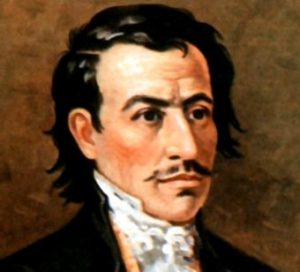
Fast forward a few hundred years. The United States is moving west. Hunters, trappers and miners seeking their fortune are the first of the new immigrants to arrive in the Verde Valley. Soon, they’re wandering into the land of the Yavapai, and setting their sites on what would become Jerome, Arizona.
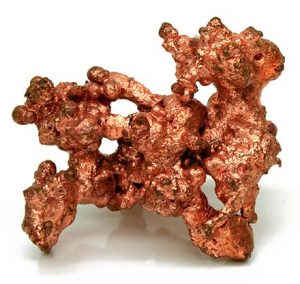
Just what attracted the miners to the area? What caught their eye? Well, it seems that all that glitters wasn’t gold, and like the Yavapai before them, they came for the copper. Copper wasn’t as prized as gold or silver, but it was valuable. The miners came. Others followed.

While copper and other minerals were attractive to the miners, they were attractive to merchants, bars owners, brothel madams and others, and a boom town was in the making, and the rush was on. You just know where this is going don’t you? If not, you just might want to see the movie “Paint Your Wagon.” Apparently, Jerome was a little of that, and maybe more.

“GOD AIN’T DONE WITH JEROME YET,” SHE SAID.
Once known as the wickedest town in the west, Jerome was the real thing, a copper mining camp of the first degree, growing from a settlement of tents to a roaring mining community in a matter of a few years. All the attendant vices followed. The town was officially founded in 1876, and its reputation was already in the making.

Standing on a street corner in Phoenix, in 1899, “Aunty Thomas,” described by a news reporter as, “A shining light, albeit of African descent, of the Salvation Army, Arizona Regiment,” decried to the fate of Jerome to passersby:
“God ain’t done with Jerome yet. His is gwine to regenerate yander in that town, or he ain’t gwine to have no town at all! God ain’t gwine to give up the fight with Jerome. He’ll burn it up a dozen times–as fas’ as they can build it up. He’s started in to make Jerome a Christian town and it’ll be Christian or nuthin.”
Aunty Thomas was referring to the fires that would often sweep through Jerome, the result of buildings placed too close together, without adequate fire breaks. “Divine Chastisement,” as Aunty called it. Clearly, it seemed, Jerome was on God’s naughty list.

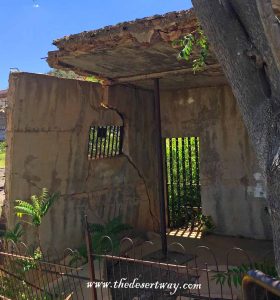
At its peak, Jerome had more bawdy houses, aka: Bordellos, than it did churches and schools, and claimed fame to the aptly named “Prostitution Row,” (later known as “Husbands Alley”).
It was home to eight full-time houses of ill-repute. When the local population wasn’t visiting the brothels, they had more than twenty saloons where they could spend their money. Jerome was a party city before party cities were cool.
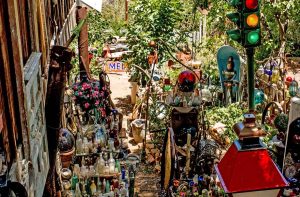
Saloons and brothels lined the streets and alleys of Jerome from the late 1800s, well into the 1900s. In keeping with its Wild West reputation, people in town would occasionally perish in mining accidents, gunfights, overdose on opium, succumb to social diseases and in ways that would fill several books on tragedies.


Anyway, civility of a sort eventually came to Jerome, and the town was incorporated in 1899. Perhaps in spite of Aunty Thomas’ predictions. At one time, Jerome was the fourth largest town in the Arizona Territory. Never easy to get to, she sits at an elevation of 5200 feet, just a few feet short of a mile high. The brothels stayed on well into the 1940s, even after the profession was made illegal. The saloons, on the other hand, still linger. Oh happy days.

EUGENE’S TOWN
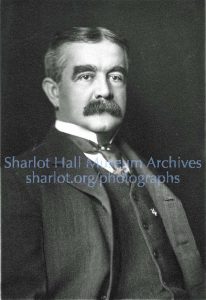
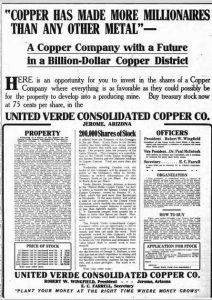
Odd as it seems, Jerome is named after one “Eugene Murray Jerome,” out of New York City. Mr. Jerome was the treasurer of the Verde Valley Copper Company when the town was booming. It just seemed right to name the place after its biggest investor. However, Eugene Jerome never once visited the town named after him. Not once. He died in New York in 1914. Alas, the fun he might have found there.
THE SPIRITED LADIES OF JEROME’S RED LIGHT DISTRICT
Just a little about the bordello trade in Jerome. After the copper mines, the bawdy houses were the biggest businesses in town. One of the more popular ladies of the evening was a woman named Jennie Bauters. Jennie immigrated from Belgium, and started a brothel called “Jennie’s Place.” It was known as the first brothel. It wasn’t. Jennie became one of the richest women in northern Arizona. She was murdered by a client in 1905. Success often breeds contempt.

Now, Jennie was supposed to have learned her trade from another lady of the night, her friend Nora “Butter” Brown. Butter actually started the first brothel in Jerome. One customer was a fellow known as “Wyatt Earp.” Nora said he was the perfect customer. Wyatt, you old dog! Eventually, Nora sold the place to Jennie, and lit out for San Diego. Like Jennie, Butter Brown was also murdered. Killed by her opium addicted husband.

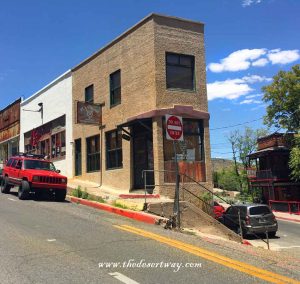
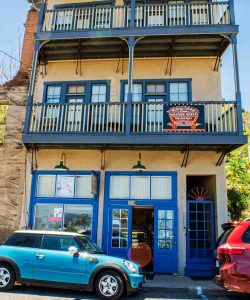
The Mile High Inn was originally built in 1899 and was known as the Clinksdale Building. Built over the ashes of a burnt out building, the new structure had 18 inch thick walls to make it as fire-proof as possible. Some time later, the building became the home of Madam Jennie Bauters’ popular bordello, where Jennie and her red-light ladies entertained numerous men.
Later, when Jerome began to take on a more “civilized” manner, the bordellos were forced to move their businesses off Main Street and “Husband’s Alley” was born. Jennie moved to Husbands Alley to keep the business going.
In the meantime, the Clinksdale Building became a hardware store on the lower level and the upstairs portion was used as apartments. Over the years, a number of businesses were housed here until it became the inn that it is today.


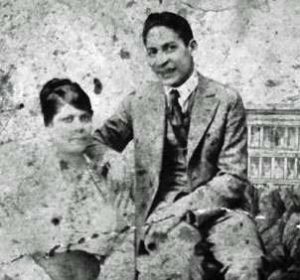
The Cuban Queen Bordello was always popular establishment. Owned by Anita Gonzalez, it apparently had a Spanish theme, even though Anita was African-American. It was sadly necessary in those days that Anita had to bleach her skin and straighten her hair, in order to pass herself off as a Mexican.
ROARING INTO THE TWENTIETH CENTURY, JUST IN TIME TO DIE

The Great Depression of the 1930s slowed the mining operations significantly, and Jerome began to wither away. World War II brought increased demand for copper and, for a time, Jerome began to flourish once more. Finally, after the war, demand for copper once again decreased. The end was approaching.

In 1953, the last mine in town, Phelps Dodge Mine, closed its doors and tunnels. By that time, Jerome had produced over one-billion dollars in copper, silver and zinc. When gold and copper deposits petered out, Jerome became a veritable ghost town with about 50 residents that stayed behind. From a high of 15,000 residents, one third of 1 percent remained.

As the brothels and bars disappeared along with the miners, about the only things left were a few antique stores and other businesses catering to local residents. In 1967 Jerome was designated a National Historic District by the federal government Finally, after years of life, followed by years of decay, Jerome unofficially became a real living ghost town.
TOURISTS TO THE RIGHT OF US, GHOSTS TO THE LEFT

Jerome is now a popular tourist destination, comprised of artists, writers, unique boutique shops, wine bars, quaint dining spots and amazing views across the Verde Valley, it’s appearance has not changed much in the last 100 years. Today, maybe 450 people still live here. “Living” being the operative term in this case.

With its wild past, it comes as no surprise that the town is allegedly filled with wandering spirits. While it may be true that “What happens in Vegas, stays in Vegas,” it may also be equally true that, “Who dies in Jerome, stays in Jerome.”

THE GHOSTING OF JEROME
Depending on who you ask, even though the living still stay and play in Jerome, the ghosts of past residents are still the biggest demographic category in town. My first visit to Jerome was in 1975, on a visit to my grandparent’s home in nearby Sedona. They have long since departed, but Jaylyn and John still visit Jerome whenever the opportunity comes up.


Truth be known, we have not yet seen a ghost. However, when you walk down the now seldom deserted streets, pause for a moment. Look around. Can you hear the madame at the Cuban Queen Bordello yelling at rowdy patrons? Can you feel the ground tremble in the terrible mine shaft accident of 1911? Many say that they have.


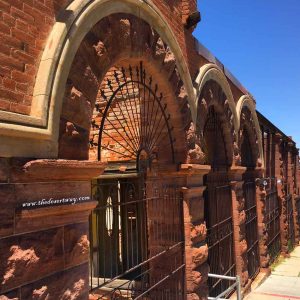

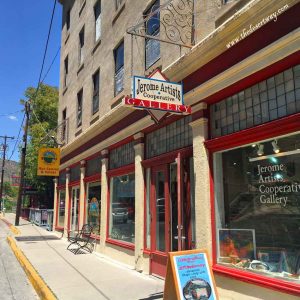
A SAMPLING OF JEROME SPIRITS
One of the town’s most well-known ghosts is said to lurk at Jerome’s community center. Formally called Lawrence Memorial Hall, the building is more familiarly referred to as “Spook Hall” due to its number of strange happenings there by its resident ghost. Named for a major contributor of the Jerome Historical Society, Lawrence Hall was once the old J.C. Penney building.
However, before the building was built, in its place stood a number of small shacks, referred to as “cribs”, used by the “sporting ladies” who lived there and entertained their guests. In one of these, lived a prostitute who was stabbed to death by a miner. It is her forlorn spirit that is said to to be often seen in front of Spook Hall, lingering momentarily before moving toward a hotel, where she suddenly vanishes.

ANITA GONZALEZ
Madam Anita Gonzalez is said to haunt the abandoned Cuban Queen Bordello. Anita’s brother was William Manuel Johnson, a famous band leader out of New Orleans. William lived to be a hundred years old, and died in 1972. Miss Anita wasn’t so fortunate.
BELGIAN JENNIE BAUTERS
Jennie was already mentioned in our story. However, after she was murdered, she apparently still decided to stay around. We’re not real sure what she’s looking for, but after more than 100 years, it’s not likely she’s going to find it anytime soon. As in life, Jennie is the most popular of the inn’s unearthly guests.
The former madam of the brothel is often seen in the Lariat and Lace Room as well as keeping an eye on the kitchen, where she lets her presence be known by flying objects that come off their resting places when they are not put away properly.
There’s much more to Jerome than a few old bordellos and bars. It has a presence about it. A famous song by Kate Wolf, “Old Jerome”, was written in 1983 while she was visiting folk singer Katie Lee in Arizona. In 1987 Jerome town council adopted the song as the “official town song.” One line of this 8 verse ballad says in part: “And they say that once you live here you never really go.” Jerome, Arizona is a ghost town alive and well.

The United Verde Hospital was built in 1926. By the 1930s, it was known as the most modern and well-equipped hospital in Arizona. When the mining played out, so went the hospital. It closed in 1950. For the next 44 years it sat vacant until it was renovated into the Jerome Grand Hotel. It became an instant success with tourists and the departed, alike.
Almost immediately upon opening it’s doors in 1997, ghostly reports began to be told about the Jerome Grand Hotel. Sometimes in hurried whispers, and at times with blood curdling screams. It seems some of the many patients who suffered and died within the confines of the building, overstayed their doctor’s orders and remained after being pronounced deceased. Sounds of labored breathing, groaning and coughing is often heard coming from otherwise unoccupied rooms.
The 1980s brought another closure, this time due to safety violations, but it was not the final nail in its coffin. It reopened in the 21st century, after extensive renovations. The ghosts had been patient and were not deterred. Odd stories about a guest who stayed in Room #1 who had heard whispers and women laughing, objects that moved on their own accord in Room #2, and a ghostly dog who growls beneath the door of Room #4 emerged.
It has been reported that ghostly lights often appear in empty rooms at the old hospital. Two female apparitions have been spotted. One dressed in white with a clipboard is thought to have been a former nurse. Another is the thought to be a woman who died in childbirth, frantically searching for her newborn. Others have reported seeing a ghostly child running through the bar area late at night. Other phenomena includes the sounds of screaming, heavy footsteps in empty hallways, and doors that open and close by themselves. Of course, when looked into further, no one is there. Or are they?
OH FUDGE!


Other buildings and landmarks that you may find of interest include: United Verde Hospital (now the Jerome Grand Hotel), Club House Hospital, Chief Surgeon’s House, the ‘Cribs District,’ United Verde Apartments, Powder Box Church, United Verde Railroad Depot, Clark Elementary School, Jerome Hotel, Cleopatra Hill, the Open Pit area and the Gold King Mine.

Jerome has two museums: The Douglas Mansion and the Jerome Historical Mine Museum on Main Street. There are also four art galleries, three parks, an Archive Research Center, a Chamber of Commerce and a US Post Office.



I was visiting friends in jerome in the mid 70s , we we’re partying and having a good time in a house down in what was called gulch road I think, I wanted some air so I stepped out on a porch hanging out over the gulch, after a few moments I felt a strange cool breeze, and then I heard laughing and glasses clinking and old piano music playing, I listened for awhile and went back inside the house to tell someone what was happening out there, it was so strange as the gulch was dark , with nothing around out there except me. People in the house laughed when I told them , they said , oh yeah that’s just the old sound track of the towns hey day your hearing. Some people hear it some don’t,
How amazing, Marianne! What an experience. Life is full of so many things we do not understand. Thanks so much for sharing!